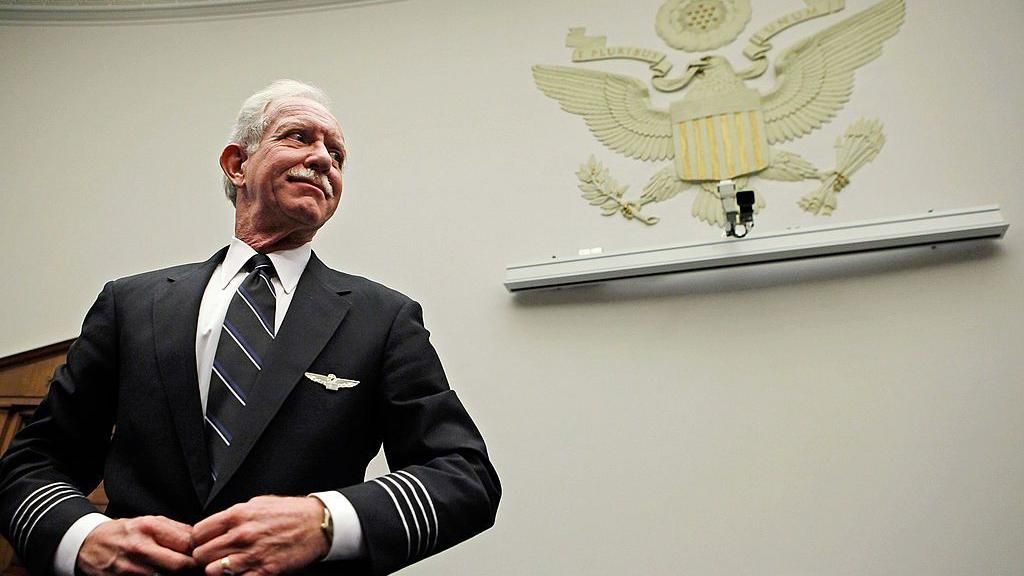
Seventeen years after he pulled off one of the most miraculous emergency landings in modern aviation history, retired Captain Chesley “Sully” Sullenberger III — the pilot who saved all 155 lives aboard US Airways Flight 1549 — has announced he is living with early-stage Alzheimer’s disease. The 75-year-old aviation icon shared the diagnosis in a heartfelt public post on his personal website Tuesday, opening up about his early symptoms and his decision to speak out to destigmatize the neurodegenerative condition.
“For now, this means a name may not come easily to me, I forget a story I have recently told, or I don’t sleep as well, but I am in the beginning of this long journey,” Sullenberger wrote in his post.
Sullenberger cemented his place as a national hero on January 15, 2009, just minutes after Flight 1549 departed New York’s LaGuardia Airport for Charlotte, North Carolina. The plane struck a flock of Canada geese shortly after takeoff, disabling both of its jet engines in an instant. With too little altitude to reach a nearby airport and a high risk of crashing into densely populated Manhattan neighborhoods, Sullenberger made a quick, life-saving decision to ditch the aircraft intact in the frigid waters of the Hudson River. Thanks to his calm expertise and split-second decision-making, every passenger and crew member on board survived the incident, which quickly became known across the globe as the “Miracle on the Hudson.”
A former U.S. Air Force fighter pilot with 40 years of flying experience when the emergency landing occurred, Sullenberger retired from commercial aviation in 2010, one year after the incident. He never stepped back from public life, however, continuing a decades-long advocacy work to improve aviation safety standards across the industry. In 2016, his extraordinary feat was adapted into the Clint Eastwood-directed Hollywood feature film *Sully*, starring Tom Hanks as the quick-thinking captain.
In his latest announcement, Sullenberger reflected that his Alzheimer’s diagnosis has forced him to reexamine what it means to live a life of service. His conclusion, he said, was to speak openly about his experience rather than stay private. Echoing the words he has shared for years about the 2009 emergency, he emphasized that courage is a contagious force that can bind communities together.
“Over the years, when people would ask about the successful outcome of Flight 1549, I would say that ‘courage can be contagious,’ and on that day it helped everyone band together to get everyone off that airplane successfully,” he wrote. “Now we need that courage to battle this disease. I am now part of a larger community with many of you, and we will be courageous together.”