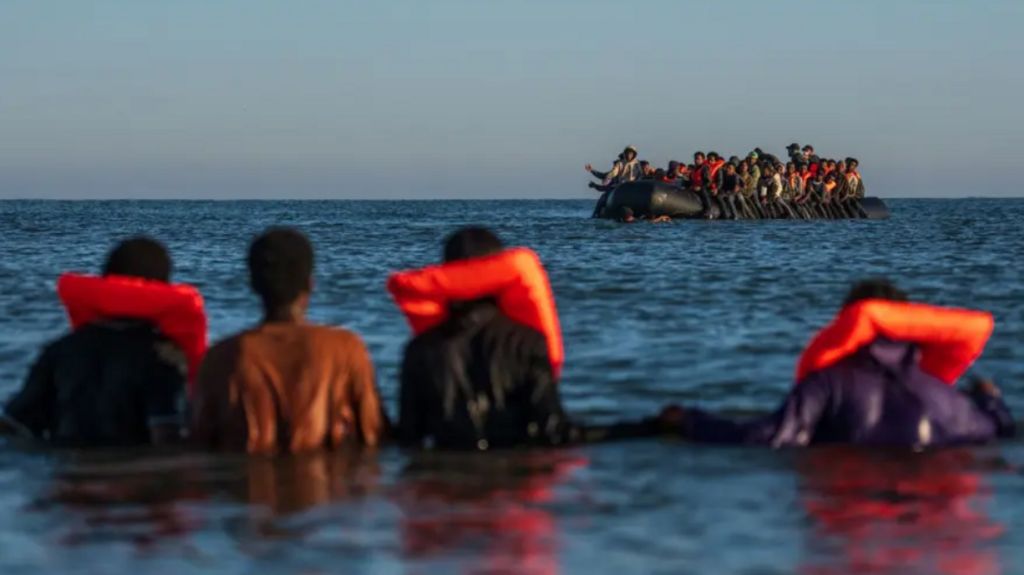
As European authorities ramp up security along France’s most well-trodden migrant crossing routes near Calais and Dunkirk, human smuggling networks are adapting by shifting launch points hundreds of kilometers south and west, extending dangerous Channel voyages and raising new safety concerns for migrants attempting the crossing. This shift comes even as overall numbers of successful crossings have dropped sharply year-over-year, according to official data from French and UK governments.
French local authorities report a dramatic uptick in crossing attempts originating far from the traditional northern launch zones. This year alone, 58 attempts have been recorded in Seine-Maritime, a coastal department in Normandy that borders the English Channel nearly 80 miles south of Calais. That figure is already nearly double the 30 attempts recorded across all of 2025, when crossings from Normandy remained extremely rare.
One recent attempt underscores the growing risk of these longer routes: a small vessel that departed Normandy last week spent more than 30 hours adrift at sea before UK Border Force intercepted the craft and escorted it to the Port of Dover. Earlier this month, another boat launched near Cherbourg was intercepted by lifeboats off the Isle of Wight, hundreds of kilometers from the usual arrival points along the Kent coast.
Audrey Baconnais-Rosez, the senior local government representative for Seine-Maritime, confirmed the geographic expansion of smuggling activity in an interview. “The number of attempts to cross the Channel has increased in number and it is getting further and further from the north of France,” she said. In response to the shift, local law enforcement has boosted coastal patrols across a 100-kilometer stretch of Normandy coastline running from Dieppe to the outskirts of Le Havre. Currently, 50 gendarmes are deployed along the coast, with an additional 20 plainclothes and uniformed police officers operating in Dieppe and surrounding communities. Baconnais-Rosez added that authorities have managed to intercept roughly half of all attempted crossings from the region, and are still cracking down on a smaller smuggling stream that hides migrants on commercial ferries bound for Newhaven in East Sussex, with intercepted smugglers facing prosecution.
Migration experts say the shift to longer, riskier routes is a direct response to enhanced security at traditional crossing points near Calais and Dunkirk. Dr. Peter Walsh, a senior researcher at the University of Oxford’s Migration Observatory, explained that the new launch sites are far from optimal for smuggling networks, but have become necessary as police block access to the northern beaches. “It’s not at all optimal for these boats to set off so far away from their intended destination,” he said. “Some of these journeys would not be 20 miles but 50 miles or even more, which substantially increases the danger on board the boats.”
Marine safety analysts echo that warning, noting that extended time at sea dramatically elevates the risk of fatal incidents. David McFarlane, a veteran marine safety consultant, explained that longer voyages increase the chance of encountering sudden, dangerous weather shifts that are common in the English Channel. “If a low pressure system is developing over the Atlantic, it can mean that in advance of the winds picking up, a swell will start to increase, with the increased likelihood of sea sickness for some, which can lead to dehydration,” he said. Winds can rise rapidly in the Channel, pushing wave heights as high as 11 feet, enough to swamp small, overloaded craft and put migrants at severe risk of drowning or hypothermia.
Official 2026 crossing data confirms the overall downward trend in arrivals: so far this year, 19,135 people have successfully completed the crossing, compared to 32,188 during the same period in 2025. Despite this drop, the shift to new routes has sparked new political pressure on the UK government, particularly after two migrant vessels reached the Kent coast last week without being intercepted. That same week, Home Office data recorded 781 migrant arrivals across 10 small boats, marking the highest single-day total for 2026.
Tony Smith, the former director general of UK Border Force, warned that smuggling networks will continue to adapt to security changes as long as demand for irregular crossings remains. “They’re not going to give up as long as the business model continues to exist and there’s a market to bring migrants over from France,” he said. “Every successful landing is a message to the next migrant waiting on a French beach that it’s worth a try.”
In response to the evolving situation, the UK Home Office said bilateral cooperation with French authorities has already delivered major results. Since the last UK election, joint operations have prevented more than 48,000 crossing attempts and seized more than 1,100 boats and engines. “Our efforts are having an impact, with the number of small boat crossings down significantly this year and the lowest number recorded for the month of July since 2020,” a Home Office spokesperson said. To address the shift to western French coasts, the UK has signed a new payment-by-results agreement with France that will increase patrol personnel on French beaches by 40%, including a dedicated surge unit of 45 additional officers focused on western coastal areas.