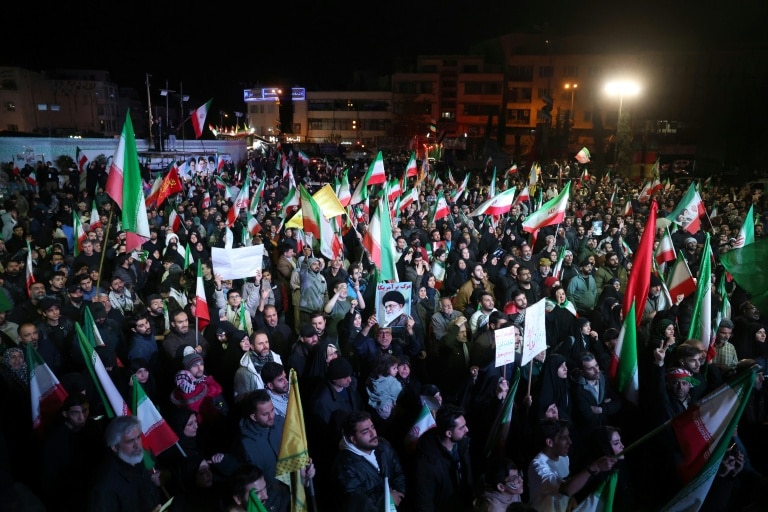
In a development that has shifted the trajectory of the recent Middle East conflict, the United States and Iran have reached an agreement on a 14-day ceasefire, with both countries putting forward claims of victory following weeks of heightened tensions. As news of the truce spread, leaders and diplomatic bodies across the world have shared varied yet broadly welcoming responses to the breakthrough.
The United Nations, one of the first global bodies to weigh in, issued a cautiously optimistic statement through Secretary-General António Guterres. While Guterres welcomed the announcement of the temporary ceasefire, his spokesperson emphasized that the truce is only a first step. The statement called on all conflict parties to strictly adhere to the ceasefire terms and uphold their obligations under international humanitarian law, framing the truce as a critical foundation to build toward a lasting, comprehensive peace across the entire Middle East region.
Australian Prime Minister Anthony Albanese’s office echoed the UN’s cautious tone, highlighting the steep costs of a prolonged conflict. The statement warned that the longer hostilities continue, the more severe the damage to the global economy will be, paired with mounting, irreversible human suffering. Australia reaffirmed its commitment to seeing the ceasefire fully enforced, joined other nations in calling for full compliance with international humanitarian law, and prioritized the protection of innocent civilian lives caught in the crossfire.
New Zealand’s foreign ministry also struck a balance between encouragement and realism. A spokesperson for Foreign Minister Winston Peters noted that the ceasefire announcement itself is an encouraging development, but stressed that substantial work lies ahead to lock in long-term stability. The spokesperson confirmed that New Zealand will continue to stand behind all diplomatic and peacebuilding efforts aimed at securing a permanent, durable end to the ongoing conflict in the coming weeks and months.
For Japan, a nation heavily dependent on the Strait of Hormuz for its energy supplies, the key priority is tangible action to de-escalate tensions. As the world’s fourth-largest economy and fifth-largest crude oil importer, Japan relied on the strategic waterway for roughly 70% of its oil imports before the outbreak of the current conflict. Government spokesperson Minoru Kihara emphasized that the most critical next step is the implementation of concrete measures to ease tensions, specifically including guarantees for safe, unimpeded navigation through the Strait of Hormuz. Japan expressed hope that permanent peace agreements would be finalized through diplomatic channels in the near term.
Iraq’s foreign ministry, which has a direct stake in regional stability, welcomed the ceasefire in an official post on X. The ministry called on Washington and Tehran to leverage this positive opening as a jumping-off point for sustained, serious dialogue that addresses the core roots of their ongoing disputes, rather than treating the truce as a final resolution. By focusing on root-cause issues, the ministry argued, the two sides can gradually rebuild mutual trust and lay the groundwork for long-term stability.
Pakistani Prime Minister Shehbaz Sharif offered an unexpectedly broad framing of the ceasefire in his own X post, claiming the truce between the US, Iran and their respective allies covers all conflict zones, including neighboring Lebanon, and went into effect immediately. However, Israel quickly issued a correction to Sharif’s announcement, confirming that the two-week temporary ceasefire does not extend to hostilities in Lebanese territory. Even as leaders gather to welcome the ceasefire, this last-minute discrepancy underscores the lingering uncertainty and complexity of forging a unified peace deal across the region’s multiple interconnected conflicts.