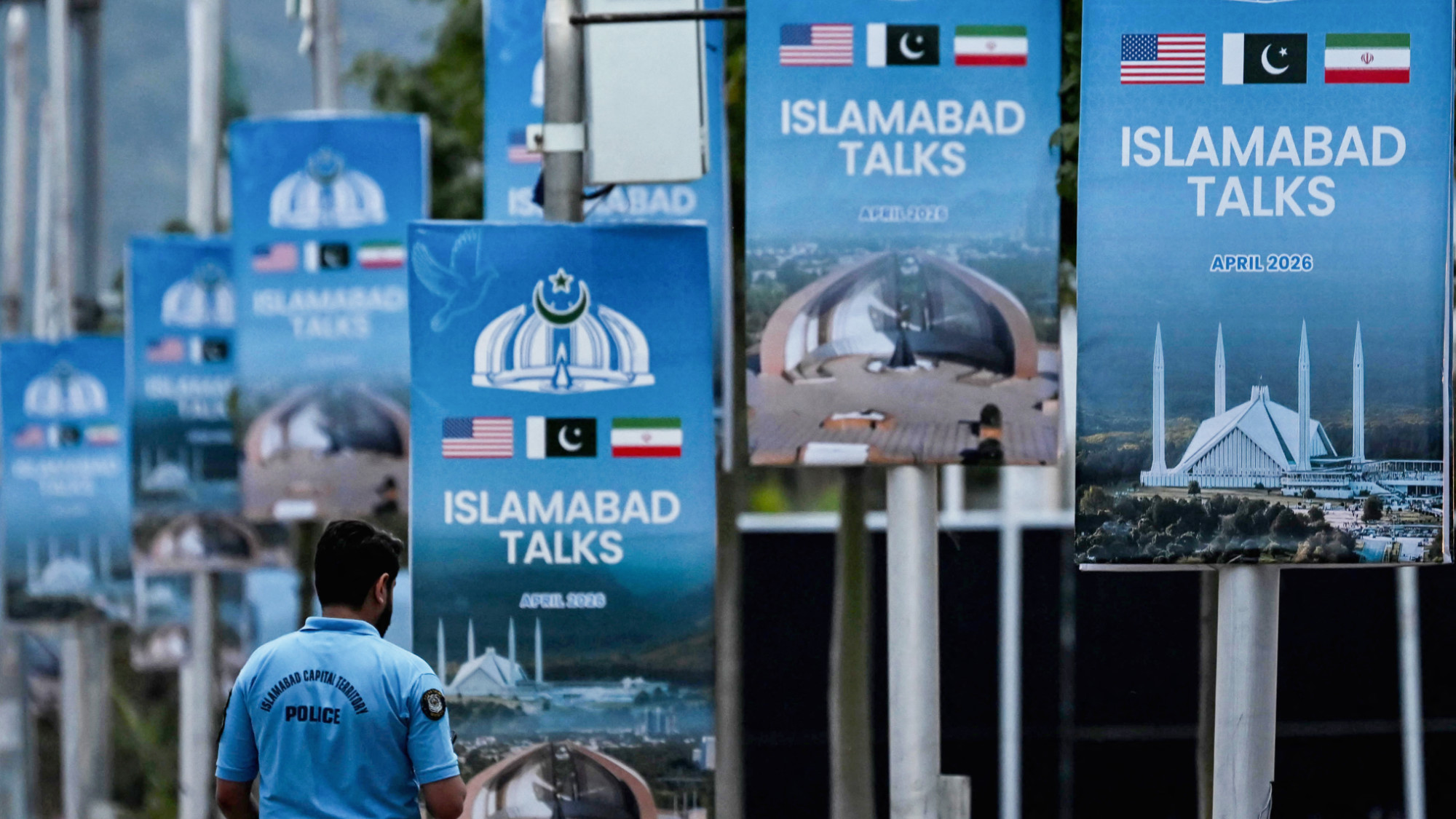
As a critical Wednesday deadline for a US-Iran ceasefire approaches, diplomatic mediators have begun pushing to extend the truce, after hopes of locking in a comprehensive peace agreement dimmed over the weekend, multiple anonymous senior regional sources told Middle East Eye.
While negotiators had made incremental progress on core sticking points in the days leading up to the weekend, the shifting geopolitical context has widened unresolved gaps across key negotiation tracks, a senior Turkish official confirmed. The official noted that the complex, multifaceted talks have seen some modules move forward as scheduled, but irreconcilable differences remain on other critical components that cannot be bridged in the remaining timeline before the two-week ceasefire expires on Wednesday.
Pakistani mediators, who have played a central role in facilitating the talks, are eager to extend the deadline to keep negotiations alive, and remain optimistic that a final resolution can be secured in the days following the original expiration. Turkish Foreign Minister Hakan Fidan has publicly backed the extension push, saying additional time is a non-negotiable requirement to reach a durable deal. Still, a senior Turkish security official warned that the risk of total negotiations collapse is tangible, and a breakdown could spark a far more brutal new round of open conflict between the two nations.
Before the weekend shift in diplomatic momentum, negotiators had laid out a detailed draft framework covering the full scope of disputed issues. The draft includes provisions to transfer Iran’s stockpile of highly enriched uranium to Pakistan, implement a multi-year moratorium on domestic uranium enrichment, establish new transit rules for the Strait of Hormuz, require partial disarmament of Iran-aligned armed groups across the Middle East, and deliver immediate sanctions relief alongside the unfreezing of an estimated $100 billion in Iranian sovereign assets held abroad. Notably, Iran’s ballistic missile program is entirely excluded from the current draft agreement.
One of the most contentious unresolved disputes centers on the length of the enrichment suspension. The U.S. originally demanded a 20-year moratorium, while conflicting reports place Iran’s current offer between a five-year and 12-year halt. After the initial moratorium period expires, the agreement would allow Iran to extend the pause in consultation with the International Atomic Energy Agency (IAEA). On the transfer of enriched uranium, however, sources indicate Tehran has come close to accepting the proposal: Pakistan originally suggested sending the stockpile to a neutral third country, a principle Iran agreed to, before Tehran put forward Pakistan itself as the storage destination, which Islamabad accepted.
The draft framework also lays out new rules for shipping through the Strait of Hormuz, a chokepoint for 20% of the world’s daily oil trade. Under the proposal, Iran would fully reopen the strait, collect a transit tariff to be split with Oman, and maintain exclusive control over transits, requiring individual approval for every passing vessel. Critically, the deal would ban military warships from transiting the strait, a provision that would block British and French plans to escort commercial tankers through the waterway.
The weekend shift in momentum came after rising tensions in the Strait of Hormuz Saturday: Iran announced it was closing the waterway just two days after reopening it, citing the ongoing U.S. naval blockade, which Tehran says constitutes a direct violation of the existing ceasefire. The move was intended to demonstrate Iran’s continued sovereignty over its territorial waters and push back against the blockade, according to Iranian sources.
On Sunday, U.S. President Donald Trump accused Iran of violating the ceasefire with the strait closure, but confirmed that U.S. negotiating teams would travel to Islamabad for a new round of talks Monday. In an interview with Fox News and a subsequent post on Truth Social, Trump issued an extreme warning, saying the U.S. would “blow up the whole country” if Iran refused to sign a deal, adding that “it’s time for the Iran killing machine to end” after 47 years of inaction by previous U.S. administrations. In response, Iran’s state-owned Tasnim news agency reported that Tehran has not yet committed to sending a negotiating delegation to Pakistan as long as the U.S. naval blockade remains in place.
On the issue of regional armed groups aligned with Iran, the draft requires the partial disbandment of Iraq’s Popular Mobilisation Forces (PMF) and Lebanon’s Hezbollah, and could open a path to a non-aggression pact or even full peace deal between Lebanon and Israel. The proposal would require Iranian-aligned PMF factions to withdraw from border regions near Kuwait and Jordan, and cap the total number of PMF fighters at 15,000, down from the group’s current estimated 238,000 total members. For Hezbollah, the agreement would require the group to dismantle all offensive weapons targeting Israel, while allowing it to retain small arms for self-defense.
Multiple sources have cast major doubt on the feasibility of the Hezbollah disarmament provision. One senior Lebanese source noted that Hezbollah emerged as a resistance movement in response to Israeli invasion, and that the Lebanese military lacks the capacity to defend the country from Israeli incursion, meaning the group will never agree to give up its offensive capabilities. Iran has also pushed back on the provision, flatly denying that it exercises control over either Hezbollah or the PMF, and insisting both groups make their own decisions independent of Tehran.
Additional layers of uncertainty hang over the negotiations beyond core policy disputes. Reports are conflicting over whether Iran’s top leadership has signed off on the draft framework: one source says Supreme Leader Mojtaba Khamenei has approved the text, but other sources claim Khamenei remains severely injured from the attack that killed his predecessor, Ayatollah Ali Khamenei, having lost a leg and suffered serious facial trauma that leaves him unable to communicate. There is also no consensus on how any final agreement would be structured or announced, with negotiators only agreeing to separate “packets of agreements on different files” so far.
Beyond Iran’s internal divides, the deal also faces major external threats from key regional actors. Israeli Prime Minister Benjamin Netanyahu has already been pressured by the Trump administration to pause Israel’s offensive in southern Lebanon, but the current draft falls far short of Israel’s core war aims: it allows Iran to retain its regime, keep its ballistic missile program, and only suspend rather than permanently end uranium enrichment. With Israel facing an election year, Netanyahu’s popularity has already suffered from a ceasefire that does not deliver a definitive victory, and senior sources confirm he will reject the current framework. There are also widespread doubts that Israel’s intelligence service Mossad will abandon its decades-long goal of forcing regime change in Iran.
Three Gulf Arab states that suffered major damage to their energy infrastructure and urban centers during the recent conflict also stand opposed to the draft. After initially lobbying against a U.S.-led attack on Iran, the United Arab Emirates, Kuwait, and Bahrain have since pushed Trump to continue military operations to eliminate Iran’s military and nuclear capabilities, with some evidence indicating the UAE and Bahrain even participated in recent drone strikes on Iranian targets. For these states, the current draft would be seen as a betrayal of their security interests by the U.S.