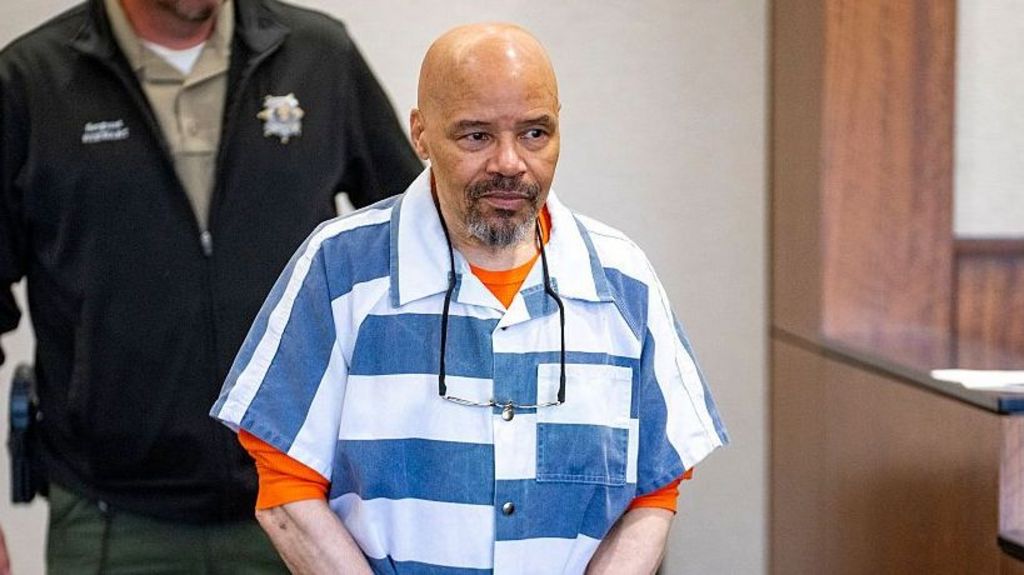
After spending four decades behind bars on Utah’s death row for a 1985 murder he always insisted he did not commit, 71-year-old Douglas Stewart Carter has been granted release on bail, following new DNA testing that cleared him of any physical link to the crime scene.
The case dates back to February 1985, when 66-year-old Eva Olesen, the aunt of a local Provo, Utah police chief, was found murdered in her home: she had been stabbed multiple times before being shot in the back of the head. Prosecutors originally alleged Carter, a Chicago native who was living with his mother in Utah at the time, killed Olesen during a botched robbery attempt.
Shortly after the killing, believing he was a person of interest in an unrelated investigation, Carter fled Utah and was eventually apprehended in Nashville, Tennessee. During interrogation, he signed a confession to the murder that he later repeatedly claimed was coerced by law enforcement. Even though no physical evidence tied Carter to the crime scene at the time of his trial, a jury found him guilty based on the coerced confession and testimony from two witnesses, who claimed Carter had bragged about killing Olesen.
The narrative of the case began to unravel in 2011, when both witnesses recanted their original testimony. They alleged police had pressured them to lie on the stand, bribed them with cash and gifts, and threatened them with deportation if they refused to cooperate with the prosecution’s narrative against Carter. Carter’s defense team also uncovered additional misconduct: investigators suppressed evidence pointing to an alternative suspect — Olesen’s husband, Orla Olesen, who died in 2009. The defense added that multiple witnesses had reported seeing a white man fleeing the murder scene, while Carter is Black. Orla Olesen, who originally told police he discovered his wife’s body, had been close to facing charges before a senior officer intervened to pause the investigation into him.
Last year, citing widespread investigator misconduct that undermined the fairness of the original trial, the Utah Supreme Court ordered a complete retrial for Carter. This month, prosecutors released the results of modern, advanced DNA testing of evidence recovered from the crime scene: genetic material from a doorknob and the kitchen knife used in the murder did not match Carter’s DNA profile.
Despite the new exculpatory evidence, Olesen’s family has pushed back against Carter’s release ahead of his retrial. During Monday’s bail hearing, Theresa Olesen, the victim’s daughter-in-law, told the court the family held serious concerns about allowing Carter to leave custody while his new trial is pending, arguing that the absence of a DNA match to Carter does not prove he was not involved in the killing. Even so, a judge granted bail Monday, over the family’s objections, ordering Carter to wear a continuous GPS monitoring device while he awaits his new trial.
Carter’s lead defense attorney Neal Hamilton has called on the state of Utah to dismiss the entire case against his client. He told the Associated Press that if prosecutors had their original way, Carter would have been executed 15 to 20 years ago — long before the investigative misconduct and exculpatory DNA evidence came to light, potentially allowing a wrongful execution of an innocent man.