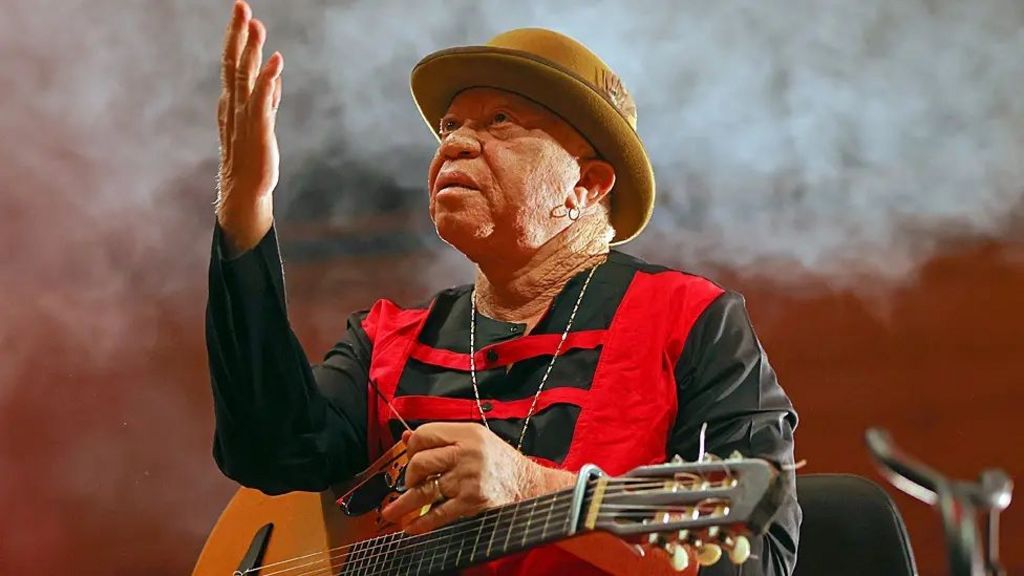
Legendary Malian recording artist Salif Keïta, globally celebrated as the “Golden Voice of Africa,” has sent shockwaves through southern Africa’s cultural and political spheres by pulling out of a headline performance at South Africa’s upcoming Macufe festival, citing widespread ongoing xenophobic violence against undocumented African migrants. The 77-year-old music pioneer, who spent decades cementing African music’s place on the global stage, said his decision to cancel the Free State province concert was not a rejection of the South African people, but a deliberate stand against hatred that runs counter to the nation he has long known.
Keïta’s cancellation arrives as South Africa grapples with a surging wave of anti-migrant activism led by fringe groups, who have set an unofficial 30 September deadline for all undocumented foreign nationals to leave the country. As tensions have escalated over the past several months, more than 160,000 migrants from across the African continent have opted to participate in voluntary repatriation programs, leaving behind homes, jobs and belongings they built over decades in the continent’s wealthiest nation, which has long drawn migrants seeking improved economic opportunity and safety.
In a public statement explaining his withdrawal, Keïta made clear he could not in good conscience perform amid reports of targeted attacks on migrant communities. “When I see migrants attacked, I do not see ‘politics’. I see people looking for work, safety, and dignity,” he wrote, adding that the current wave of xenophobia does “not match the South Africa I know.” Keïta left open the possibility of performing in South Africa at a future date, once the violence and anti-migrant rhetoric subsides.
Officials with Free State’s culture department, which hosts the annual Macufe festival framed as a celebration of pan-African unity, expressed deep regret over Keïta’s decision. “We are disappointed that the renowned musician will not be gracing our stage, but we respect his personal stance on the issue,” the department said in a formal response.
The news of Keïta’s cancellation coincided with the first repatriation flight carrying 173 Tanzanian migrants home from Durban, the coastal city that has emerged as a flashpoint for the largest and most violent anti-migrant demonstrations. For many on board the flight, the journey home closed a chapter of decades spent building lives in South Africa that ended in displacement and danger.
Abdul Idi, who moved to South Africa in 2006 chasing economic opportunity, spoke to reporters upon landing at Dar es Salaam International Airport Wednesday night, saying he was just grateful to return alive after months of growing danger. “Foreigners are not wanted there,” Idi said.
Fellow returnee Rashid Ramadhan, 53, who lived in South Africa for 30 years, described being forcibly evicted from his Durban apartment two months prior, joining hundreds of other migrants who have been left homeless and jobless amid the unrest. “We have nowhere to go, nothing left there,” Ramadhan explained.
AFP data shows that since May, repatriated migrants include citizens from Malawi, Zimbabwe, Zambia, Ghana and Nigeria, among other African nations. The anti-migrant activist group March and March, which organized the initial wave of protests in June that left multiple people injured and displaced, has announced a larger, better organized second wave of nationwide demonstrations set for 30 September. During a recent Southern African Development Community (SADC) summit held in Durban earlier this month, the group publicly called on regional heads of state to “fetch your people” and remove their citizens from South Africa.
As governments across the continent work to support the thousands of returning citizens, the crisis has spilled into diplomatic and economic channels. Ghana’s foreign ministry recently made headlines for rejecting a $1.7 million donation from MTN Ghana, the local subsidiary of South African telecom giant MTN Group, that was earmarked to support the evacuation and reintegration of repatriated Ghanaians. Ghana’s government stated it would fully fund the process of supporting its returning citizens on its own.
South African authorities have responded to the unrest by cracking down on unauthorized migration, while also moving to arrest activists and civilians who have taken violent action against migrant communities. Despite government intervention, the issue of undocumented migration has become one of the most polarizing political topics in the country in recent years, with anti-migrant protesters arguing that undocumented arrivals place unsustainable strain on South Africa’s public health, education, and social welfare systems, and contribute to rising crime rates – claims that are disputed by independent researchers and migrant advocacy groups.