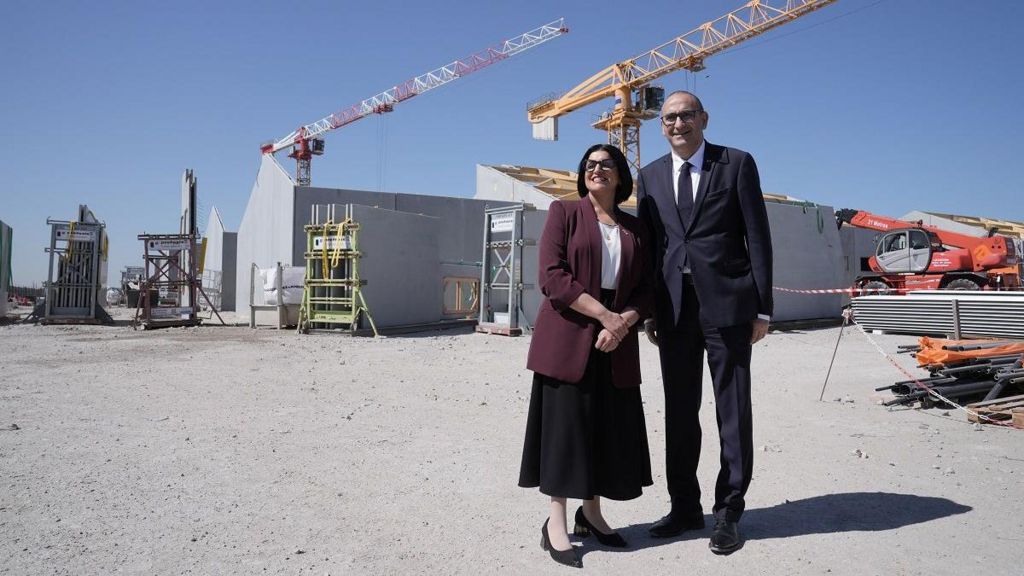
A looming legal appeal against a UK-supported migrant detention centre near Dunkirk has emerged as a major threat to a landmark £660 million bilateral agreement aimed at curbing illegal small boat crossings across the English Channel. The ongoing legal challenge, brought by a French environmental advocacy group, casts uncertainty over the timeline of the facility’s opening — a key prerequisite for the UK to release its pledged funding for the project.
The 140-bed detention centre in Loon-Plage, currently under construction and targeted for operational launch by the end of 2026, was first greenlit by French interior authorities in July 2025. Within months, local environmental group Association pour la Défense de l’Environnement du Littoral Flandre-Artois (ADELFA) contested the construction permit, arguing the facility breached multiple local and national regulations. After an initial challenge was dismissed, the group escalated the case to the Administrative Court of Lille in February 2026, opening the current appeal process.
ADELFA’s legal arguments center on four core claims: first, the site falls within an industrial zoning district where permanent residential accommodation is prohibited under local planning rules, and the detention centre qualifies as residential use; second, the facility sits in close proximity to industrial sites including an ammonia-cooled warehouse, creating unacceptable public health hazards for detainees; third, the interior ministry failed to comply with mandatory fire safety consultation requirements; and fourth, the ministry neglected to post the approved building permit in a publicly visible location as required by French law.
While the appeal is not automatically suspensive, meaning construction work can continue throughout the legal process, legal experts warn a ruling in favor of ADELFA could result in the permit being revoked — and in the most severe scenario, require the partial or full demolition of the completed facility. Even an unsuccessful challenge, however, would almost certainly delay the centre’s opening, a common outcome for legal disputes over migrant detention infrastructure in France.
This facility is a central pillar of the new bilateral migration deal signed by UK Home Secretary Shabana Mahmood and French Interior Minister Laurent Nunez last month, which expands on a 2023 agreement struck between the UK’s former Conservative government and France. Under the terms of the new £660m arrangement, the UK has set aside £160m in dedicated funding directly tied to measurable results in reducing Channel crossings, with payment for the detention centre explicitly conditional on the facility opening and delivering proven outcomes within its first year of operation. If the centre fails to meet performance benchmarks, or does not open as scheduled, the UK has confirmed the allocated funding will be withdrawn.
For UK Prime Minister Keir Starmer, the France agreement is a core policy response to mounting political pressure to reduce the persistent flow of small boat crossings that have become a defining political issue in recent years. Once operational, the new centre will house migrants intercepted while attempting to reach the UK, before they are deported to their countries of origin or EU member states they previously transited. The facility will prioritize deportations of migrants from the 10 most common origin countries for 2025 crossings: Eritrea, Afghanistan, Iran, Sudan, Somalia, Ethiopia, Iraq, Syria, Vietnam and Yemen. A pilot of the new detention and deportation model is already set to launch this month at an existing removal centre in nearby Coquelles, while construction of the permanent facility is completed.
ADELFA president Nicolas Fournier said the group acknowledges a favorable ruling is not guaranteed, but remains committed to disrupting the project through the legal process. Fournier argued that the current approach of increasing law enforcement and detention capacity — what he described as overinvestment in repressive measures — has repeatedly failed to curb crossings, and that policymakers must pursue alternative, more humane solutions to address the risks migrants face when attempting the dangerous sea crossing.
French legal experts have offered differing perspectives on the appeal’s potential outcome. Francois Benchendikh, a senior public law lecturer at Sciences Po Lille, noted the court’s central debate will revolve around whether the detention centre qualifies as residential accommodation under zoning rules, and that the nearby ammonia storage facility could be enough to justify annulling the permit. By contrast, Paris-based urban planning lawyer Alice Darson said the facility should be classified as a public service facility, which would exempt it from the residential zoning ban, though failure to properly consult fire safety officials could still lead to the permit being canceled.
Migration policy analyst Dr. Mihnea Cuibus, a researcher at the UK’s Migration Observatory, noted that even if the centre opens on schedule, there are significant structural barriers to scaling up deportation operations from the facility, and that the project’s success will likely remain a contentious sticking point in bilateral relations between London and Paris. As of this reporting, the French government has not responded to requests for comment on the ongoing legal challenge, and has not released public figures for the total construction and operational costs of the facility. A recent report from the French Senate, however, estimated that a standard 140-bed migrant detention centre costs roughly €40 million (£36 million) to build. A UK government spokesperson reaffirmed that France remains committed to completing the project, and that the UK will only release funding once construction is finalized.