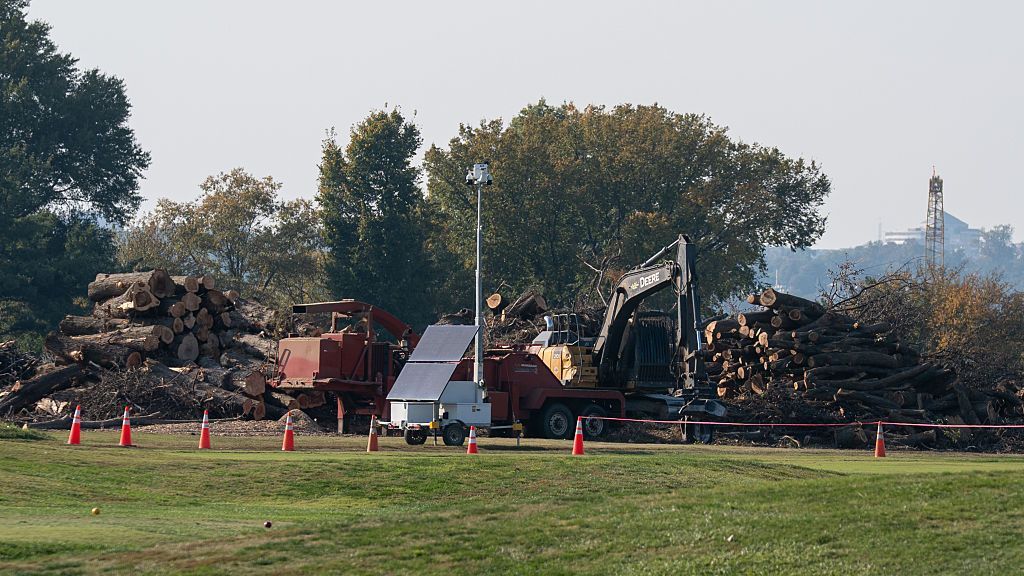
A federal judge in Washington DC announced on Friday that she will initiate a formal, court-supervised investigation into whether US Department of Justice legal representatives intentionally misled her regarding former (sitting, at the time of the proceedings) President Donald Trump’s sweeping renovation blueprint for the historic East Potomac Golf Course, following a months-long bitter legal battle over the public green space. The 106-year-old municipal golf course, located on public parkland in the heart of the US capital, became the center of a legal dispute back in February, when the DC Preservation League and allied community groups filed a lawsuit challenging the Trump administration’s redevelopment proposals for the site, arguing the plans would irreparably damage a beloved public recreational asset. Tensions boiled over earlier this month, when the National Park Service moved to cut down hundreds of mature trees on the property, only notifying presiding US District Judge Ana Reyes a mere 15 hours before the tree-clearing work was scheduled to kick off over a holiday weekend, with no prior heads-up to the court. After the unauthorized tree removal had already commenced, Judge Reyes issued an emergency temporary order halting all further tree felling operations through at least October 26, and mandated that the administration provide three full business days of advance notice before carrying out any additional permanent modifications to the site. In a 70-page formal ruling issued earlier this week, Reyes extended that protective order significantly, barring the Trump administration from making any further alterations to the golf course for the full duration of the ongoing lawsuit unless it submits 10 days of prior formal notice to the court. The Department of Justice has since confirmed it intends to file an appeal against that expanded restraining order, per reporting from BBC US partner CBS News. Even with the court’s explicit restrictions in place, Donald Trump – a self-described avid golf enthusiast who has publicly derided the longstanding public course as “Trash Island” – took to social media to announce that East Potomac Golf Course would be fully shuttered for 15 months starting in November to accommodate the full renovation project, which he claimed would transform the site into “one of the Best and Most Spectacular Golf Courses anywhere in the World”, open to the general public but engineered to professional tournament standards capable of hosting elite global golf events. Trump even shared official design renderings of the overhauled course on his social platforms, a public announcement that directly contradicted earlier statements DOJ lawyers had submitted to the court claiming there were no active plans to fully close the golf course. Only this week, government attorneys finally confirmed to Judge Reyes that the multi-month full closure was indeed part of the official project roadmap, marking a clear shift from their prior representations. During Friday’s tense public hearing, Judge Reyes adopted an uncharacteristically stern tone with the assembled DOJ legal team, repeatedly pressing them to clarify exactly when senior department officials first learned of the full closure and 15-month renovation timeline. At one juncture, she posed a direct question asking whether the US Secretary of the Interior had been personally involved in overseeing the redevelopment project, prompting Associate Attorney General Stanley Woodward – the third-ranking official at the Department of Justice – to push back by asking for a formal definition of the word “involved”. In response, Reyes proceeded to read the standard dictionary definition of the term aloud in open court. By the conclusion of the hearing, Reyes formally declared she would launch a full independent investigation, overseen by a court-appointed special master – a neutral, third-party legal professional routinely tapped by US courts to conduct independent fact-finding and case-related administrative work – to determine whether the DOJ attorneys had submitted deliberate misrepresentations to the court, violated professional legal ethical rules, provided the last-minute tree-clearing notification in bad faith, failed to correct earlier factually inaccurate statements to the judiciary, or intentionally withheld critical information about the administration’s renovation plans.
Judge investigating whether Trump administration lied about golf course renovations