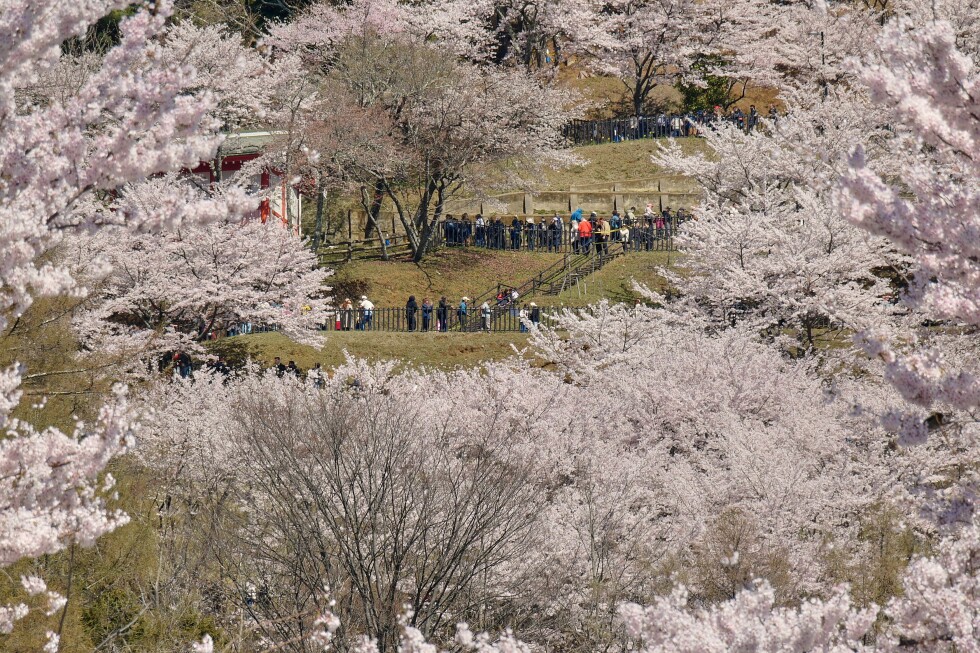
In the shadow of Japan’s iconic snow-capped Mount Fuji, a single viral social media post showcasing a postcard-perfect scene of the mountain towering over a bright red pagoda and fleeting spring cherry blossoms has triggered an unprecedented crisis for the quiet riverside town of Fujiyoshida. What began as accidental digital fame quickly devolved into chaos, as throngs of sightseers desperate to capture their own version of the viral shot flooded the town’s narrow residential streets, overwhelming local infrastructure and upending the quiet daily lives of long-term residents.
Local complaints mounted rapidly in the wake of the tourist influx: chronic gridlock that clogs small neighborhood roads for hours on end, overflowing trash bins and piles of litter left behind by visitors, uninvited foreign travelers knocking on the doors of private homes to beg for restroom access, and even cases of visitors relieving themselves directly in residential front yards. The situation grew so untenable that in February of this year, Fujiyoshida city officials announced the cancellation of the town’s annual cherry blossom festival — an event launched a decade ago specifically to drive tourism to the region.
The crisis in Fujiyoshida lays bare a stark, growing contradiction at the heart of Japan’s national policy: as the country grapples with deepening long-term economic stagnation, national leaders are counting on inbound tourism to deliver a much-needed economic boost. But local communities across the country remain woefully unprepared for the massive influx of foreign visitors that marketing campaigns have succeeded in attracting, a problem locals have labeled “tourism pollution.”
“This area is first and foremost an ordinary residential neighborhood, and balancing tourism with protecting the safety and quality of our residents’ living environment has become impossible,” explained Masatoshi Hada, manager of Fujiyoshida’s Economics and Environment Department, in an interview with the Associated Press. “We made the decision to cancel the festival because we cannot in good conscience encourage more visitors to come here.”
Even without the festival drawing extra crowds, the region saw massive numbers of foreign tourists during the first week of April, when cherry blossoms hit their peak bloom. On one sunny weekend day, the narrow winding road leading to the popular Arakurayama Sengen Park — the most popular spot for the viral Mount Fuji photo — was completely packed with visitors queuing for a chance to capture the world-famous panoramic view. In recent years, daily tourist numbers in the area have regularly exceeded 10,000, a volume the city described in its February statement as a direct threat to residents’ daily lives.
Fujiyoshida is far from the only Japanese destination grappling with overtourism. Other iconic cultural and scenic locations, including the ancient capital of Kyoto and the coastal historic town of Kamakura, have reported similar issues. In Kyoto, for example, locals regularly complain that out-of-town visitors dragging large rolling suitcases clog public city buses and make daily commutes nearly impossible for residents.
The rise of “tourism pollution” coincides with another major demographic shift in Japan: as the country’s population ages and shrinks, the government has brought in a rapidly growing population of foreign workers to fill labor gaps. The combination of sudden mass tourism and increased immigration has fueled a rise in anti-foreign sentiment, and the current nationalistic administration of Prime Minister Sanae Takaichi has proposed stricter new regulations on foreign visitors and residents even as it pushes an aggressive target to grow inbound tourism. The government has pledged to address overtourism concerns while working to hit a goal of 60 million annual foreign visitors by 2030, up from the current 40 million.
To manage the crisis ahead of this year’s cherry blossom season, Fujiyoshida implemented a series of emergency measures starting April 1. The city added dozens of additional security guards to residential areas near the park, banned most tour buses and private vehicles from entering the scenic neighborhood, and requires all visitors to walk the final distance to the viewing area.
Working one recent shift directing crowds and enforcing rules, security guard Hiroaki Nagayama described the constant strain of the job. “It’s a constant struggle. I don’t speak foreign languages, so communicating with many visitors is really hard,” he said. “A lot of people buy food from local stalls and just leave their trash on the ground. This is exactly what overtourism looks like.”
For long-term residents, the experience is a mixed burden. Sitting on a bench outside his home just a few blocks from the popular viewing spot, 93-year-old local Hitoshi Mori summed up the common resident perspective: having tourists is good for the area, but it’s also deeply annoying. “It’s so crowded outside that I can only go grocery shopping once a week now, just to avoid the crowds,” he explained.
For the tourists themselves, the large crowds and long wait times have done little to dim enthusiasm for the iconic view. Despite numerous signs posted around the area asking visitors to follow local rules and multiple-hour lines to reach the top viewing spot, most visitors leave happy with the experience. “It’s actually pretty well organized. When they let you up, you get about five minutes to take all the photos you want, and it really is just amazing,” said Lisa Goerdert, a visitor from Paris.
Vicky Tran, who traveled to the spot with her family and friends from Melbourne, Australia, said her group was not even able to reach the top viewing platform because of overcrowding, but still enjoyed the experience. “Even from where we were, the view was incredible, and the neighborhood was really lovely,” she said.
The sudden influx of tourists has also created deep divisions within the local community, pitting residents who prize their quiet suburban lifestyle against locals who have been able to build new businesses catering to the flood of visitors. In a nearby shopping arcade that was once dotted with shuttered, closed small family stores, business has boomed after another viral social media post showed Mount Fuji framed perfectly by the arcade’s entrance. Now, hundreds of tourists crowd the street daily to take photos, often blocking traffic and prompting angry honking from frustrated local drivers.
Masami Nakamura, who runs a decades-old school uniform shop in the arcade with her husband, said the sudden change has been jarring for long-term locals accustomed to quiet. “For people like us who have lived here our whole lives and are used to a quiet suburban way of life, this is a huge shock,” she said. “I just hope that tourists will respect our local rules and social manners.”
Even for locals who are benefiting financially from the tourist boom, the sudden shift comes with constant frustrations. “I once almost hit a tourist who just jumped out into the street without looking both ways,” said Kyoko Funakubo, a 60-year-old employee at a local hotel who also sells Fuji-themed souvenirs part-time. “This place used to be almost abandoned, with so many shops closed down. But now, so many old shops have reopened and new ones have opened, and it feels good to see this area come alive again.”