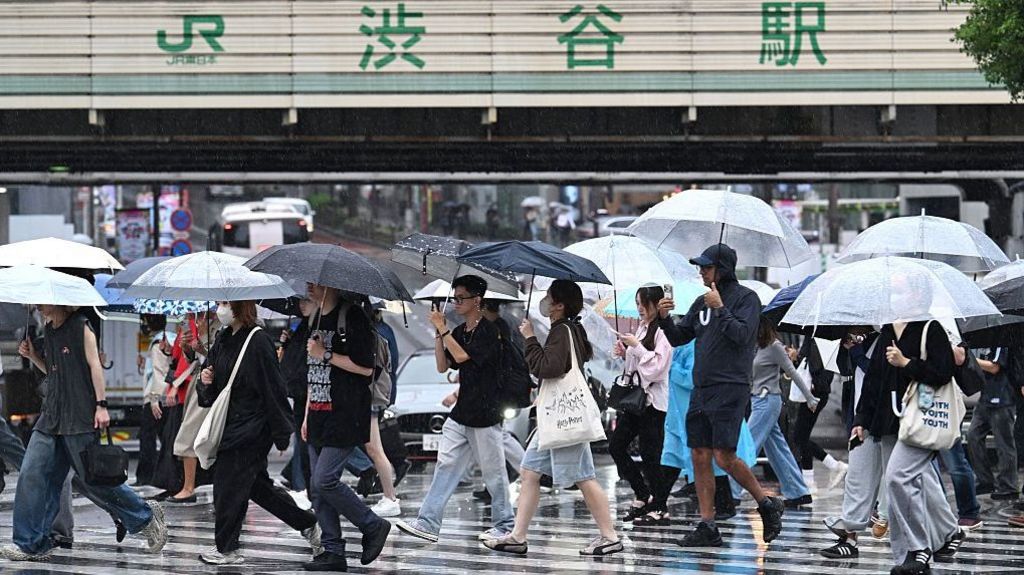
As Japan enters the final stretch of its annual typhoon season, the country’s 25th named storm of 2026, Typhoon Dujuan, has swept toward Japan’s eastern coastline, bringing destructive winds, extreme rainfall and widespread disruption to daily life and major public events just as the nation’s five-day autumn holiday gets underway.
Meteorologists tracking the storm confirm Dujuan carries sustained wind speeds of 126 kilometers per hour, with dangerous gusts that can reach up to 180 kilometers per hour. Current forecasting models project the storm will pass close to the Boso Peninsula in Chiba Prefecture, located just outside the Tokyo metropolitan area, on Monday. The Japan Meteorological Agency (JMA) has issued urgent warnings that the storm could dump record-breaking rainfall across large swathes of the country through Tuesday, urging residents in low-lying coastal zones to prepare for immediate evacuation if ordered, and stay vigilant for the risk of deadly landslides.
According to JMA projections, accumulated rainfall could reach as high as 350 millimeters in the central Tokai region, 300 millimeters across the greater Kanto region and Izu Islands, and up to 200 millimeters in the northern Tohoku region. Beyond landslide risks, the agency has flagged severe flooding in low-lying coastal and riverine areas as a major threat to public safety.
The storm’s arrival has already upended transportation networks across eastern Japan. All Nippon Airways has suspended all flight operations to and from Hachijo Island, a small popular tourist destination located south of Tokyo that is already being battered by heavy downpours and powerful winds. JR East, Japan’s largest regional rail operator, has paused multiple service lines running through Chiba Prefecture, which is home to Tokyo’s primary international gateway, Narita Airport, leaving thousands of holiday travelers stranded.
Beyond transportation disruptions, the typhoon has forced the closure of numerous popular tourist attractions across eastern Japan, and the cancellation of dozens of planned holiday events. The Rock in Japan music festival scrapped all scheduled performances for Monday, while the annual Tokyo Game Show, one of the video game industry’s biggest global conventions, canceled its full slate of Monday programming.
Even the ongoing Asian Games, hosted this year across Aichi Prefecture and the city of Nagoya in central Japan, have felt the storm’s impact. Organizers confirmed that widespread safety concerns over the approaching typhoon kept thousands of spectators away from Sunday’s official opening ceremony held at a 30,000-seat main stadium, with large sections of the venue standing visibly empty throughout the event.