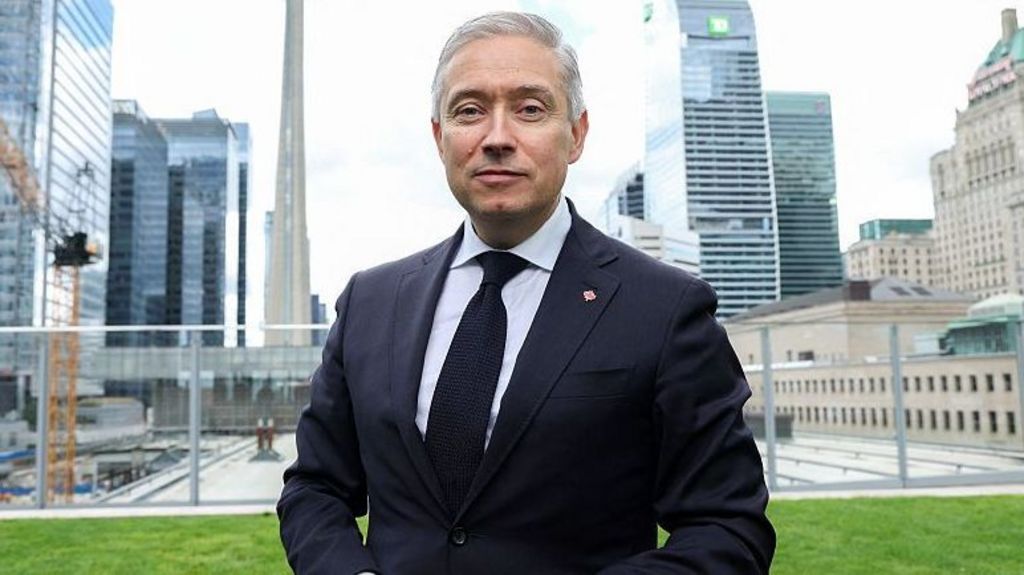
In a shifting global trade landscape marked by growing transatlantic tensions, Canadian Finance Minister François-Philippe Champagne has publicly urged the United Kingdom to join an ambitious new economic alliance being forged between Canada and the European Union. Speaking in an interview with the BBC, Champagne framed the proposed bloc as a forward-thinking collaboration built for a dramatically changed global order, noting that shifting US policy has created an urgent need for like-minded nations to realign their economic relationships.
Champagne’s call follows a groundbreaking proposal from European Commission President Ursula von der Leyen, who recently announced the EU would open negotiations for unprecedented associate membership status for Canada. Shortly after von der Leyen tabled the plan, Canadian Prime Minister Mark Carney—former Governor of the Bank of England—traveled to Strasbourg to address the EU legislature, a trip Champagne described as a foundational step toward building the “alliance of the future.” Carney has long advocated for a coalition of middle powers to collaborate on driving inclusive economic growth, strengthening supply chain resilience, and advancing shared security priorities.
Champagne emphasized that the UK and Canada are natural partners for this project, bound by overlapping values and aligned global visions. “We are independent and sovereign, but we are stronger together,” he told the BBC. “Why don’t we team up?”
The push for a new Canada-EU-UK alignment comes as Canada remains mired in an escalating trade conflict with the United States, triggered by sweeping tariffs imposed by President Donald Trump after his return to the White House last year. Last month, high-stakes trade talks between Ottawa and Washington collapsed entirely, leading both sides to impose tit-for-tat retaliatory tariffs. Champagne defended Canada’s response, saying the country had no choice but to stand up for its domestic industries, workers, and economic sovereignty. Calling Canada’s countermeasures “measured, targeted and strategic… dollar-for-dollar, tariff-for-tariff,” he added that the country has no interest in further escalation and stands ready to re-engage with the US when conditions are right, while pledging full, long-term support for any industries impacted by the dispute.
Trump has not only lashed out at Canada, labeling the country a “terrible trading partner,” but has also threatened additional tariffs on the European Union if the associate membership plan goes forward, dismissing the initiative as “laughable” and claiming it is hostile to US economic interests.
Champagne argued that the trade dispute has actually created a golden opportunity for Canada to diversify its economic partnerships, a goal that is supported by the country’s strong underlying fiscal position that has bolstered its resilience through the conflict.
The proposal also adds new uncertainty to the UK’s post-Brexit positioning, already strained by recent shifts in US rhetoric on the Falkland Islands and Irish unity. While the UK secured a renegotiated trade deal with the US last June, Champagne’s overture opens a new path for closer alignment with Europe. Recent diplomatic moves underscore the accelerating negotiations: Carney met UK Prime Minister Andy Burnham in Liverpool during his trip to Brussels and Strasbourg last week, while Champagne joined UK Chancellor John Healey at a meeting of EU finance ministers in Dublin this Friday. Burnham is set to meet Trump for the first time this week on the sidelines of the UN General Assembly in New York.
Longer-term, the associate membership framework is being designed as a flexible structure for like-minded nations that do not seek full EU membership. Carney has already laid out key priorities for Canadian participation, including access to EU university exchange programs, scientific research collaborations, AI development initiatives, and joint defense funding projects, as well as expanded mobility for young Canadians and Europeans to study and live across the Atlantic. In return, Canada would position itself as a reliable supplier of critical minerals and natural gas to European markets, while seeking greater access to European advanced manufacturing and technology sectors. Discussions are already open to the possibility of other middle power nations joining the framework in the future, with Australia cited as an example of a potential future participant.
The push for closer ties also carries broader geopolitical undercurrents: last year, shortly after taking office, Carney invited King Charles to open the Canadian Parliament in Ottawa, a move widely interpreted as a rebuke to Trump’s repeated public suggestions that Canada could become part of the United States. To date, the formal details of the EU’s associate membership offer for Canada have not been finalized, with negotiations still in the early stages.