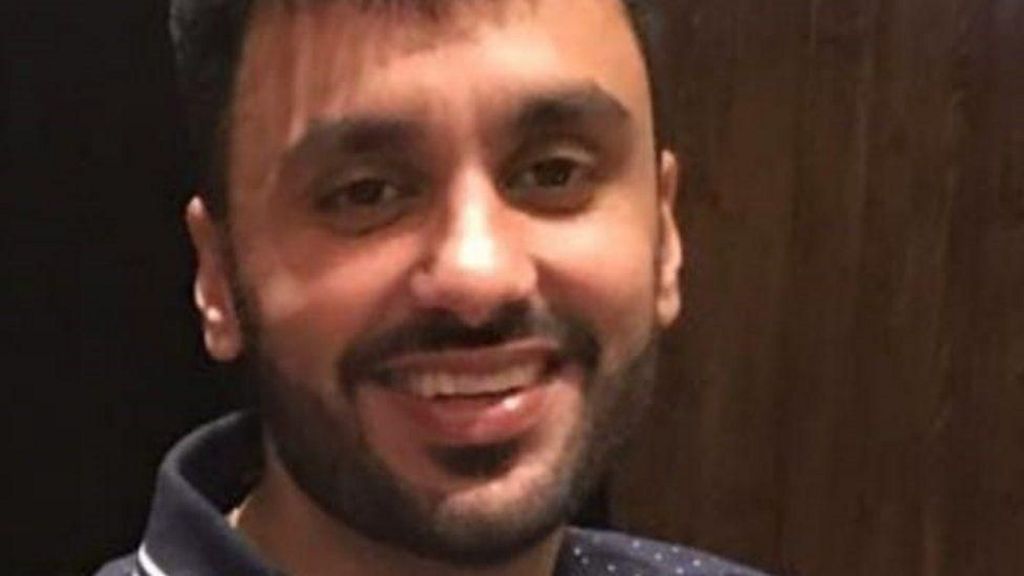
After nearly nine years of incarceration without a final conviction in India, Scottish Sikh activist Jagtar Singh Johal has secured a major legal victory with a bail grant from the Delhi High Court, bringing cautious relief to his family and supporters who have long campaigned for his freedom.
Johal, a 39-year-old native of Dumbarton, Scotland, was first taken into custody in India’s Punjab region in 2017, just weeks after he married there. Indian federal authorities have leveled serious terror-related charges against him, alleging he played a role in a string of targeted assassinations of religious and political figures. Last year, Johal was formally acquitted of charges that he provided financial backing to the Khalistan Liberation Force (KLF), an outlawed group that has carried out attacks in Punjab, but unresolved federal charges have kept him behind bars up to this ruling.
The terms of Johal’s bail come with significant restrictions: he is required to surrender his passport, deposit a personal bond of 500,000 Indian rupees (equivalent to roughly £3,907), is limited to access to just one personal phone, and is prohibited from making any media statements related to his ongoing case. For Johal’s family, who have spent years lobbying for his release, the ruling is a long-awaited breakthrough, though they stress it is only the first step toward bringing him home to Scotland.
“It is a really important milestone for Jagtar’s campaign,” Johal’s brother Gurpreet Singh Johal told BBC Radio Scotland Breakfast. “It has been a long haul and an expensive rollercoaster but the community and the public have kept me going to campaign to bring Jagtar home. This will be a huge relief for him.” Gurpreet added that the entire family has been overwhelmed by the news: “It is a momentous moment for the family, his wife has been crying since this morning. Everyone was joyful, my kids went to school saying they cannot wait to see their uncle coming home. It is just a first step, but it is a step in the right direction.”
Campaigners and supporters have long maintained that Johal’s detention is unjust. They argue he was targeted specifically for his online blogging documenting alleged human rights violations against the Sikh community in India, and that he was coerced into signing a false confession admitting involvement in the killings. A United Nations working group formally classified Johal’s detention as arbitrary back in 2022, and Johal himself has repeatedly alleged he was tortured while in custody. Indian authorities have consistently rejected the torture claims and have maintained that all judicial proceedings have followed full due process. The Johal family further assert that no credible evidence has ever been presented against Jagtar, noting that the case relies heavily on witness testimony that has since been recanted in open court.
Gurpreet, who has lobbied multiple UK governments for diplomatic intervention to secure his brother’s release, previously described a December 2025 meeting with then-UK Foreign Secretary Yvette Cooper as “disappointing.” A spokesperson for the UK Foreign, Commonwealth and Development Office has previously stated that British officials have repeatedly raised concerns over Johal’s prolonged detention with the Indian government at all appropriate diplomatic opportunities. Johal was denied bail in a 2024 application, making this week’s ruling a notable shift in his legal trajectory.
Political leaders in Scotland have welcomed the court’s decision. Scottish First Minister John Swinney called the bail grant a “significant and positive development,” adding: “I hope to see Mr Johal released from custody as soon as the necessary procedures are completed and continue to underline the importance of a fair, transparent and timely judicial process.”
Legal charities Redress and Reprieve, which represent Johal in the UK, have also welcomed the ruling but warn that major challenges remain. Dan Dolan, deputy executive director of Reprieve, pointed out that Johal still faces capital punishment on what the organization calls “trumped up charges.” “We must now watch closely to ensure this order is actually implemented and not obstructed in any way. The conditions attached are likely to be onerous,” Dolan said. Chris Esdaile, senior legal advisor at Redress, emphasized that the bail grant cannot reverse the harm Johal has already endured. “Granting bail can’t undo the intolerable suffering caused by nine years of arbitrary detention. The need for accountability for the allegations of torture and the deeply flawed proceedings against Jagtar remains urgent,” Esdaile said.