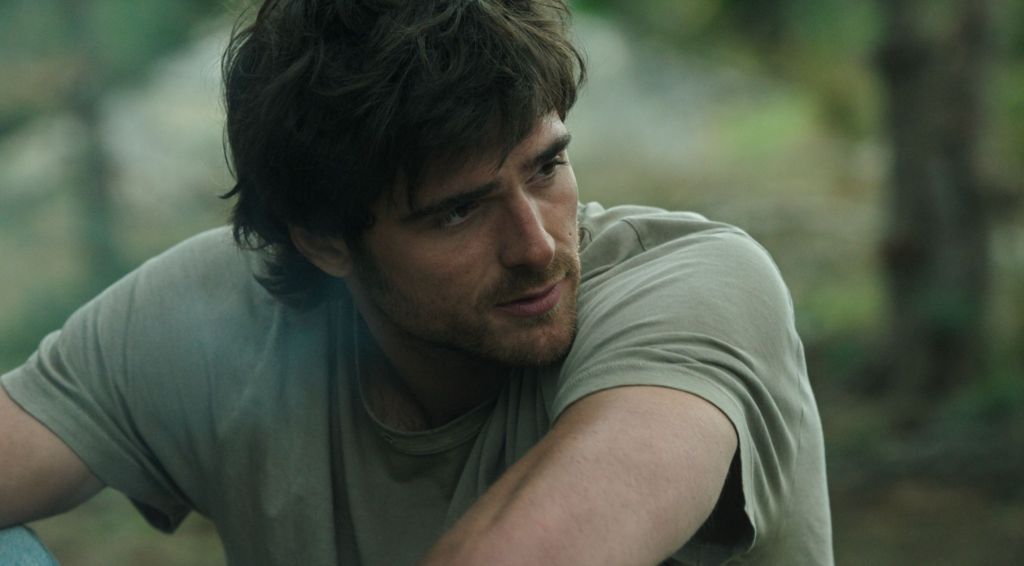
Legendary filmmaker Sir Ridley Scott is set to debut his haunting new post-apocalyptic sci-fi thriller *The Dog Stars* in UK cinemas on August 28, bringing Peter Heller’s 2012 bestselling novel of the same name to the big screen with a star-studded cast and sharp, timely themes that draw direct parallels to modern global crises. At the core of the story is a bleak 2030s landscape, where a devastating global flu pandemic has wiped out most of humanity, leaving behind only immune survivors in a fractured, anarchic society ravaged by environmental collapse. Leading the cast is 29-year-old Jacob Elordi, fresh off his first Oscar nomination for *Frankenstein*, who stars as Hig, a former mechanic turned civilian pilot who roams the empty skies over Colorado alongside his loyal German shepherd companion Jasper in search of signs of a better, more meaningful future.
In an interview with the BBC, Elordi explained that the film frames its apocalyptic setting not as a mere action backdrop, but as a mirror to examine the universal human condition. Even when everything familiar has been destroyed, he noted, the core impulse to seek more, hope for more, and crave connection remains unchanged. The cast also includes A-list talents Guy Pearce, Margaret Qualley and Josh Brolin, with Pearce playing Pops—a retired Navy SEAL and veteran survivor who takes in Hig after the younger pilot makes an emergency landing near Pops’ isolated homestead. For both Elordi and Pearce, the story’s themes of environmental collapse hit close to home: both actors grew up in Australia, a nation that has faced increasingly severe and widespread bushfires in recent years, with Pearce’s home state of Victoria suffering major damage just this year.
Pearce pointed out that the film’s desolate, scorched landscape shots echo real-world footage of climate-driven disaster, making the dystopian premise feel far from abstract. “All round the world now there’s just more and more effects of climate change so it’s pretty terrifying that a lot of those things are not far away,” he said. Both cast members also highlighted the film’s undercurrent of hope, rooted in the natural world’s ability to regenerate. Elordi noted that just a few years after the apocalyptic pandemic in the story, lush green forests, thick grass and wildflowers begin to regrow across the scarred landscape, mirroring how coastal ecosystems bounce back after devastating wildfires. “This provides a note of hope and an idea of redemption,” he explained.
Beyond climate, the story also pushes audiences to reflect on the everyday privileges many people take for granted, from access to groceries to the simple joy of sharing a meal with loved ones. Pearce, who previously collaborated with Scott on 2012’s *Prometheus*, noted that this message feels particularly pertinent even today, when billions of people around the world lack these basic comforts. Elordi added that his character’s quiet restlessness—his search for purpose even when he has secured survival—mirrors the unspoken dissatisfaction many people feel in modern, developed societies: “Everything is sweet for us… and we still go to bed and think ‘What else is there?’, ‘What am I missing?’”
Scott, the film’s director, shared that the project drew dual inspiration from the 2020 Covid-19 pandemic and the original novel’s roots, which was written in the aftermath of the 2008 global financial crisis. Combining these two periods of widespread chaos, he explained, created the perfect foundation for a story of societal breakdown: “If you put those two together you’ve got a great combination of chaos. If you have chaos, you get panic and anarchy and away you go.” Scott also drew from his own personal experience building the film’s post-apocalyptic world: born during World War II, he recalled childhood memories of sheltering from incendiary bombings, an experience that gave him first-hand insight into what it feels like to live through an existential crisis.
For Elordi, working with Scott—an industry pioneer who defined the modern sci-fi and thriller genres—was an unforgettable privilege. “I would have done any movie he sent through for me to make, it’s a privilege to get to work with a pioneer of our industry in my lifetime—it’s kind of unfathomable,” he said. Early critical reception of *The Dog Stars* has been mixed. The Guardian gave the film three stars, calling it “limp and lethargic” that only briefly sparks audience curiosity, while *Empire*’s two-star review criticized it for failing to deliver a convincing answer to its core question about the difference between surviving and thriving. *The Telegraph* also awarded three stars, noting that the film’s action sequences are more nonsensical than frightening. On the more positive side, *The Hollywood Reporter* described the film as “muted but never dull” and an “appealingly mellow watch” that rewards patient viewing.