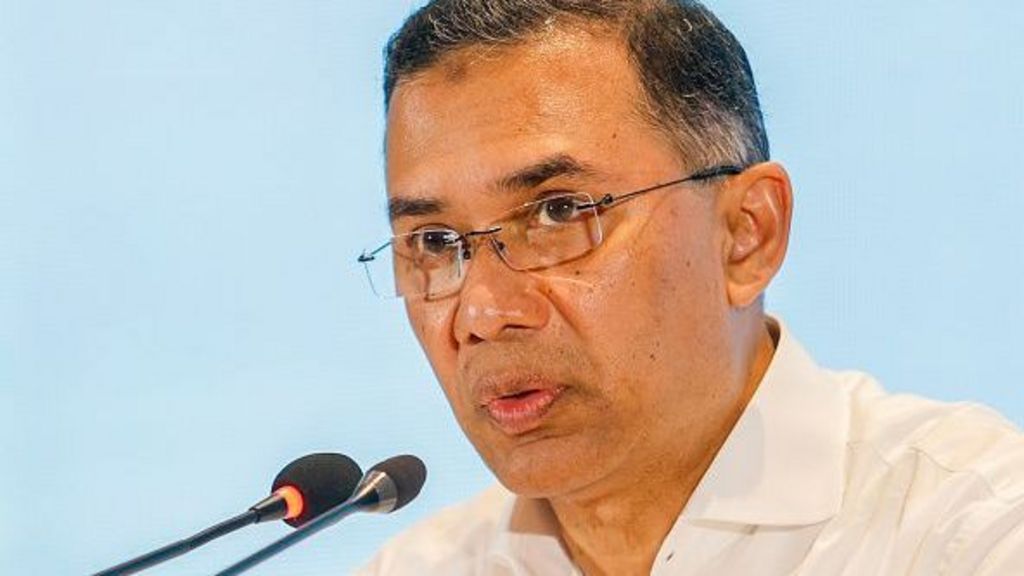
Diplomatic intrigue between South Asia’s two largest neighboring nations has spilled into public view, after an accidental internal email from India’s presidential palace exposed New Delhi’s urgent behind-the-scenes efforts to host Bangladesh’s newly inaugurated Prime Minister Tarique Rahman for a landmark bilateral reset.
The early August email, sent to officials ahead of a scheduled change of guard ceremony at Rashtrapati Bhavan, notified recipients that the traditional event would be canceled to make way for rehearsal activities ahead of a formal ceremonial welcome for Rahman. The catch? No official announcement of the visit had been made by either government. The email was swiftly withdrawn within hours, but it validated weeks of growing speculation over the long-rumored trip and laid bare New Delhi’s eagerness to lock in the first visit from Rahman since his Bangladesh Nationalist Party (BNP) won a landslide parliamentary election in February 2026.
The election marked the end of a decades-long political era for Bangladesh, coming on the heels of a mass 2024 popular uprising that ousted long-serving Prime Minister Sheikh Hasina, who now lives in exile in India after fleeing Dhaka amid the unrest. Hasina, who was sentenced to death in absentia by a Bangladeshi special tribunal on charges of ordering lethal force against anti-government protestors – charges she denies – has become the central sticking point in New Delhi’s push to reset strained bilateral ties.
After Hasina’s removal, an interim government led by Muhammad Yunus took power in Dhaka, and bilateral relations deteriorated sharply. Now, New Delhi views Rahman’s newly seated administration as a critical opening to repair the relationship, but Dhaka has made the extradition of Hasina a non-negotiable precondition for any high-level summit.
“We called for the creation of a propitious environment and are awaiting response from the Indian side regarding expediting extradition of Sheikh Hasina,” AAM Saleh, press secretary to the Bangladeshi prime minister, confirmed to media. For its part, India has stated only that the extradition request is under active review, a response that has left Dhaka unsatisfied. As of late August, Rahman has not yet confirmed his acceptance of India’s invitation, with Saleh noting that “no decision has yet been made on the visit.”
Despite the impasse over Hasina, New Delhi has pulled out all stops to court Rahman’s government. A formal invitation was extended within days of Rahman taking office, and India’s High Commissioner to Bangladesh Dinesh Trivedi has held multiple high-level discussions with Rahman and senior Bangladeshi officials in recent weeks. Trivedi has publicly stated that a visit from Rahman would see the new leader “accorded the highest honour” and given a “memorable welcome” – an unusually public show of enthusiasm for a visiting neighbor, a departure from India’s typical restrained diplomatic protocol.
Shyam Saran, a former Indian foreign secretary, told reporters that New Delhi has already gone to great lengths to accommodate Dhaka’s priorities beyond the extradition issue. “Except for actually handing over Hasina, they have gone pretty far in terms of reaching out to Dhaka,” Saran said, noting that India has moved quickly to meet Bangladesh’s immediate needs including expanded supplies of electricity and fuel, streamlined processing for medical visas, and the revival of multiple bilateral trade facilitation mechanisms. Still, Saran acknowledged that New Delhi is growing frustrated by the continued delay in securing the visit.
Geostrategic and economic stakes for both sides are extraordinarily high. India and Bangladesh share a 4,096-kilometer open border, and share deep cultural and linguistic ties that stretch back centuries. Bilateral trade between the two nations topped $12 billion in the last calendar year, with a substantial trade surplus in India’s favor. For India, Bangladesh is also critical to improving overland access to its geographically isolated northeastern states; during Hasina’s 15 years in office, the two governments expanded cross-border road, rail, and port connectivity that cut travel times to India’s northeast dramatically, and collaborated closely on counterinsurgency security operations, with Hasina’s government cracking down on insurgent groups that New Delhi said operated from Bangladeshi territory.
But India’s close alignment with Hasina became deeply unpopular in Bangladesh in her final years in power, with critics accusing New Delhi of turning a blind eye to growing concerns over democratic backsliding and human rights abuses under her administration. Hasina’s continued presence on Indian soil has kept these public tensions high, and tensions flared again earlier this month when Hasina delivered a virtual address to a press event hosted by the Foreign Correspondents’ Club of South Asia in New Delhi, where she vowed to return to Bangladesh in December and accused Rahman’s BNP government of political repression against her supporters.
Dhaka reacted with fury, stating it was “outraged” that Indian authorities allowed Hasina to speak publicly from Indian territory. India’s foreign ministry attempted to de-escalate the situation, stating it had “no role” in organizing the event and did not “endorse anything said at the forum, especially with regard to the duly constituted government of Bangladesh.” Even so, the incident derailed tentative progress on a visit: Dhaka University international relations professor Lailufar Yasmin told media that Rahman had been seriously considering accepting the invitation before Hasina’s address, which triggered a major public backlash in Bangladesh that forced the new government to pump the brakes. “It actually created a huge backlash in Bangladesh,” Yasmin said. “Questions were raised whether Indian authorities were sincere about a reset in bilateral relationship.”
For Rahman, agreeing to a visit to New Delhi while Hasina remains in exile in India carries significant domestic political risk, as he seeks to establish his government’s independent foreign policy footing. Beyond the Hasina issue, New Delhi is also facing a new geostrategic challenge: since Hasina’s ouster, Bangladesh has moved to rebuild long-dormant ties with India’s long-standing regional rival Pakistan, with the two nations exchanging high-level military delegations and publicly discussing plans to expand bilateral defense cooperation.
The issue has taken on added urgency this month with the announcement of the so-called Mecca Pact, a collective defense agreement modeled on NATO’s mutual defense principle signed by Saudi Arabia, Turkey, and Pakistan. While the details of the pact and membership obligations remain unclear, Bangladeshi junior foreign minister Humayun Kabir confirmed this week that Dhaka views potential participation positively. “If there is a security arrangement among Islamic nations in the Middle East, it is not unusual for us to consider participating,” Kabir said. “It is being viewed positively.” Saudi Arabia has also extended a separate bilateral invitation for Rahman to visit the kingdom, adding another option for the new Bangladeshi leader as he weighs his diplomatic priorities.
Yasmin noted that Bangladesh has good reason to move cautiously on joining the pact, arguing that “Bangladesh should be a bit cautious about entering into any defence pact. It’s not just about antagonizing India; Bangladesh needs to wait for a while to see which way it’s going and whether it will align with our interests.”
For New Delhi, the shifting diplomatic landscape makes clear that the unusually close bilateral relationship it enjoyed with Bangladesh during Hasina’s tenure can no longer be taken for granted. For Rahman’s government, meanwhile, there is strong domestic pressure to demonstrate that Bangladesh’s foreign policy is not overly reliant on its much larger neighbor. Even so, there are two upcoming high-profile opportunities for Rahman to finally make the trip: Yasmin has publicly urged Rahman to visit New Delhi ahead of the UN General Assembly meeting in New York in mid-September, and India will host a BRICS summit later that month where Bangladesh has been invited as a special guest. After weeks of behind-the-scenes diplomacy, public overtures, and one accidentally leaked email that exposed New Delhi’s hand, all eyes remain on Dhaka to see if Rahman will finally accept India’s invitation.