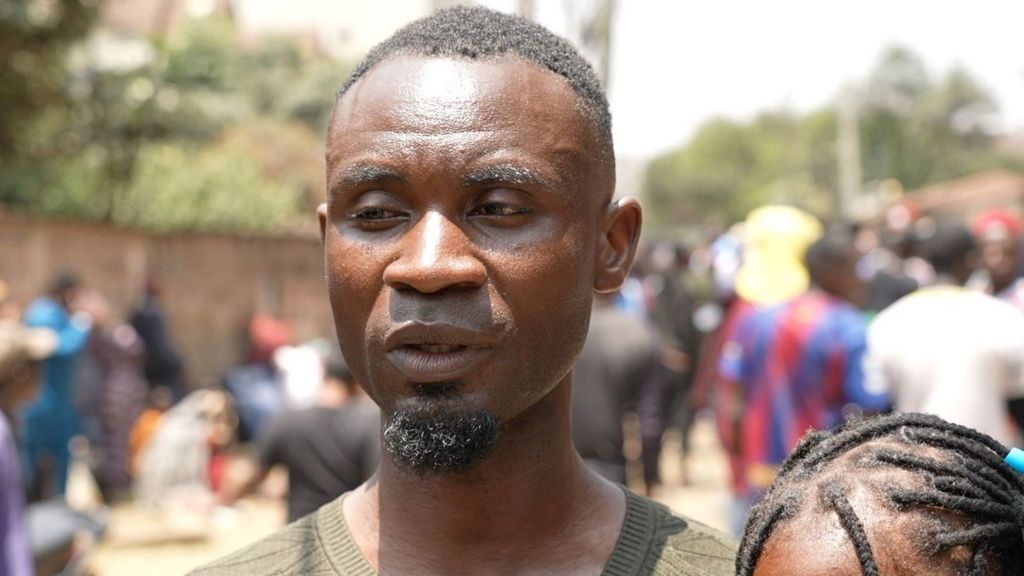
For nearly a decade, Ndaikech Ali navigated the chaotic streets of Nairobi as a tuk-tuk driver, building a life far from his native Burundi. For nine years, his biggest daily challenge was navigating the capital’s gridlocked traffic, and he always found Kenyans warm and welcoming. That all changed abruptly last week, when Kenyan President William Ruto announced a sweeping crackdown on foreign nationals operating small-scale businesses and informal trade, turning Ali’s long-time home into a hostile environment.
Ali is one of hundreds of regional migrants who have been caught up in the fallout of Ruto’s announcement, delivered to a crowd of Kenyan traders at State House. The directive came alongside pending parliamentary legislation that would bar foreign citizens from engaging in petty trade and require businesses to source specific materials locally. Ruto gave all foreign small business owners until September 7 to close their operations, arguing that low-income, informal jobs should be reserved exclusively for Kenyan citizens.
Speaking to the BBC from the Burundian embassy in Nairobi, where dozens of foreign migrants have queued this week to obtain exit documentation, Ali described a sudden shift in public sentiment. “Now they have turned against us,” he said. “The threats are many… even from children. It’s a like a dog has been set loose upon us. We have been bitten.” For Ali and other undocumented migrants, the announcement triggered immediate panic: many Kenyans interpreted the president’s words as a blanket signal that all foreign nationals were no longer welcome in the country, regardless of their legal status.
“We face harassment and can’t work,” Ali explained. “If our work is stopped, we lose the income that enables us to pay rent and buy food. When those jobs are taken away, the only option left is to return home.” Hundreds of foreign migrants have already rushed to Kenya’s border crossings to exit, with multiple reports of stranded travelers who lack the documentation or funds to complete their journey. The crackdown has also torn mixed-nationality families apart.
Prosper, a Burundian man who has lived in Kenya since 2019 and shares a young child with a Kenyan partner, told the BBC he faces an impossible choice if forced to leave. “When I heard the announcement, it was very painful because when I go, I’m forced to leave my family… and I love my family,” he said. In Nairobi’s low-income Majengo neighborhood, Kenyan resident Grace Wamaitha is already reeling from the departure of her Burundian husband, who left the day after Ruto’s September 3 directive. Left to support five children alone, she has taken on extra work washing clothes to make ends meet, and is desperate for his return. “Now he’s gone, who will help me pay school fees? I don’t know what to do. Let them come back,” she said.
Regional migrants have long formed a core part of Kenya’s informal economy, working as barbers, construction laborers, motorcycle taxi drivers, street vendors, and small retail sellers across Nairobi and other major urban centers. Most left their home countries to escape conflict or economic collapse, while others moved to Kenya in search of better livelihood opportunities. As members of the East African Community (EAC), a regional bloc of eight nations including Kenya and Burundi, citizens are guaranteed relatively free movement across borders – but formal employment and long-term residency still require official work permits. Under Kenyan law, even refugees have the legal right to work and operate small businesses, provided they obtain the correct documentation.
Filmon Eyob, a coordinator with Nairobi’s Eritrean community, told the BBC he shares widespread concerns that the crackdown will be used as a pretext to harass all foreign residents, regardless of their documentation. While many Kenyans have remained supportive of migrant communities, Eyob said a number of Eritrean and Ethiopian small business owners have already closed their shops and stayed at home over the past week as a precaution.
The president’s announcement quickly escalated into a diplomatic dispute, with Burundi’s foreign affairs minister warning that anti-Burundian hate speech could trigger reciprocal measures against Kenyan citizens living in Burundi. Kenyan authorities have struggled to contain the growing backlash, and this week senior foreign affairs official Korir Sing’Oei visited the Burundian embassy in Nairobi to apologize to gathered migrants and guarantee them protection from targeted violence.
Critics across political and civil society circles have labeled Ruto’s announcement a populist political gesture calculated to stoke nationalist sentiment ahead of next year’s presidential re-election, warning that the poorly worded directive has already fanned dangerous xenophobic sentiment across the country. The Kenyan government has repeatedly denied these accusations, and has since issued a series of clarifying statements to walk back the initial hardline order. Under the updated guidance, undocumented foreign small business owners have been given a 90-day amnesty window to register their operations and comply with Kenyan labor and immigration laws. All migrants undergoing registration will be considered legal residents during the processing period.
Still, observers and affected migrants argue the crisis could have been avoided entirely with clearer, more thoughtful communication from the presidency. Academic Hesbon Owilla told the BBC that Ruto’s uncompromising language was always likely to be misinterpreted, particularly by undocumented migrants who already lived in fear of immigration enforcement. While Owilla noted that the proposed policy of reserving some informal jobs for Kenyans is aligned with global migration norms and reasonable domestic policy, he said the president’s delivery was deeply problematic. “For those not in the audience, people interpreted the president’s words as saying: ‘We are kicking these guys out,’” Owilla explained.
The crackdown on small foreign-owned businesses is not the only controversial economic move Ruto has made in recent days. Just one day after his announcement targeting migrant traders, the president ordered India’s Tata Chemicals to cease operations and exit Kenya, accusing the firm of failing to deliver sufficient economic benefits to the local Maasai community in Kajiado County. Tata has operated a soda ash mining concession at Lake Magadi, a vast saline soda lake in southern Kenya famous for its flocks of pink flamingos, since 1911. The original concession was established under British colonial rule, and has remained largely unchanged despite decades of disputes over land and resource rights between the local community, successive Kenyan governments, and the company and its predecessors.
Economist Odhiambo Ramogi argues that the current policy restricting foreign nationals from small-scale businesses is far too broad, and requires significant refinement to avoid long-term damage to Kenya’s economy. Ramogi pointed out that Kenya hosts hundreds of thousands of refugees and regional migrants, mostly from EAC member states, in addition to attracting billions in foreign investment from across the globe. He argued that Ruto’s stated goal of protecting jobs for Kenyans does not explain the scope and tone of the announcement.
Ramogi warned that Kenya stands to lose far more than it gains from targeting neighboring countries’ citizens. Kenya exported $56 million worth of goods to Burundi alone last year, he noted, and maintaining open trade and labor markets supports faster economic growth through healthy competition. “If you got $56m out of a country, why are you worried about a hawker who’s just trying to make, say, $200 in a month? It absolutely makes no sense what the president has done,” Ramogi said.
The president’s remarks have already drawn widespread pushback from Kenyan civil society groups and ordinary citizens, many of whom have spoken out in support of migrant communities. Facing growing public backlash, Ruto’s office has issued a new statement seeking to reassure both domestic and international audiences. “Kenya will remain an open, secure and welcoming country, protecting opportunities for its citizens, safeguarding the rights of all persons lawfully within its borders,” the statement from Ruto’s spokesman said. “Kenya’s commitment to the East African Community of the African continent remains firm.”
For mixed-nationality Kenyan families, the damage of the initial announcement has already been done. Lima Kabura, a Nairobi resident whose husband is Tanzanian, said Ruto acted far too hastily, and should have first targeted only undocumented migrants rather than issuing a blanket threat to all foreign small business owners. “When they are forced out, I’m left with no work, no business and no husband,” she said.