A controversy surrounding a London real estate event marketing properties in illegal Israeli settlements has prompted formal regulatory intervention from the UK’s Charity Commission, resulting in new guidance for a major Jewish charitable trust and a reopened compliance review of the synagogue that hosted the gathering. The entire case stems from a formal complaint submitted by the International Centre of Justice for Palestinians (ICJP), an advocacy group that supports Palestinian legal rights in territorial disputes.
The dispute began when the Great Israeli Real Estate Event was hosted at the Edgware United Synagogue, a London-based registered charity. Ahead of the gathering, an independent investigation by Middle East Eye (MEE) uncovered clear links between multiple participating firms and illegal settlement development in the occupied West Bank and East Jerusalem—territory universally recognized as occupied under international law. Among the confirmed participants were Harey Zahav, a developer that advertises homes in the illegal Negohot settlement in the southern Hebron Hills; the Meshulam Levinstein Group, which has constructed both residential and commercial projects in illegal settlements across the West Bank and East Jerusalem, including the Homat Shmuel settlement neighborhood; and Tivuch Shelly, a real estate agency that openly lists properties for sale in the Ma’ale Adunim West Bank settlement.
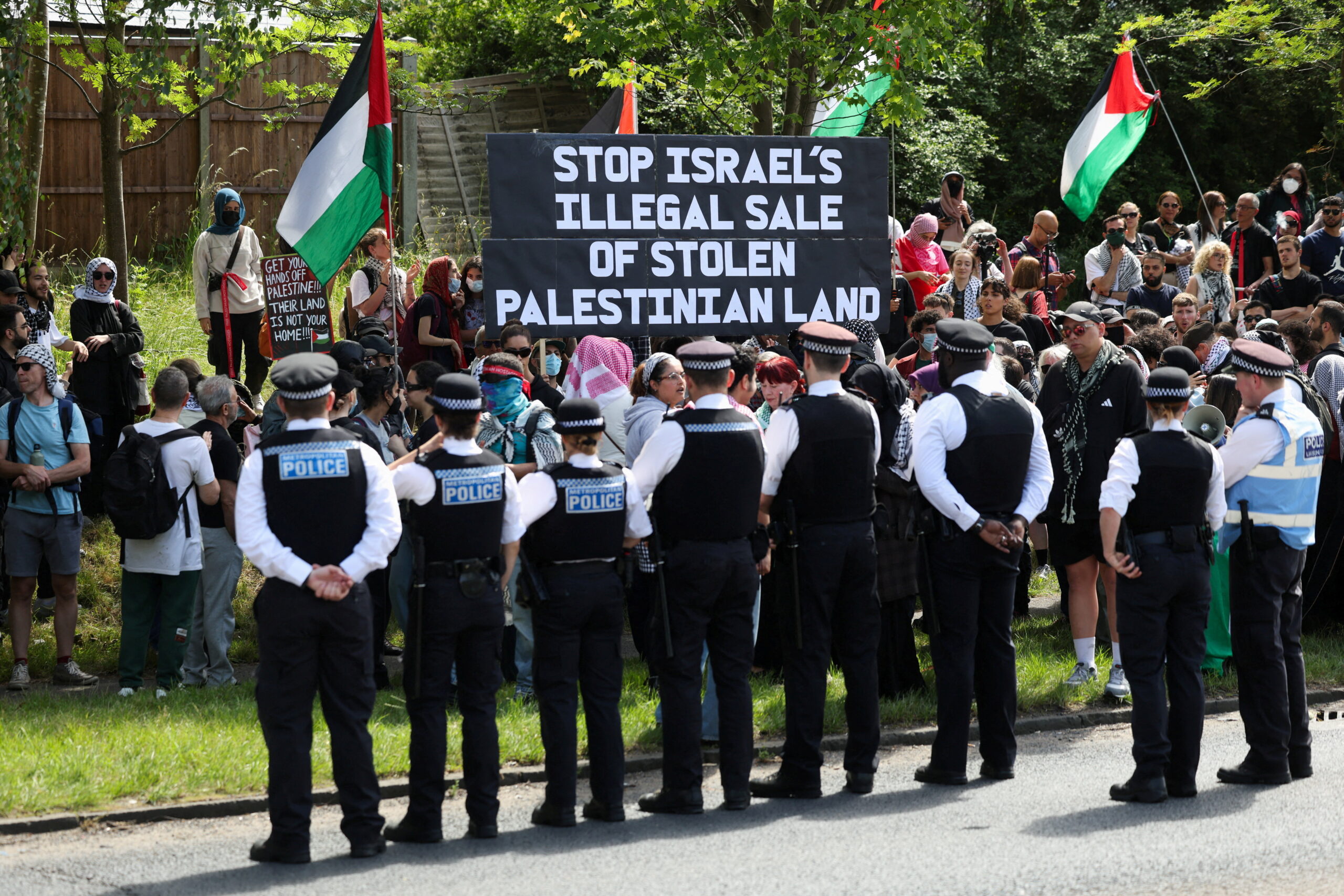
Following the MEE investigation, activists held a public protest outside the synagogue to oppose the event, arguing that marketing properties in illegal settlements constitutes material support for Israel’s unlawful occupation. In response, the Board of Deputies of British Jews (BDBJ), a prominent Jewish community body, dismissed the protest as baseless, claiming event organizers had assured the group no illegal settlement properties would be promoted. BDBJ further characterized the demonstration as an attempt to harass and intimidate the local Jewish community. However, after the event concluded, organizers themselves issued an apology for including multiple illegal settlement properties in the event’s official brochure, directly confirming the protesters’ core concerns.
The ICJP filed its formal complaint against the Board of Deputies Charitable Foundation—the registered charity that funds and carries out BDBJ’s activities—arguing that BDBJ had failed to retract or correct its misleading public statements after evidence confirming the protesters’ claims emerged. The complaint emphasized that BDBJ’s false framing misrepresented a targeted protest against unlawful settlement activity as an attack on a religious institution and the broader Jewish community, risking erosion of public trust and distortion of the facts of the case.
In its response to the complaint, the Charity Commission acknowledged that the contested public statements were formally issued by BDBJ’s corporate entity, not the charitable foundation itself. Even so, the regulator confirmed it would issue formal guidance to the foundation’s trustees under Section 15(2) of the UK’s 2011 Charities Act, reminding trustees of the inherent risks when a registered charity “is, or perceived to be, closely associated with a company, particularly in relation to public statements and communications.” The Commission will also retain all information submitted by the ICJP for consideration in any future regulatory interactions with the charity.
Separately, the regulator opened a review of its previously closed compliance case involving Edgware United Synagogue for hosting the event. The Commission stated it shares widespread concerns that registered charities being linked to support for illegal Israeli settlements risks damaging public trust in the charitable sector as a whole. It also clarified that charity-owned property must not be misused for unlawful or controversial activity that violates public expectations. The regulator’s initial investigation found that despite synagogue leadership having pre-existing concerns about the event and a formal organizational policy prohibiting it from being hosted, trustees still allowed the gathering to proceed on site and failed to implement adequate checks to ensure booking terms were honored. The Commission noted it may escalate regulatory action if further concerns about the synagogue charity arise.
ICJP legal researcher Shaima Dallali emphasized the broader significance of the case, noting that illegal settlement marketing in the UK directly contributes to the displacement of Palestinians and underpins the economic infrastructure of Israel’s decades-long unlawful occupation. She added that the protest was challenging activity that the UK government itself has already moved to restrict, and called on BDBJ to issue a formal correction to its earlier public statements.
In line with longstanding UK policy, a Foreign Office spokesperson reaffirmed to MEE that Israeli settlements are illegal under international law and remain a core barrier to lasting two-state peace. The spokesperson also noted that updated government guidance issued in June 2024 explicitly warns British citizens and businesses against engaging in any economic or financial activity connected to illegal Israeli settlements.