For the first time in its recorded public health history, Kenya is confronting an unprecedented Ebola outbreak – a crisis that neighboring Uganda and the Democratic Republic of Congo have decades of experience managing. To date, nine confirmed cases have been logged, all linked back to the index patient: a Kenyan businessman who traveled out of an Ebola-affected zone in eastern DR Congo, transited two other countries, and died two weeks after crossing into Kenya. Among the new infections are four of the index patient’s relatives, three frontline healthcare workers, and one hospital cleaner.
Growing public and expert anxiety over potential wider community spread has persisted, even as Kenyan public health officials work continuously to reassure residents that the outbreak remains contained. At a regional level, the ongoing DR Congo Ebola outbreak – the second deadliest on record, with more than 9,500 confirmed cases and over 4,000 deaths since it was declared in May – creates a persistent cross-border risk of new imported cases for Kenya, which acts as a major regional transport and trade hub. The current outbreak is caused by the rare Bundibugyo Ebola species, for which no widely approved vaccine or targeted treatment exists, though clinical trials for new countermeasures are currently ongoing.
From the moment the first case was confirmed, Kenyans have questioned why the index patient was able to travel unimpeded through multiple countries after spending time in eastern DR Congo’s high-risk Ebola zone before his infection was detected. Kenya’s national doctors’ union, the Kenya Medical Practitioners and Dentists Union (KMPDU), has raised alarms over systemic lapses in screening at key border crossings with Uganda and Tanzania, as well as at Nairobi’s Jomo Kenyatta International Airport. Union representative Dennis Miskellah confirmed that border and port health facilities are severely understaffed, leaving critical gaps in infection control.
In spite of these concerns, senior health officials have emphasized steady progress in containing the outbreak. “All eight currently active patients are showing improvement and responding well to care,” Kenya’s Health Director-General Patrick Amoth stated Tuesday, in an effort to calm public panic. Immediately after the first case was announced, authorities rolled out enhanced cross-border screening measures for all travelers arriving from 10 high-risk African nations: DR Congo, Uganda, Tanzania, Rwanda, Burundi, Angola, Zambia, Ethiopia, South Sudan and the Central African Republic. Travelers from these countries must now complete a digital surveillance form before boarding any flight to Kenya and present a scannable QR code to port health officials upon arrival, with all incoming aircraft also subject to enhanced public health inspections.
Within Kenya’s borders, the government has launched a nationwide public awareness campaign to educate residents on Ebola symptoms and prevention, urging people to immediately report suspected cases and seek prompt hospital care. Core hygiene guidance, including frequent handwashing and avoiding close contact with symptomatic individuals, has been widely distributed. The government has also designated dedicated treatment and isolation facilities across all counties, completed training for nearly 5,000 national and local healthcare workers in Ebola clinical management and infection control, and opened a specialized testing laboratory at Kenyatta National Hospital’s Infectious Disease Unit to prevent cross-contamination of general lab samples.
Contact tracing efforts have already reached 99% of people known to have been exposed to the index patient, with 134 of 135 identified contacts currently in supervised quarantine. Public health officials from the International Rescue Committee (IRC), which has partnered with both Kenyan and Congolese authorities on outbreak response, note that all confirmed infections to date are directly linked to the index patient – a clear indicator that early containment measures are working effectively. Kenya is also collaborating with global and regional health bodies including the Africa Centres for Disease Control and Prevention and the World Health Organization (WHO) to scale up surveillance, public outreach, and community engagement. A free 24/7 toll-free emergency hotline has been activated to allow residents to report suspected symptoms.
“None of the traced contacts have developed symptoms before entering quarantine, so the risk of secondary community spread is extremely minimal, effectively non-existent,” Amoth affirmed. Ebola, which spreads through direct contact with infected bodily fluids such as blood or vomit, has an incubation period ranging from 2 to 21 days, meaning exposed individuals can remain asymptomatic for weeks after infection.
In addition to training and infrastructure upgrades, the Kenyan Ministry of Health has partnered with the WHO to produce public health materials that explicitly address the danger of stigma surrounding the outbreak. Posters distributed across the country carry the message: “Stop stigma, choose support. Stigma can discourage people from reporting symptoms or cooperating with response teams.” Authorities have also called on Kenyans to avoid discriminating against contacts of confirmed cases. The government has additionally procured stockpiles of personal protective equipment (PPE) for frontline facilities.
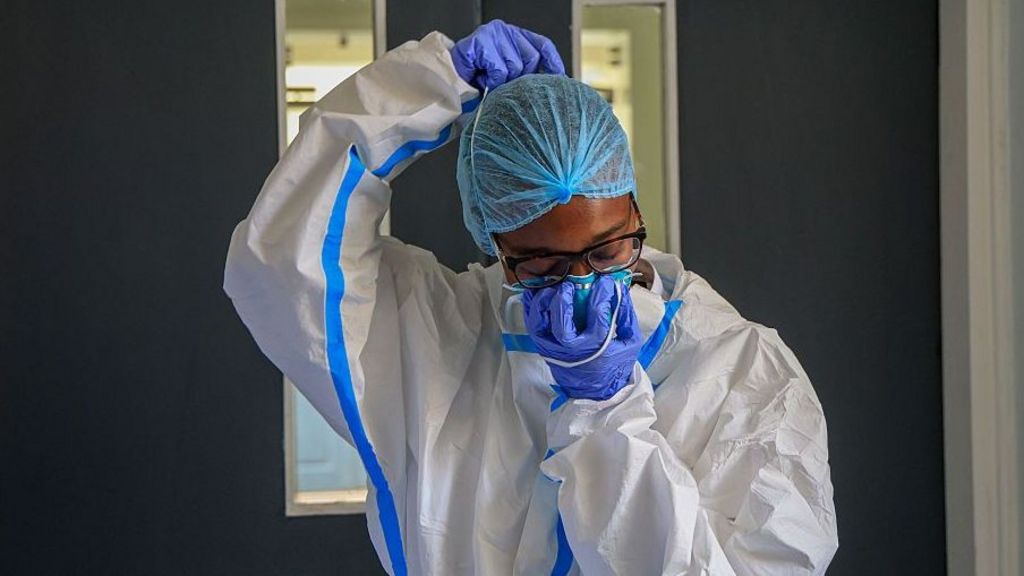
However, KMPDU has pushed back on the government’s claims of adequate preparedness, pointing to the infection of three healthcare workers and one hospital cleaner as evidence of unaddressed gaps in worker protection. Frontline health staff face inherently higher risk of infection, as they regularly come into contact with infected patients’ bodily fluids during care. “Protective equipment must be distributed to all hospitals to ensure full worker protection, especially in cases where symptomatic patients do not disclose recent travel to high-risk Ebola zones,” Miskellah told the BBC. He also called for expanded public health education to reduce stigma, so that people with potential exposure do not hide their symptoms. The IRC has additionally called for sustained international funding to support contact tracing, border screening, and ongoing frontline worker training in Kenya.
To date, the Kenyan government has rejected calls for national lockdowns, internal travel restrictions, or bans on public gatherings and trade, and the country remains open to international visitors. No nation has implemented a full travel ban on Kenya, though the U.S. has issued an advisory urging its citizens to reconsider non-essential travel to the country over Ebola concerns. The UK has issued a health alert warning British travelers that they will face enhanced screening upon entry to Kenya, while Canada has advised its citizens returning from Kenya to monitor their health for 21 days after arrival. Regional neighbors have also activated their own precautionary measures: one contact of the index patient is currently quarantined in Somalia, with samples sent to Nairobi for testing, while Somalia, Ethiopia, Tanzania, and Uganda have all tightened border surveillance and screening for incoming travelers. Uganda, which was declared Ebola-free by the WHO after a small 2022 outbreak, continues to maintain strong border monitoring to prevent reintroduction of the virus.
Public health and economic analysts have flagged potential risks to Kenya’s key international tourism sector if the outbreak spreads to the general community, but so far there is no empirical evidence of a major drop in travel demand. Cross-border population movement between eastern DR Congo and Kenya remains frequent: a 2022 report from the Center for Strategic and International Studies estimates that roughly 2,500 Kenyans live in eastern DR Congo, while more than 10,000 Congolese reside in Nairobi alone. Kenya’s embassy in Kinshasa has long urged Kenyans living in the high-risk region to register with the mission to facilitate emergency support if needed.