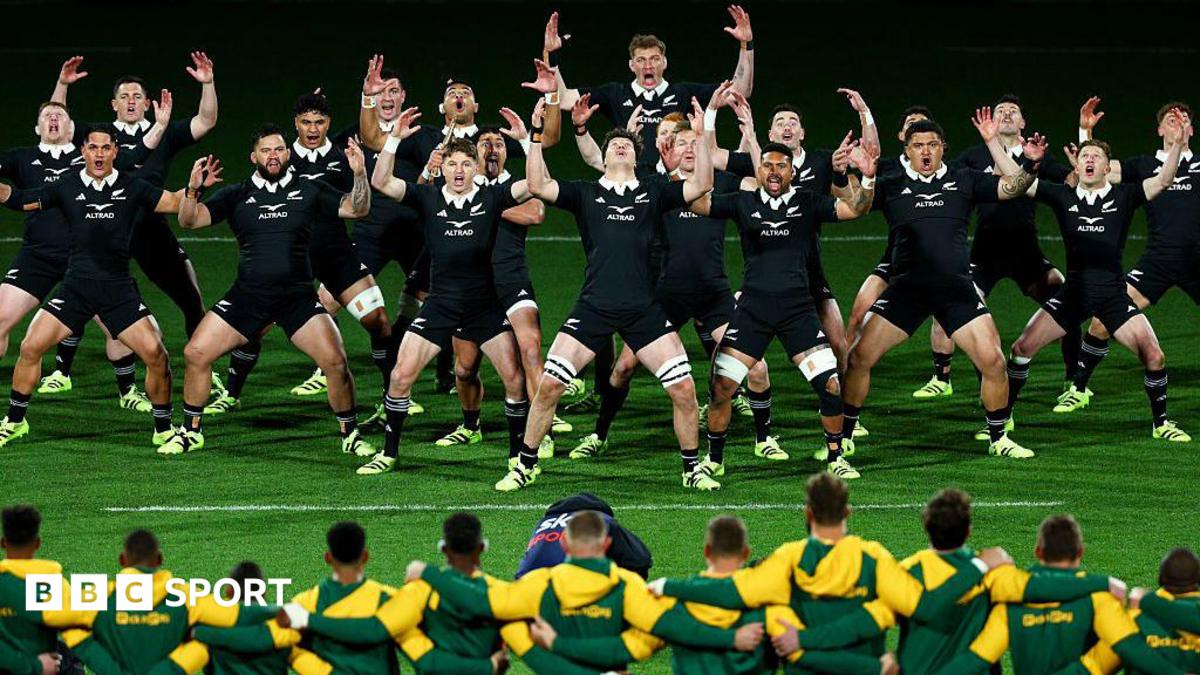
It has been three years since South Africa edged out New Zealand by a single point to claim back-to-back Rugby World Cup titles, cementing their place as the first nation ever to lift the Webb Ellis Cup four times. Today, that narrow 2023 final margin sets the stage for one of the most anticipated showings in modern international rugby: a historic four-yearly multi-Test tour between the sport’s two most iconic and successful global powerhouses.
Rassie Erasmus’ Springboks enter this series as the undisputed dominant force in men’s international rugby, sitting atop the world rankings and having claimed consecutive Rugby Championship titles. For decades, that mantle belonged to the All Blacks, who won back-to-back World Cups of their own in 2011 and 2015. While the pecking order has shifted in recent years, both sides remain the most commercially marketable teams in the sport, and their head-to-head clashes draw unmatched global viewership.
Against this backdrop, the historic tour is far more than just a series of exhibition matches. To accommodate the All Blacks’ trip to South Africa, 2026’s edition of the Rugby Championship — the southern hemisphere’s flagship international rugby competition — has been called off entirely, leaving Australia and Argentina to arrange independent fixtures for the year. After the three core Test matches in South Africa, the two rivals will cap the tour with a historic first meeting on American soil in Baltimore, a match that hints at long-term plans to grow the sport ahead of the 2031 Rugby World Cup hosted by the United States. This quadrennial tour structure will become a permanent feature going forward, with New Zealand set to host the Springboks for the next iteration in 2030.
The core driver behind this new tour venture is straightforward: financial sustainability for New Zealand rugby, which has faced mounting economic pressures in recent years. Multiple reports confirm that both rugby unions aim to build a commercial product that can rival the earning power of the British and Irish Lions tours, with projected profits expected to reach millions of dollars for both sides. To put that earning potential in context, the 2025 British and Irish Lions tour of Australia generated $35 million in pure profit for Rugby Australia, enough to erase the governing body’s entire $17.9 million debt.
For New Zealand rugby, the need for new revenue streams is particularly urgent. A 2025 Deloitte report obtained by New Zealand outlet Stuff paints a grim picture of the current Super Rugby Pacific model, noting that the competition is “under strain economically, commercially, and in delivering on its high performance purpose.” Across the past six years, all five New Zealand Super Rugby provinces have operated at a cumulative loss; 2023 champions the Hurricanes posted a $1.4 million loss that year, followed by an even larger $2 million deficit in 2025. The competition, which now includes teams from New Zealand, Australia and Fiji, lost South African sides when the Springboks opted to join the European-based United Rugby Championship in 2021, exacerbating existing financial strains.
Compounding these challenges is the ongoing exodus of top All Blacks talent to more lucrative club contracts in Japan and Europe. Three starters from the 2023 World Cup final — Richie Mo’unga, Jordie Barrett and Rieko Ioane — have all recently taken up deals outside New Zealand. While the All Blacks maintain a strict selection policy requiring players to compete domestically to earn a national call-up, the governing body cannot match the inflated wages on offer overseas, putting constant pressure on retention.
On the pitch, the tour serves as the first major test for new All Blacks head coach Dave Rennie, who took over the role earlier this year after Scott Robertson’s departure in January. Rennie’s side has impressed in pre-tour warm-ups, racking up three comfortable wins over weakened South African franchise sides: a 38-21 victory over the Stormers on 7 August, a dominant 54-0 shutout of the Sharks four days later, and a 50-19 win over the Bulls on 15 August that leaves the All Blacks unbeaten on tour heading into the first official Test. These warm-up results, however, come with a large asterisk, as the franchise fields fielded multiple reserve players. The real test of New Zealand’s form will come on Saturday, when the first Test kicks off at Johannesburg’s Ellis Park.
History is not on the All Blacks’ side for away success in South Africa: the men in black have only won four Tests on South African soil since 2016, and their last away Test series victory came all the way back in 1996. Key All Blacks stars Will Jordan and Cam Roigard have yet to feature on tour due to minor fitness issues, but both are expected to be fit for selection for the opening Test. The Springboks, by contrast, enter the series in strong form, having held the world number one ranking since November 2024. Erasmus’ side earned comfortable wins over England, Scotland and Wales in July, followed by a victory over Argentina in Buenos Aires, and boasts unrivaled depth across the match day squad.
Beyond commercial and on-field goals, the tour also signals a potential shift in the structure of international rugby. Talks of a unified global rugby calendar have been ongoing for years, with a proposed launch targeted for 2024 that never materialized. The introduction of the Nations Championship was meant to be a stepping stone toward greater alignment, but a recent incident where France fielded a severely weakened side for a July tour of New Zealand after a lengthy club season highlighted just how difficult scheduling alignment remains. South Africa’s split decision to leave Super Rugby for the URC while continuing to compete in southern hemisphere Test rugby has added another layer of complexity to calendar negotiations.
For both sides, this series offers unbeatable high-stakes preparation ahead of the 2027 Rugby World Cup, and will almost certainly draw massive global attention from rugby and casual sports fans alike. The final match in Baltimore, on American soil ahead of the 2031 World Cup, makes clear the end goal: growing the global footprint of the sport while capitalizing on the massive appeal of rugby’s greatest rivalry. While Argentina and Australia, who face each other in a standalone series this year, face the risk of being sidelined further in the future, the commercial appeal of this new venture makes continued growth likely.
Full 2026 tour schedule:
– 7 August: Stormers 21-38 New Zealand (warm-up)
– 11 August: Sharks 0-54 New Zealand (warm-up)
– 15 August: Bulls 19-50 New Zealand (warm-up)
– 22 August: South Africa v New Zealand, Ellis Park, Johannesburg (16:10 BST, First Test)
– 25 August: Lions v All Blacks, Ellis Park, Johannesburg (18:00 BST, Unofficial Tour Match)
– 29 August: South Africa v New Zealand, DHL Stadium, Cape Town (16:10 BST, Second Test)
– 5 September: South Africa v New Zealand, FNB Stadium, Johannesburg (16:10 BST, Third Test)
– 12 September: South Africa v New Zealand, M&T Bank Stadium, Baltimore (22:00 BST, Historic American Test)