A rapidly unfolding crisis in the Persian Gulf’s strategic Strait of Hormuz has sent global shockwaves, after a series of escalatory moves from both the United States and Iran have pushed regional security and global energy supplies to the breaking point. What began with incendiary rhetoric from US President Donald Trump has now devolved into armed confrontation at sea and a complete breakdown of planned diplomatic negotiations, raising grave fears of a broader regional war.
On Sunday, Trump opened the week with an extreme public threat against Iran: if Tehran refused to sign a new US-brokered deal, he warned, “the whole country is going to get blown up.” Minutes later, conflicting claims emerged over a maritime confrontation in the Gulf of Oman. According to Trump’s account, US forces opened fire on an Iranian-flagged vessel, which he claimed ignored repeated warnings before being seized and disabled during operations to enforce a US naval blockade on Iranian ports. Iran’s account directly contradicts this narrative: state media affiliated with the Islamic Revolutionary Guard Corps (IRGC) says IRGC forces repelled US troops and forced them to retreat from Hormuz waters following the clash.
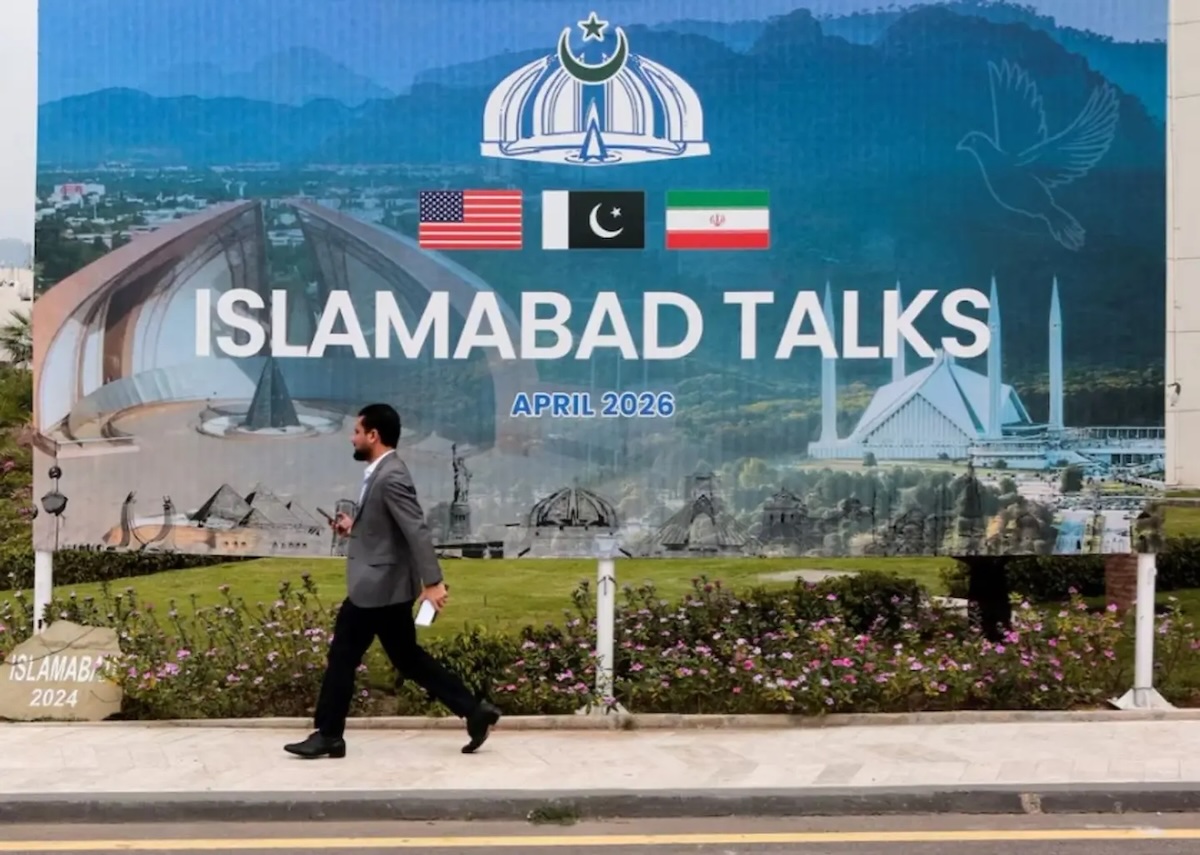
The maritime incident is the latest flashpoint in a crisis that erupted after Trump unilaterally announced plans for a new round of talks set to take place Monday in Islamabad, Pakistan, saying the US delegation would be led by Vice President JD Vance, senior advisor Jared Kushner, and Middle East envoy Steve Witkoff. Iran’s official government news agency IRNA swiftly refuted the announcement, calling the claim of planned talks “not true” and dismissing it as “a media game and part of the blame game to pressure Iran.”
Iran’s position has long been clear: it will not enter negotiations with the US while the naval blockade of its ports remains in place, a measure Tehran considers a direct violation of the temporary ceasefire agreed between the two nations earlier this month. When Trump confirmed the blockade would continue, Iran acted Saturday to close all shipping traffic through the Strait of Hormuz, just one day after reopening the route following a ceasefire between Lebanon and Israel.
An anonymous senior Iranian official familiar with Tehran’s internal decision-making told Drop Site News that the collapse of talks stems from what Iranian leaders see as Washington’s unworkable approach to diplomacy. “Washington’s excessive demands, unrealistic expectations, constant shifts in stance, repeated contradictions, and the ongoing naval blockade” have convinced Iran to pull back its negotiating team, the official explained. While Iran remains open to a future agreement that would secure its right to enrich uranium, deliver meaningful sanctions relief, and establish a long-term non-aggression pact, Trump’s erratic leadership and maximalist demands – including the full surrender of all Iranian enriched uranium – have destroyed any trust that he could be a reliable negotiating partner.
“Our assessment is that Trump effectively lacks both a coherent plan and the capacity to secure even a temporary agreement,” the official said, adding that Trump’s decisions are consistently shaped by daily Israeli security and political input. The official also noted that during the first round of Islamabad talks that produced the earlier two-week ceasefire, Iran explicitly warned the US delegation that public threats to destroy “Iranian civilization” would not be tolerated. Even before Sunday’s new threat, Iran had refused to commit to another round of talks.
Should Trump choose to continue military escalation rather than pursue good-faith diplomacy, the official warned, Iran will suspend all diplomatic channels indefinitely and prepare to impose far greater costs on US interests across the region. “Tehran is prepared for a long war,” the official added.
Tehran-based political analyst Mohammed Sani confirmed that Iran has used the two-week ceasefire to dramatically upgrade its military readiness. “The Americans have been bringing in more troops and equipment to prepare to attack, but the Iranians have also not been resting during these two weeks of ceasefire,” Sani told Drop Site News. “They have been preparing, repairing the underground missile cities, bringing in new air defenses, missiles, and drones. Iran is at a high standard of readiness right now. If there is another round of negotiations sometime later in the future, after another round of American attacks against Iran fail, the Iranian conditions for peace will be much tougher.”
Foreign policy experts say Trump’s reliance on coercive threats is self-defeating, pushing Iran further from the negotiating table even as the president claims he wants an exit from the conflict that has already triggered economic upheaval and dragged down his already low approval ratings. Trita Parsi, executive vice president of the Quincy Institute for Responsible Statecraft, noted that Trump has prioritized public optics of victory over tangible diplomatic progress. “Due to poor discipline, Trump ends up prioritizing the optics of victory over actually getting a deal,” Parsi said Sunday. “Instead of using deescalatory signals from Iran to get closer to a deal, he declares victory and seeks Iran’s humiliation, and by that, he undermines his own diplomacy.”
Global attention is now fixed on the Strait of Hormuz, one of the world’s most critical chokepoints for global energy supplies, with market and diplomatic observers bracing for further escalation as both sides maintain hardline positions.