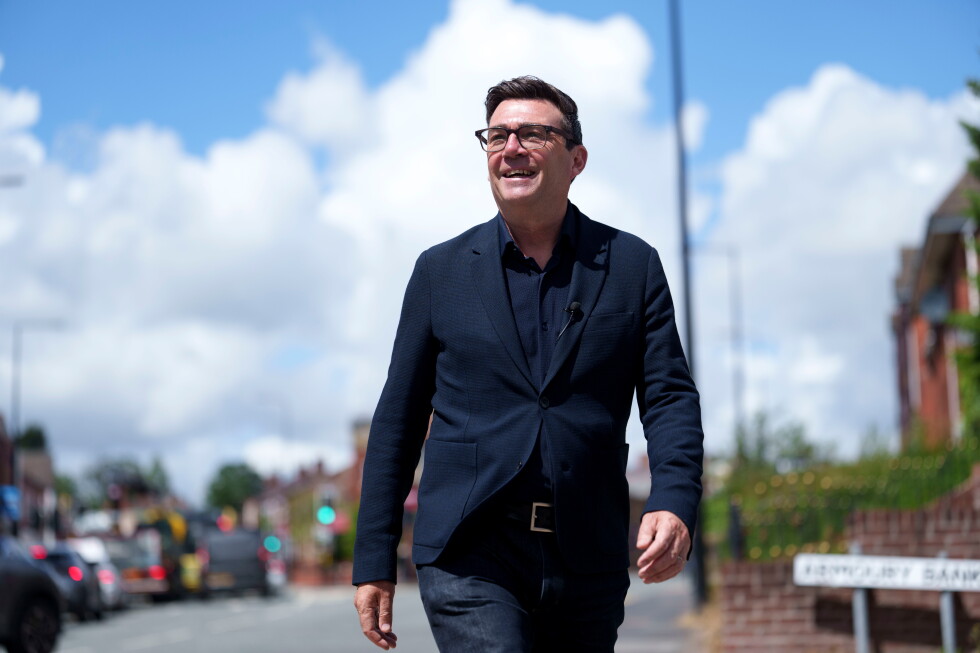
Deep in the former coal-mining belt of northwest England, 75,000 eligible voters in the Makerfield constituency are preparing to cast ballots that hold the potential to upend the entire trajectory of British national politics. Scheduled for June 18, this special House of Commons by-election is no ordinary midterm vacancy contest: it could elevate a new prime minister to power, deepen the political chaos roiling the nation’s ruling party, or even deliver both outcomes in one blow.
For decades, this working-class district has been an unshakable stronghold of the center-left Labour Party, holding Labour representation for 120 consecutive years. But this year, the race is anything but predictable, drawing global media attention rarely seen for a single parliamentary by-election. At the center of the contest is Andy Burnham, the wildly popular mayor of Greater Manchester, who has been dubbed the “King of the North” for his regional popularity and independent political brand. Burnham, who is running as Labour’s candidate, needs a parliamentary seat to mount a leadership challenge against embattled incumbent Prime Minister Keir Starmer—whose tenure has been marked by stumbling performance, sinking approval, and growing calls for his resignation from within Labour’s own ranks.
Starmer’s Labour government, which swept to power in July 2024, has failed to deliver on core campaign promises of economic growth, repaired public services, and relief from the country’s persistent cost-of-living crisis. A series of high-profile missteps—including the controversial appointment of scandal-linked Peter Mandelson as U.S. ambassador—have compounded the party’s woes. Last month’s abysmal local election results triggered open mutiny among Labour lawmakers, forcing cabinet minister Wes Streeting to resign to prepare for an impending leadership contest. A win for Burnham in Makerfield would clear his path to challenge Starmer, making a leadership change that would install him as Britain’s next prime minister almost a foregone conclusion, political analysts say.
Standing in Burnham’s way is Reform UK, the hard-right anti-immigration party led by veteran populist Nigel Farage. Last month, Farage’s party shocked the political establishment by taking 24 of 25 up-for-grabs local council seats in the Makerfield area, signaling a dramatic erosion of Labour’s longstanding hold on the region. Reform’s candidate, local plumber and sitting councilor Rob Kenyon, is framing the race as a rejection of a failing Labour establishment, tapping into deep voter frustration over the UK’s recent immigration surge. The contest comes as immigration has reemerged as the most polarizing issue in British politics, fueled by high annual net migration in recent years and fresh unrest following a stabbing attack in Belfast that sparked violent arson protests.
On the ground in Ashton-in-Makerfield, the constituency’s main town, many voters echo Reform’s narrative that record immigration has stretched public housing, healthcare, and other local services to breaking point, with working-class taxpayers bearing the cost. “Immigration’s too high, all the services are being put under pressure and Labour just keep inviting more and more people into the country and it’s the taxpayer who has to pay for them,” said retiree Phil Arrowsmith, one of a growing number of long-time Labour voters abandoning the party in this election. Long-time Makerfield resident Shirley Prior summed up the widespread disillusionment with the status quo: “I think they’re all a waste of time,” she said of the field of candidates, noting she abandoned her family’s generations-long Labour voting pattern years ago.
Burnham, who has served as Greater Manchester’s mayor since 2017, is leaning hard into his successful regional record to win over skeptical voters. Under his leadership, post-industrial central Manchester has experienced an economic boom, with new skyscrapers transforming once-blighted former factory sites. He won widespread praise for bringing the region’s fragmented public transport system under municipal control as the Bee Network, delivering cheaper, more reliable service for commuters. Though he served 15 years as a Labour MP and cabinet minister before entering regional office, he leans into his “outsider” brand, positioning himself as a leader who can deliver tangible change that London’s political establishment has failed to deliver. “What we’ve built in Greater Manchester needs to go national,” Burnham told reporters at a recent campaign stop. “I know what it is to turn places around.”
Burnham has acknowledged the deep anger driving support for Reform, calling the party’s rising local support a “cry for real change” that Labour cannot ignore. Even so, he faces a steep uphill battle to hold the seat, with even long-time Labour supporters admitting the unpopularity of Starmer’s national government will make the contest close. Retired teacher and Labour backer Michael Poultney noted that without Burnham’s personal local popularity, the party would struggle to hold the seat. “Keir Starmer has done reasonably well on the international stage, but the government are yet to be in control of the economy,” Poultney explained.
Burnham for his part has refused to take victory for granted, insisting he is focused on representing Makerfield constituents rather than his national leadership ambitions. “I am making no assumptions beyond the 18th of June,” he said, though he acknowledged the historic stakes of the contest: “this is a change by-election. I will take the fight for the changes I want to see in politics as far as I can take it.” With national leadership hanging in the balance, all eyes of British and global politics will be on this small corner of northwest England when polls open next week.