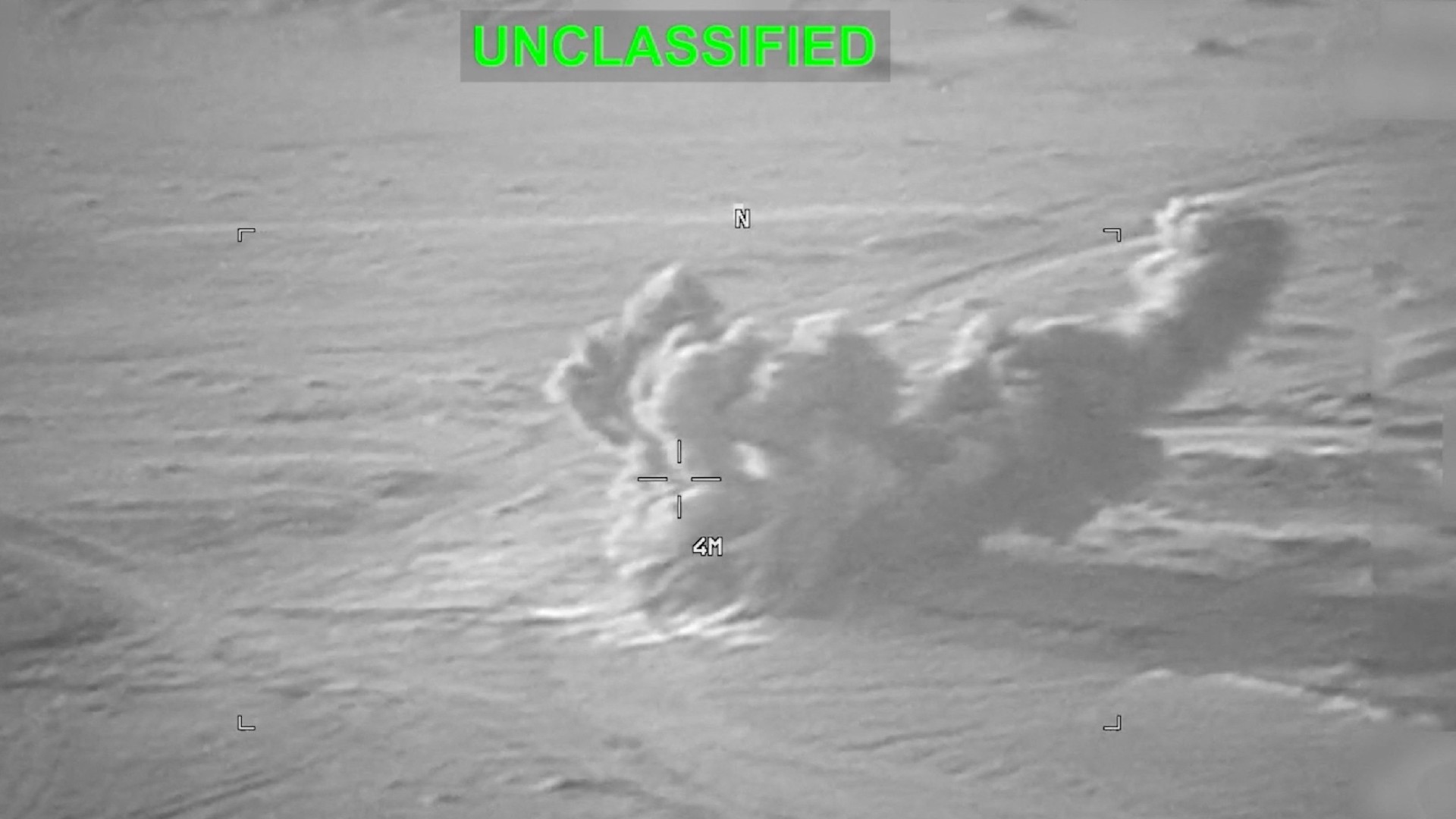
A dangerous cycle of retaliatory military strikes between the United States and Iran has plunged the Middle East into escalating tension, following the deaths of three American service members in attacks blamed on Iran earlier this month. This outbreak of open hostilities has disrupted critical global energy shipping through the Strait of Hormuz and pushed regional security to its most fragile point in years, even as behind-the-scenes diplomatic efforts continue to de-escalate the crisis.
The current spiral of violence began on July 17, when an Iranian drone and ballistic missile attack targeted two key US military installations in Jordan and northern Iraq. US officials confirmed that 25-year-old Lieutenant Tyler James Feehan from Hawaii, 19-year-old Private First Class Isabella Gonzales from Texas, and one additional American soldier were killed in the attacks, with dozens more service members wounded. In response, the US Central Command (Centcom) launched nine straight nights of airstrikes targeting Iranian military assets across Iran, marking one of the largest sustained US military campaigns on Iranian territory in modern history.
In the early hours of Monday, the US military detailed that its latest round of strikes hit a range of key Iranian military infrastructure: command centers, coastal surveillance outposts, air defense sites, missile and drone launch facilities, and military communications networks. US President Donald Trump told reporters that the “very hard” strikes were carried out to honor the fallen American troops, claiming “those who died were fighting so that Tehran cannot have a nuclear weapon.” Trump added that Iran’s military capacity has been left heavily damaged, saying “they’ve lost everything almost – militarily. They’ve got some missiles, some drones, some manufacturing ability, not much.”
Shortly after Centcom announced the latest strikes, Iranian state media reported widespread explosions across multiple Iranian cities, including the southern ports of Bandar Mahshahr, Bandar Imam Khomeini, Bushehr, and Chabahar, as well as the northwestern city of Tabriz. One civilian was killed and several others were wounded in strikes near Tabriz, according to Iran’s semi-official Mehr News Agency. Strikes also hit multiple locations near Bushehr, home to Iran’s primary operational civilian nuclear power plant, while an under-construction nuclear facility at Darkhovin in southwestern Iran was also hit in earlier strikes. Tehran has called on the International Atomic Energy Agency to condemn the attack on Darkhovin, with Iran’s Atomic Energy Organization denouncing the strike as a clear violation of international law.
Iranian officials have issued a fiery response to the US attacks, with Foreign Ministry spokesperson Esmaeil Baghaei stating that Iran’s leadership is “counting down the minutes to welcome” any US ground invasion. Baghaei also emphasized that the terms of the Pakistan-brokered interim deal signed between Washington and Tehran in June are “completely clear,” leaving “no excuse” for the US to violate the agreement. Despite the military escalation, Baghaei confirmed that diplomatic backchannels between the two sides remain active, with mediators continuing to exchange proposals to end the fighting.
In the wake of US strikes, Iran’s Islamic Revolutionary Guard Corps (IRGC) launched a wave of retaliatory attacks against US military assets and infrastructure across US-allied states in the region, including Jordan, Kuwait, Syria and Bahrain. The IRGC claimed that it targeted US aircraft at Aqaba airport in Jordan with ballistic missiles, inflicting severe damage on multiple planes, and also struck 20 US troop shelters at Jordan’s Muwaffaq Salti Air Base, claiming to have killed dozens of American personnel. Anonymous US officials confirmed that dozens of US troops have been wounded and multiple helicopters damaged in Iranian strikes in Jordan over the past week.
In Kuwait, the IRGC said it targeted US military facilities at Ali Al Salem Air Base, striking an aviation warehouse and a hangar housing US MQ-9 surveillance drones and setting multiple aircraft on fire. Kuwaiti officials reported that a civilian desalination plant was struck for the second consecutive day, condemning the attack as a deliberate strike on critical civilian infrastructure, and activated air defense systems across the country to intercept incoming projectiles. The IRGC also carried out a surprise strike on a US-allied command center at al-Tanf in southern Syria, saying the attack was revenge for recently killed IRGC soldiers in southeastern Iran. Air defense sirens also sounded in Bahrain’s capital Manama, with local state media confirming that air defense systems intercepted incoming Iranian attacks.
The escalating conflict has directly threatened the Strait of Hormuz, the world’s most critical energy chokepoint through which roughly 20% of global oil supplies pass daily. The IRGC has issued a stark warning that “not a single drop” of oil will be allowed to transit the strait if US attacks continue, and has already disrupted shipping in the region. The IRGC claimed that it disabled two “offending” oil tankers south of the strait that were attempting to transit the waterway under US coercion, while the UK Maritime Trade Operations reported an unexplained fire on a cargo ship just off the coast of Oman. Shipping data confirms that traffic through the strait has already dropped by 50% amid the violence, falling from eight transiting vessels on July 18 to just four on July 19. Global oil prices initially spiked sharply following the outbreak of hostilities, but fell back below $90 a barrel on Monday following confirmation of ongoing diplomatic talks.
US Secretary of State Marco Rubio accused Iran of using the strategic strait as a bargaining chip to coerce the international community, calling on global powers to step up efforts to protect commercial shipping. Despite the ongoing exchange of attacks, Rubio reaffirmed that the United States remains open to a diplomatic resolution to the ongoing crisis. In a public statement, the IRGC doubled down on its opposition to US presence in the region, saying: “This is our land, and the intervention of the American terrorist army from thousands of kilometers away has no legal basis and will be dealt with with certainty. As long as America’s evil deeds continue in the region, this passage will not be safe for the passage of chemical fertilisers or even a single drop of oil and gas.”