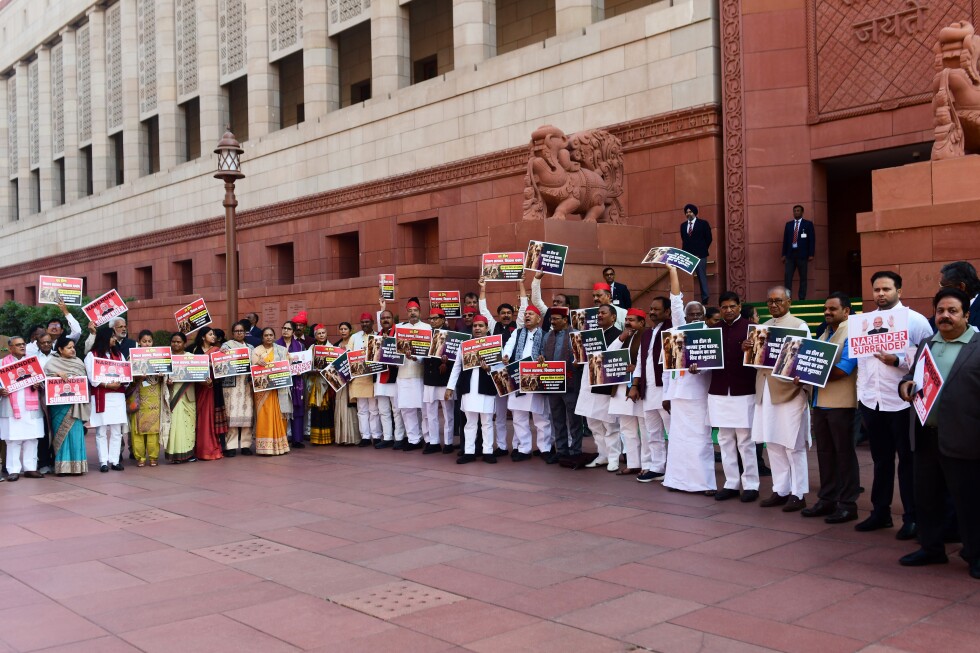
NEW DELHI — India witnessed significant nationwide disruptions on Thursday as a coalition of trade unions and agricultural organizations launched coordinated strikes protesting the country’s interim trade framework with the United States. The widespread demonstrations highlighted growing resistance to market-oriented reforms championed by Prime Minister Narendra Modi’s administration.
Protesters asserted that the bilateral agreement would enable the influx of subsidized American agricultural products into Indian markets, potentially devastating local farmers and small enterprises. The strike action partially paralyzed public services and manufacturing operations across multiple states, revealing substantial opposition to the government’s economic policies.
In parliamentary proceedings, opposition lawmakers intensified their criticism, demanding immediate cancellation of the trade pact and chanting derogatory slogans targeting Prime Minister Modi. The political confrontation occurs amid preparations for crucial state elections scheduled later this year.
Amarjeet Kaur, General Secretary of the All India Trade Union Congress, articulated the protesters’ concerns: ‘The agreement facilitates the dumping of cheap American farm produce in India, creating impossible competition conditions for our agricultural sector and small businesses.’
Government officials defended the interim arrangement as a strategic move to enhance export capabilities, attract foreign investment, and strengthen diplomatic relations with the United States. Trade Minister Piyush Goyal recently emphasized that protections remain in place for agriculture and dairy sector stakeholders.
The proposed trade framework, announced earlier this month, envisions reciprocal tariff reductions on Indian goods from 25% to 18%, alongside the elimination of penalty tariffs related to India’s previous purchases of Russian oil. In exchange, India committed to ceasing Russian oil imports and purchasing $500 billion worth of American goods, including energy products, while reducing various trade barriers.
Beyond the trade agreement, protesters also expressed opposition to the government’s privatization initiatives for state-owned enterprises and recently implemented labor codes, characterizing these measures as ‘deceptive fraud’ against workers. Government representatives maintain that these reforms will ultimately enhance economic efficiency and generate employment opportunities.