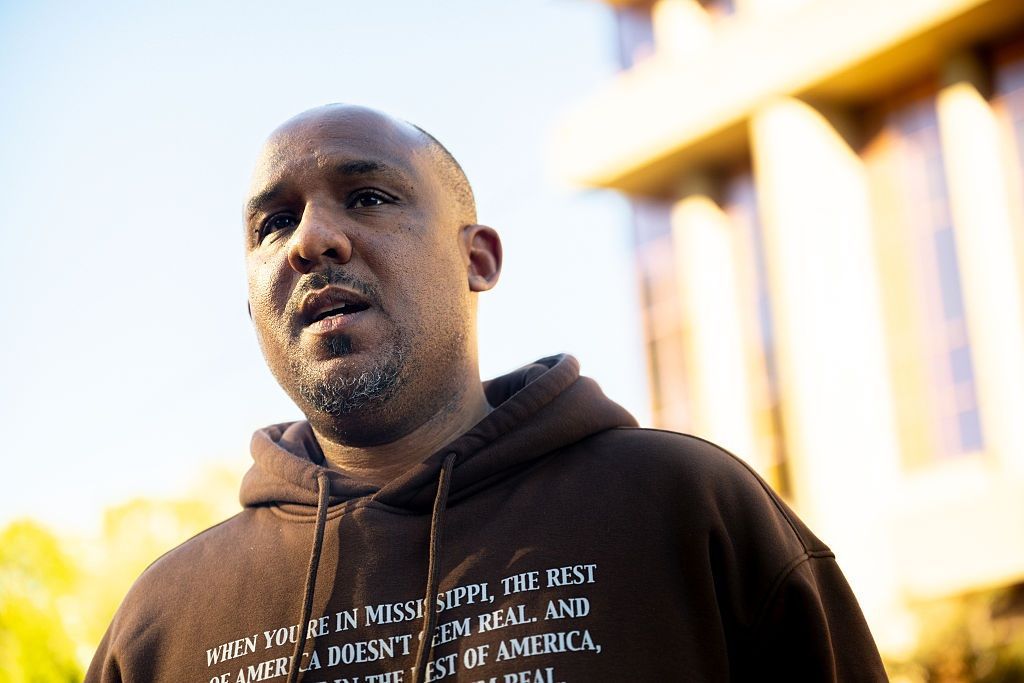
Nearly one week following the conclusion of the 2026 U.S. midterm elections, Mississippi remains locked in a high-stakes, nail-biting Senate tally that could upend 42 years of uninterrupted Republican control over the state’s U.S. Senate seat and make groundbreaking civil rights history. Democratic nominee Scott Colom, a veteran local prosecutor, currently holds a razor-thin lead of roughly 2,500 ballots — less than 1% of total votes cast — over incumbent Republican Senator Cindy Hyde-Smith, according to the latest unofficial vote tabulations. Should Colom maintain his advantage through the ongoing counting process, he will become Mississippi’s first Black U.S. senator in more than 140 years, and the first Democrat to hold the state’s Senate seat since 1982.
The unexpected competitive nature of the race has defied long-standing political gravity in Mississippi, a deeply conservative stronghold where former President Donald Trump secured a 22-point victory in the 2024 presidential election. A final Colom win would expand the incoming Democratic Senate majority to 55 seats, pending the still-undecided knife-edge Senate contest in Alaska, and add to a string of surprising Democratic upsets across traditionally red states including Texas, Kansas, and Iowa in this cycle’s midterms, alongside a projected landslide Democratic takeover of the U.S. House of Representatives.
Under Mississippi state election regulations, the formal deadline for state officials to certify final election results falls this coming Friday, but thousands of unprocessed mail-in and affidavit ballots remain outstanding. Affidavit, or provisional, ballots are cast by voters whose initial eligibility was flagged for minor discrepancies such as missing valid identification at polling sites on election day; these voters have until this Tuesday to resolve their documentation issues for their ballots to be counted. State election administrators estimate that between 12,000 and 20,000 total affidavit ballots were submitted across the state, with roughly 15,500 processed as of Tuesday morning — a pool of uncounted votes large enough to fully reverse Colom’s narrow current lead. Both the Democratic and Republican national parties have deployed teams of legal representatives to Mississippi, laying the groundwork for potential post-certification legal challenges that could prolong the final outcome for weeks.
On the sun-dappled, tree-lined campus of Jackson State University, a prominent historically Black public university in Mississippi, dozens of first-time student voters shared their overwhelming enthusiasm for a potential Colom victory. 18-year-old freshman Jamyria Dunn, who cast her first-ever ballot for the Democratic nominee, told reporters, “I really feel like a change is what we need. I’ve had some amazing days in my life, but seeing Mississippi, this state in particular, turn blue, would really bring a light to my heart that people just would not understand.” Her classmate Journey Moore, another first-time Colom voter, noted that the chance to witness and participate in making Black American political history felt like a once-in-a-lifetime moment, rating her excitement level “1,000 out of 10.”
Conversely, in Hyde-Smith’s hometown of Brookhaven, Lincoln County — where Trump won 72% of the vote in the 2024 election — deep Republican loyalty remains pervasive, with nearly all local residents surveyed stating they either skipped voting or cast their ballot for the incumbent. While few local voters blamed Trump or Hyde-Smith directly for widespread rising cost of living pressures, many lifelong Republican supporters expressed quiet frustration with the lack of tangible policy deliverables from Trump’s second term. 29-year-old logger Travis Powe noted that periodic spikes in fuel and grocery costs have long been a constant across different administrations, but lifelong Republican Lee Barry acknowledged that soaring everyday prices, including $100 grocery bills for just a handful of household items, had significantly harmed Hyde-Smith’s electoral performance. Multiple local conservative voters also criticized the incumbent for running a low-profile campaign with far fewer public appearances than expected, a gap the Colom campaign aggressively exploited.
The Colom campaign leveraged widespread national voter frustration with Trump-era economic policies, including steep tariffs and the ongoing war with Iran, to frame Hyde-Smith as “Cindy High Prices” for her unwavering support of the former president’s agenda. The Democratic nominee toured all 82 of Mississippi’s counties to engage directly with voters, while Hyde-Smith faced widespread backlash for dismissive public remarks such as telling cost-conscious voters concerned about rising beef prices that they “have so many proteins to choose from” — a comment the Colom team turned into a widely shared viral attack ad. The Hyde-Smith campaign, in turn, attempted to discredit Colom as a puppet of liberal billionaire donor George Soros, whose family has provided partial funding for Colom’s electoral efforts. Trump himself traveled to Mississippi last month to host a last-minute rally in support of Hyde-Smith, in a last-ditch effort to shore up conservative turnout.
The unprecedented competitiveness of the race is also driven by record-breaking turnout among Mississippi’s large Black voting population, who historically vote overwhelmingly Democratic. Early exit poll data shows that 91% of Black voters in the state cast their ballot for Democratic candidates this cycle, a sharp increase from previous election years that has upended long-held partisan assumptions about the deeply conservative Magnolia State.
In Mississippi, voters await cliffhanger Senate result with hope and frustration