The United States has publicly downplayed the likelihood of launching fresh large-scale military offensives against Iran, even as senior administration officials dismiss Tehran’s preconditions for a political resolution to their long-running conflict as completely unreasonable. The shift toward de-escalatory rhetoric from the Trump White House came shortly after the Republican Party suffered a decisive defeat in the November 3 U.S. midterm elections, where Democratic candidates ran heavily on campaign platforms opposing ongoing Middle East military engagements and soaring domestic energy costs. Following a closed-door meeting with Qatar’s prime minister at the White House on Monday, U.S. President Donald Trump stated that the active phase of the conflict was “effectively over,” and that tangible momentum was building to reach a negotiated end to hostilities.
This framing of ongoing diplomatic progress was immediately rejected by a senior Iranian national security official. Mohsen Rezaei, a former commander of the Islamic Revolutionary Guard Corps (IRGC) and current secretary of Iran’s Supreme National Security Council, clarified in a televised interview that no active bilateral negotiations were currently underway between Tehran and Washington. Rezaei confirmed that Iran remained fully committed to its seven-point diplomatic proposal first rolled out earlier this summer, a framework that includes provisions to reopen the critical Strait of Hormuz maritime chokepoint. His comments came shortly after the IRGC announced on Tuesday that three commercial oil tankers had caught fire after striking underwater mines in the strategic waterway. Rezaei added that Iran had formally shared its settlement conditions with U.S. representatives, but deemed Washington’s initial response insufficient and deceptive, noting that Tehran was still waiting for a clear, unambiguous official reply.
Speaking to reporters on the sidelines of a G7 foreign ministers gathering in Paris on Tuesday, U.S. Secretary of State Marco Rubio offered a blunt public assessment of Iran’s terms, dismissing them as “absurd” and “not serious.” Rubio specifically pushed back against Tehran’s demand for war reparations and access to large cash infusions, arguing that Iran was the party that owed reparations for decades of regional destabilization, and that the Trump administration would never approve cash transfers to the Iranian government.
The core points of contention between the two nations remain Iran’s nuclear program and sovereign control over the Strait of Hormuz, a narrow waterway through which roughly a third of global seaborne oil supplies pass. Earlier in June, the two sides had reached a preliminary memorandum of understanding intended to lay the groundwork for a full final settlement, but that draft deal collapsed after Iran pushed for full authority over all maritime traffic in the strait, a provision that would have allowed Tehran to impose transit fees on all passing vessels. Rubio emphasized that while the Trump administration had no interest in resuming large-scale ground or air combat operations, it was in no rush to finalize a settlement, as U.S. officials believed they held a strategic advantage in the Strait of Hormuz standoff.
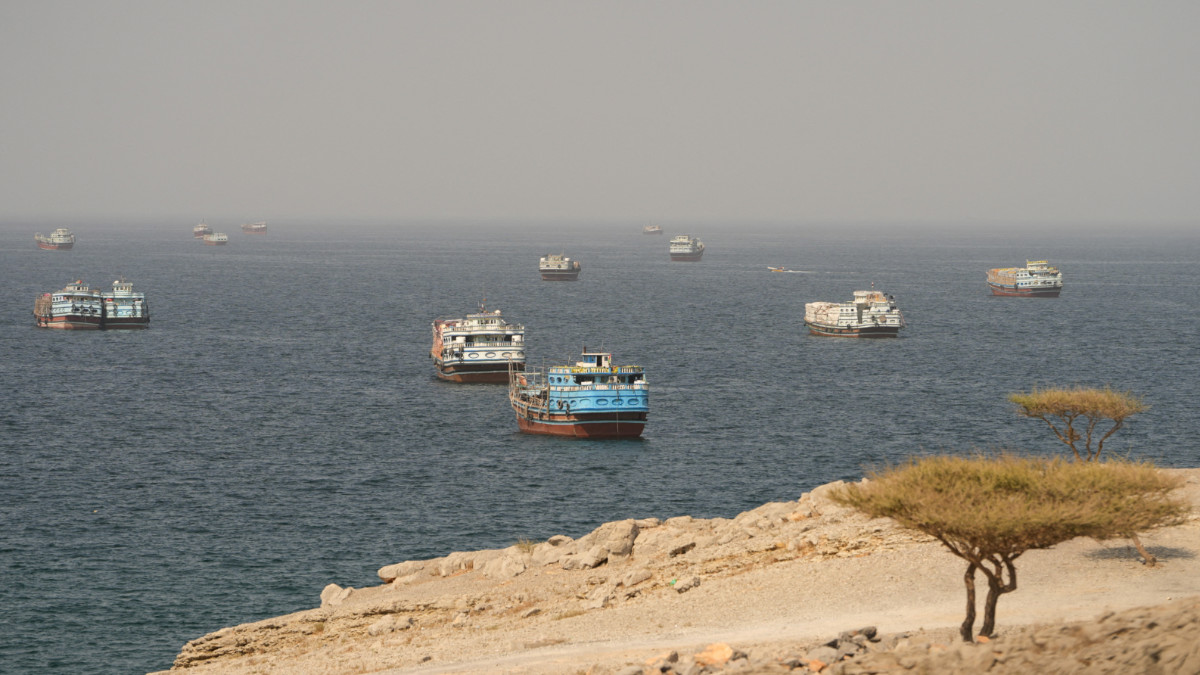
Both nations have imposed competing de facto blockades on the waterway in recent months: Iran has carried out targeted attacks on commercial vessels linked to U.S. Gulf allies, while the U.S. has deployed costly, resource-intensive military escorts to guide non-Iranian vessels safely out of the strait. Rubio framed Iran’s ongoing ship attacks as minor nuisances rather than meaningful battlefield victories that could force U.S. concessions to Tehran’s seven-point proposal. He noted that roughly 80 to 85 percent of pre-conflict oil and petroleum product flows were now moving through the strait, and that the only crude being consistently blocked from export was Iranian oil itself.
Global energy markets reacted sharply to the post-midterm shift in U.S. rhetoric, as traders priced in expectations that Trump would be constrained from launching new unprovoked military strikes. The international Brent crude benchmark fell nearly 15 percent over the past week, hitting $91.37 per barrel on Tuesday, though U.S. domestic retail gasoline prices have dropped only 4 percent over the same period, a far smaller decline that has been noticeable to ordinary American consumers.
U.S. partners in the Gulf region, meanwhile, report they are bracing for a prolonged period of uncertainty marked by sporadic maritime strikes and no formal end to the broader conflict, a scenario that threatens to derail planned cross-border investment projects. Saudi Arabia, in particular, has faced a sustained wave of missile and drone attacks launched by Houthi forces based in neighboring Yemen. Rubio pushed back against public data showing major Gulf economies facing significant economic strain from the prolonged crisis, claiming that Iran was suffering far more severe economic harm, and that the U.S. strategy of waging targeted economic pressure campaigns against Tehran was delivering results. He stated that the devastating impact of U.S. economic sanctions on Iran had convinced President Trump that major combat operations were unnecessary for the time being, as Washington could achieve all of its core strategic objectives through non-military economic pressure.