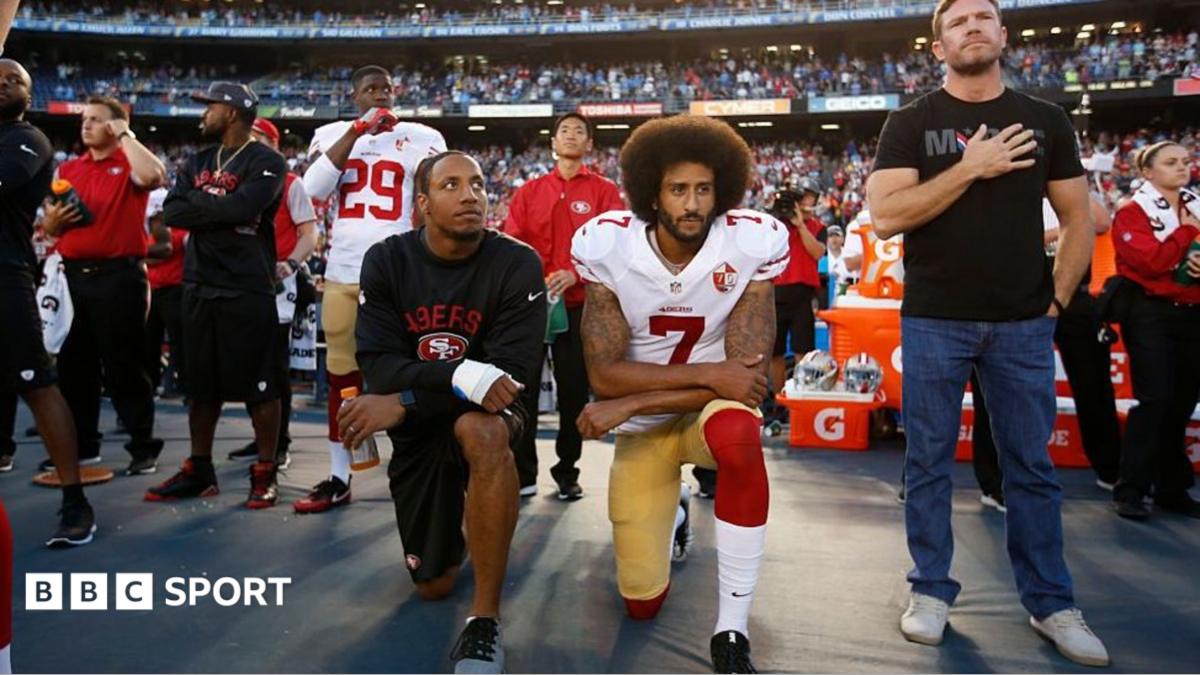
Ten years to the month after a quiet, pre-game gesture turned him into a global civil rights icon and effectively ended his elite NFL career, former San Francisco 49ers star quarterback Colin Kaepernick has reaffirmed he would make the exact same choice all over again, holding zero remorse for the path he took to protest systemic racial injustice and police brutality against Black communities in the United States. Speaking exclusively to BBC Sport in his first extended interview with the outlet since his 2016 act of defiance, the 38-year-old athlete opened up about the steep personal cost of his activism, the global ripple effects of his signature “take the knee” movement, and his unshakable belief that sport can never be fully separated from political and societal realities. Back in September 2016, Kaepernick first opted to kneel rather than stand for the pre-game playing of the US national anthem, having initially chosen to sit out the ritual to draw attention to the ongoing oppression of Black and people of colour across the country. He would repeat the quiet, non-violent protest ahead of 11 consecutive regular season matches that year, a choice that split public opinion sharply down the middle: millions hailed him as a courageous moral leader, while critics labelled his act deeply disrespectful to military service members and unpatriotic. The backlash reached the highest levels of US politics, with then-presidential candidate Donald Trump publicly denouncing Kaepernick, calling for him to be deported and demanding that any NFL player refusing to stand for the anthem be immediately fired. The league subsequently introduced rules that would fine teams whose players declined to participate in the national anthem ceremony. Despite having led the 49ers to a Super Bowl appearance in 2013 and posting a career-high 16 touchdown passes in his final active NFL season, Kaepernick was effectively blacklisted from the league after opting out of his 49ers contract in 2017, with no franchise extending him a playing offer for nearly a decade. He later filed a formal grievance against NFL team owners, alleging they had colluded to bar him from employment over his activism, reaching a confidential financial settlement with the league in 2019. While the NFL later issued a public apology, admitting it had been “wrong for not listening to players earlier” and formally endorsing peaceful player protest, Kaepernick’s long-awaited NFL comeback never materialised. The global cultural reckoning that followed the 2020 murder of George Floyd in Minneapolis catapulted the “take the knee” gesture far beyond US gridiron fields, becoming a universal symbol of anti-racist solidarity adopted by professional athletes across every major sport, including England’s men’s and women’s national football teams. Kaepernick told BBC Sport he found that widespread international adoption humbling, but warned that structural racism remains a pervasive, global challenge far from resolved. Even as public support for anti-racist athlete action grew, Kaepernick noted that the momentum of athlete activism has slowed in recent years, pointing to instances where Premier League players chose to stand rather than take a knee during the league’s 2023 No Room for Racism campaign, as frustration mounted over the glacial pace of tangible societal change. UK anti-discrimination charity Kick It Out confirmed that reports of racial abuse in English football had more than doubled over the past five years, hitting all-time record levels in the most recent season. Kaepernick argued that this stagnation in progress makes public protest more necessary now than ever, attributing the muted visibility of modern athlete activism to coordinated, systemic pushback from powerful institutions including the NFL, successive presidential administrations, and large corporate entities that have prioritised profit over equity. Pushing back against critics who claim sport and politics should remain entirely segregated, Kaepernick dismissed that argument as deeply hypocritical, pointing to the fact that public taxpayer funds are routinely used to build and subsidise NFL stadiums, while league owners openly donate to and endorse partisan political candidates. The only “rule” barring political participation, he argued, is selectively enforced to silence athletes rather than neutralise sports as a public political space. He also criticised the recent trend of high-profile political figures, including former and now second-term president Donald Trump, leveraging major global sporting events for public favour, calling FIFA’s 2024 decision to award Trump its inaugural “Peace Prize” deeply regrettable, while praising crowds that have openly booed Trump at events ranging from NBA Finals games to the Super Bowl. Now a published author, Kaepernick has released his new memoir *The Perilous Fight*, which traces his journey from his childhood as a Black child adopted by a white California family to the years of lived experience and community education that led to his 2016 protest, rather than framing the gesture as a sudden, unplanned stunt. He continues to run the Know Your Rights community education and philanthropic initiative he founded, has published a series of children’s books focused on justice, and still maintains the full professional fitness regime he kept during his NFL prime, holding open the remote possibility of a return to professional gridiron play. Widely compared to legendary activist athletes including Muhammad Ali, 1968 Olympic Black Power Salute advocates Tommie Smith and John Carlos, Kaepernick says he remains focused on long-term movement building rather than personal acclaim, stating his ultimate goal is to help build a truly equitable global society that meets the needs of all marginalised communities.
‘I would do it again’ – Kaepernick reflects on price of protest, 10 years on