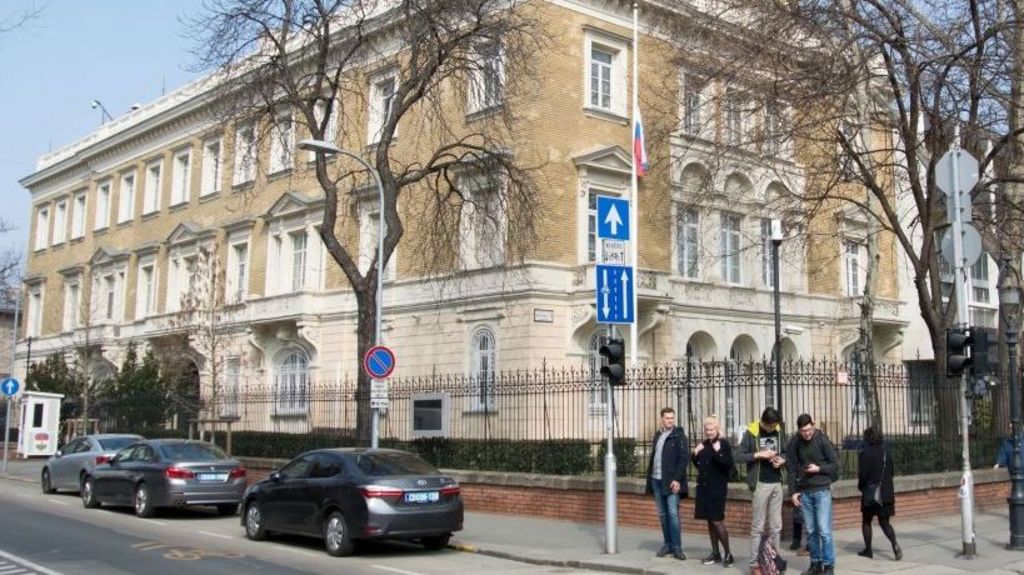
In a sharp departure from the pro-Kremlin foreign policy that defined Hungary for nearly a decade under former Prime Minister Viktor Orbán, Budapest’s newly elected government has ordered 10 Russian diplomats to leave the country over accusations of participating in activities that undermine national security, triggering a fiery vow of retaliation from Moscow.
Hungarian Foreign Minister Anita Orbán announced the expulsion order via social media, framing the move as a necessary step to safeguard the country’s national sovereignty and security. She declined to share additional specific details about the alleged activities that prompted the decision, but emphasized that the expulsion does not amount to a full severance of diplomatic ties between the two nations.
The policy shift marks the most significant break yet from the course set by Viktor Orbán, who positioned Hungary as Russia’s closest ally within the European Union for years. Following Viktor Orbán’s Fidesz party’s defeat in April’s general election, Prime Minister Péter Magyar’s Tisza party took power and quickly began moving away from the previous administration’s staunchly pro-Moscow stance. While Magyar initially pledged to maintain what he called “pragmatic” relations with Russia, his government has consistently called on Moscow to end its full-scale invasion of Ukraine, a sharp contrast to the previous government’s positions.
Tensions between the two nations have been building for months. In May, Anita Orbán summoned Russian Ambassador Evgeny Stanislavov to protest a large Russian drone attack on Ukraine’s Transcarpathia region, which is home to a substantial ethnic Hungarian minority. Political observers have been quick to note that this move would have been unthinkable under the previous Fidesz administration, which never took such a step in response to attacks on Ukrainian territory holding Hungarian communities since Russia launched its full-scale invasion in 2022. Just last month, Magyar formalized the policy break, releasing new official guidelines that explicitly label Russia’s military action in Ukraine as a direct threat to Hungary, European stability, and the global international order, as well as a critical danger to the Hungarian minority in Transcarpathia.
Stanislavov, Russia’s top envoy to Budapest, issued a scathing response to the expulsion announcement. He dismissed Magyar’s earlier promise of pragmatic cooperation as worthless, calling the expulsion an “extremely unfriendly step” that amounts to an unprovoked and unprecedented escalation of tensions between the two countries.
On the Russian side, Foreign Ministry spokeswoman Maria Zakharova said that Moscow would deliver a “harsh and painful” response to what she called actions by the “Russophobic lobby” in Budapest. For years, the Fidesz government resisted any action against alleged Russian intelligence activity on Hungarian soil, according to former Hungarian counter-intelligence chief András Telkes, who spoke to the BBC about the situation. Even before the April election, when investigations into Russian spying operations were already underway, the previous administration blocked any punitive measures, Telkes explained.
Ahead of the 2024 election, independent Russian investigative outlet Agentsvo published a report finding that 15 of the 47 total Russian embassy staff in Budapest had confirmed ties to Russian intelligence agencies, with an additional six more suspected of having connections to intelligence work. That report also alleged that three Russian military intelligence officers had traveled to Hungary to attempt to influence the outcome of the national election. The Russian embassy in Budapest has repeatedly denied those accusations, and Moscow has a longstanding policy of rejecting all claims that its diplomatic missions around the world are used for espionage activities.
This expulsion order places Hungary in line with a broader trend across Europe: since Russia launched its full-scale invasion of Ukraine in 2022, hundreds of Russian diplomats have been expelled from European capitals over espionage concerns, and Moscow has consistently responded with reciprocal tit-for-tat expulsions of European diplomats. Telkes warned that the scale of the current expulsion could lead to a major disruption of diplomatic relations. If Moscow chooses to expel 10 Hungarian diplomats in response, that would effectively leave the Hungarian embassy in Moscow unable to operate, he noted.
The new Hungarian government’s move makes clear just how far the Central European nation has shifted its foreign policy in just a few months, ending years of close alignment with Moscow and bringing Hungary more in line with the European Union’s unified stance against Russia’s war in Ukraine.