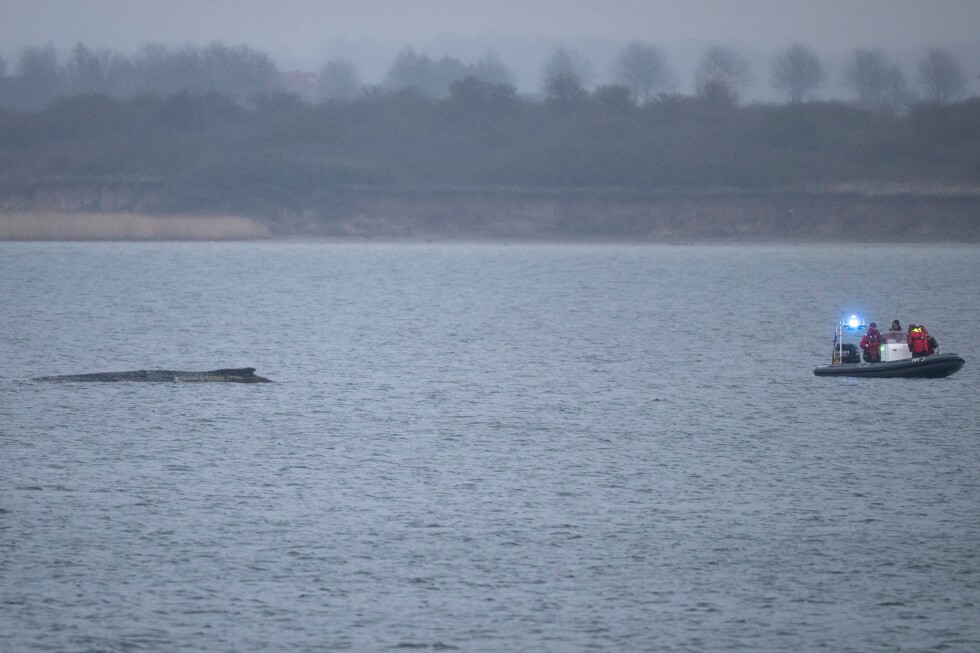
A distressed humpback whale continues to battle for survival in Germany’s Baltic Sea waters, captivating national attention as rescue teams mount persistent efforts to guide the marine mammal back to its natural habitat. The 12-15 meter (39-49 feet) cetacean found itself stranded again Tuesday near Wismar Bay, mere hours after successfully escaping a previous grounding situation.
The recurring strandings began when the whale first appeared in the region on March 3, with experts speculating it may have pursued herring shoals or become disoriented during migration. The most recent incident occurred when the animal diverted from a path toward open waters and entered a shallow inlet, despite escort efforts by police and Greenpeace vessels.
Marine biologist Thilo Maack of Greenpeace emphasized the enormous challenge facing the whale: ‘Our objective remains guiding it from Wismar Bay through the Baltic and Danish waters into the North Sea, and ultimately to the Atlantic where it belongs. These animals require depths that simply don’t exist in the Baltic.’
The whale’s deteriorating physical condition complicates rescue operations. Its skin has suffered damage from prolonged exposure to the Baltic’s low salinity, preventing researchers from attaching tracking devices. Despite visible exhaustion and health concerns, Environment Minister Till Backhaus reported that recent assessments indicate the animal ‘has potential’ for recovery.
Rescue strategy currently focuses on providing calm conditions for the whale to regain strength, with occasional boat approaches to encourage movement toward deeper waters. The emotional saga has gripped German media and citizens, who await each development in the high-stakes effort to return the magnificent creature to its ocean home.