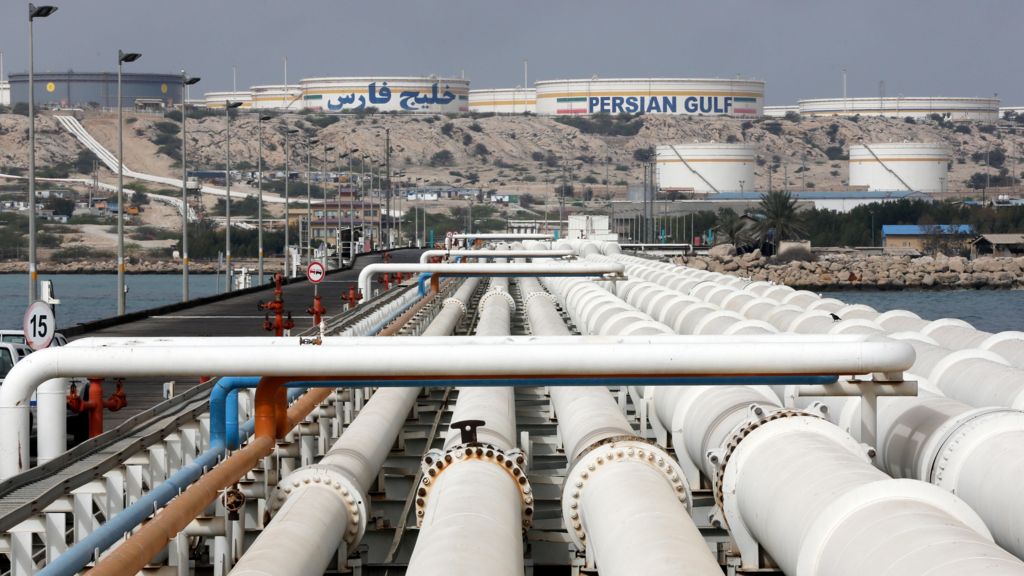
The United States is contemplating a high-stakes military operation to capture Iran’s pivotal Kharg Island oil terminal, a strategic maneuver that could dramatically escalate tensions in the Persian Gulf. This offshore facility serves as Tehran’s primary oil export conduit, processing approximately 90% of the nation’s petroleum exports through its deep-water capabilities accommodating Very Large Crude Carriers.
President Donald Trump’s administration has signaled potential deployment of nearly 7,000 troops—including 5,000 Marines and 2,000 paratroopers from the 82nd Airborne Division—to execute this complex operation. Military strategists envision nighttime airborne assaults by paratroopers to secure key positions on the 20-square-kilometer island, supported by amphibious landings using Osprey tilt-rotor aircraft and Landing Craft Air Cushioned vehicles.
The operation’s stated objective would be temporarily severing Iran’s oil exports to compel concessions regarding the Strait of Hormuz, through which 21% of global petroleum passes. However, the mission carries extraordinary risks: invading forces would need to navigate Iranian-controlled waters past numerous drone and missile installations, then withstand anticipated defenses including anti-personnel mines and drone swarms.
Iran has dramatically reinforced Kharg’s defenses with surface-to-air missile batteries, while Parliamentary Speaker Mohammad Bagher Ghalibaf promised ‘fire rain’ upon any invading forces. Historical precedent suggests challenges for occupation forces, with comparisons drawn to Russia’s experience at Ukraine’s Snake Island, where persistent artillery fire from the mainland proved decisive.
Complicating the strategic calculus, analysts note that Kharg might be part of a deception plan, with alternative targets including Larak Island near Bandar Abbas, Qeshm Island with suspected underground military facilities, or the disputed Abu Musa and Tunb islands claimed by the United Arab Emirates.
Paradoxically, the military buildup coincides with diplomatic overtures. President Trump acknowledged ‘serious discussions’ with Iran that could potentially ‘end our military operations,’ highlighting the administration’s simultaneous pursuit of military and diplomatic pressure campaigns. This dual-track approach reveals the enormous gap between American and Iranian positions that any potential agreement must bridge.