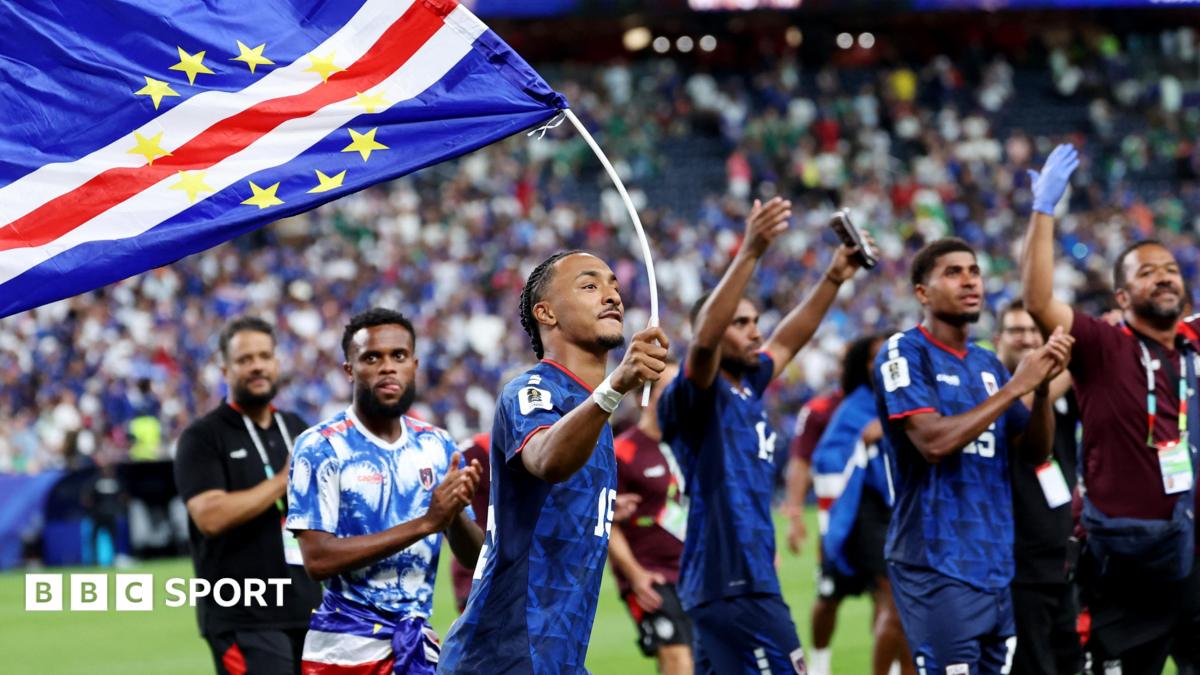
Against all the odds stacked against it, the tiny Atlantic archipelago nation of Cape Verde has written its name into World Cup folklore, becoming the smallest country by population to ever advance to the tournament’s knockout round on its first ever appearance at the global showpiece.
After securing a hard-fought goalless draw against Saudi Arabia in their final Group H fixture, the entire Cape Verde squad huddled around a mobile phone on the pitch, waiting anxiously for the full-time whistle of the concurrent Spain-Uruguay match. When Spain secured the win that confirmed Cape Verde’s place as group runners-up, celebrations erupted: tears of joy and pride flowed across the pitch, the stands, and across the entire island nation, in what commentators have already called the defining moment of the 2026 World Cup.
This historic run is no accident. Cape Verde entered the tournament with draws in already under their belt: an incredible opening goalless stalemate against 2010 World Cup champions Spain, where 40-year-old veteran goalkeeper Vozinha delivered a man-of-the-match masterclass, and a dramatic 2-2 draw against two-time World Cup winners Uruguay. For a country of just 525,000 inhabitants that beat five-time African champions Cameroon to qualify, this run has left the global football community stunned.
The blueprint for Cape Verde’s success was crafted years ago, centered on a deliberate strategy by the country’s football federation (FCF) to leverage its large global diaspora. Centuries of colonial ties to Portugal, paired with 20th century droughts that drove mass emigration and deep-rooted maritime trading traditions, have left large communities of Cape Verdean descent across Europe, most notably in the Dutch port city of Rotterdam. Of the 26 players in Cape Verde’s 2026 World Cup squad, 14 were born outside the archipelago, with six hailing from Rotterdam. One of those diaspora players, forward Dailon Livramento, scored the game-winning goal that sealed Cape Verde’s qualifying victory over Cameroon in September 2025.
This open approach to recruitment has produced some unlikely success stories: centre-back Roberto Lopes, born in Dublin, was first scouted and recruited via the professional networking platform LinkedIn back in 2019, while former Portugal under-21 winger Bebe – once of Manchester United – joined the squad for the 2023 Africa Cup of Nations (Afcon). “There is an inner confidence in this team that we are good enough to mix with the best teams in the world,” Lopes explained. “It’s not something that’s just been fabricated out of nothing. Since I’ve been involved, and before that, there’s been an ongoing plan to get Cape Verde up at the big table with the big football nations of the world.”
Much of the credit for the team’s cohesive, disciplined performance also goes to head coach Bubista, a former Cape Verde international who has led the side since January 2020. The stability of his long tenure has allowed the 56-year-old former defender to build a tight, well-organized unit: a solid defensive structure, technically gifted midfielders, and clinical forward play that carried Cape Verde to the Afcon 2023 quarter-finals – just a decade after the nation made its debut in the continental tournament.
Bubista’s tactical discipline was on full display against Spain: while Vozinha’s seven saves earned the headlines, it was the team’s extraordinary discipline that set a modern record, conceding just one foul against the 2010 champions – the lowest number of fouls by any team in a World Cup match since 1966. When the team needed a fighting equalizer against Uruguay, they shifted to a more expansive attacking game and showed their resilience to get a result. That same resolve held against Saudi Arabia to secure the point they needed to advance.
“It’s incredible what they are doing, it wasn’t just one game against Spain, it is three games at the highest level,” former Spanish World Cup winner Juan Mata commented of the side’s run. Bubista, who was named 2025 African Coach of the Year by the Confederation of African Football after securing qualification, has long held belief in his team’s potential. Back before the 2021 Afcon, where Cape Verde reached the last 16, he predicted the side would soon reach the World Cup – a prediction that has now come true. Today, he hopes his side’s run can inspire other underdog football nations across the globe. “I believe that football belongs to everyone, or is for everyone,” he said.
Next up for the Blue Sharks is a showdown with defending champion Argentina, led by Lionel Messi, in the round of 32 this Friday in Miami. Midfielder Deroy Duarte, who earned man of the match honors against Saudi Arabia, summed up the mood in the camp: “Honestly, it’s mad. I feel like I’m in a dream. First, let’s celebrate. We’re so happy. Let’s hope all Cape Verdeans are happy too. From tomorrow, we’ll focus on the next match. It’s against Argentina, isn’t it? A tough match, but let’s believe. Anything is possible.”
Global football figures have been quick to praise Cape Verde’s historic run, noting it captures the true spirit of the World Cup. “It’s just a great story for what the World Cup is all about,” said top manager Ange Postecoglou. “We often talk about how football touches every part of the globe and this is what it can do.” Former England and Manchester United defender Gary Neville added that the run could change minds about World Cup expansion: “I think those sceptics who thought expanding the World Cup wasn’t the right thing might be rethinking it watching these Cape Verde fans, because this is really special. A country of 500,000 people getting to the knockout phase. We’ve seen Uruguay, one of the biggest football nations, going out and then one of the smallest teams making it. What a moment for them.”