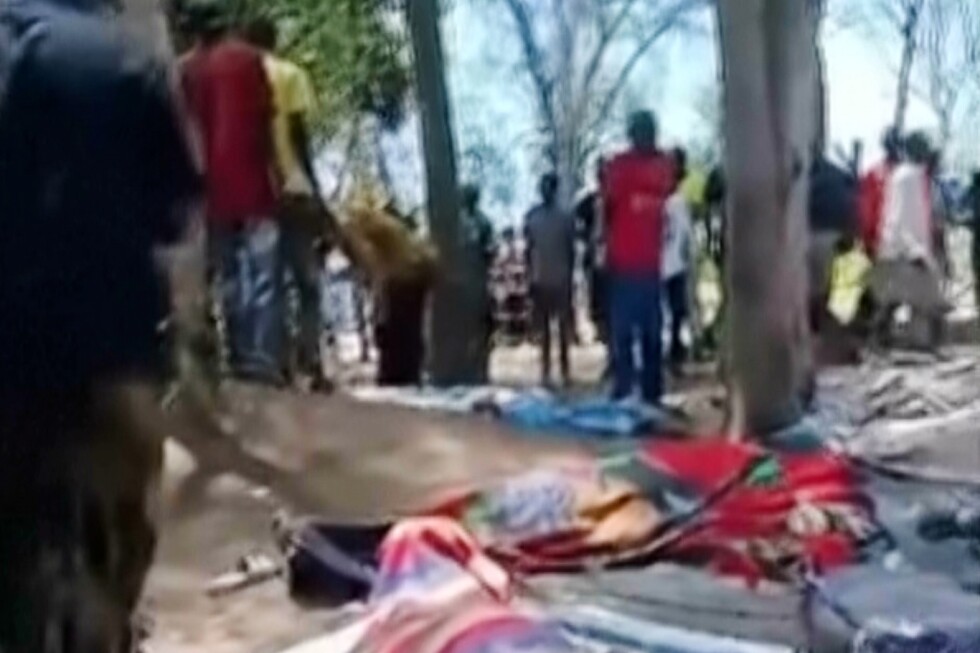
JUBA, South Sudan — A violent dispute at an unregulated gold mining operation near South Sudan’s capital has resulted in one of the country’s deadliest civilian attacks in recent memory, with confirmed fatalities exceeding 70 people. The weekend massacre at Jebel Iraq mining site in Central Equatoria State has exposed the dangerous consequences of resource competition in areas with minimal government oversight.
According to police spokesperson Kwacijwok Dominic Amondoc, unidentified assailants carried out the coordinated attack on artisanal miners, though specific motives remain under investigation. Graphic footage circulating online shows dozens of victims’ bodies scattered across open ground, with local reports indicating many additional casualties may have fled into surrounding wilderness areas.
The incident has triggered political finger-pointing, with the Sudan People’s Liberation Movement/Army-In Opposition (SPLM/A-IO) issuing a formal statement blaming government forces (SSPDF) for the massacre. ‘Jebel Iraq exists within territory exclusively controlled by SSPDF units, making them fully accountable for this atrocity,’ the opposition group asserted.
South Sudan’s gold mining industry operates without centralized regulation, creating jurisdictional gaps that have previously fueled violent confrontations. State governments maintain autonomous control over mineral resources, often without coordinating with national authorities in Juba.
Human rights organizations including the Nile Institute for the Study of Human Rights and Transitional Justice have condemned the attack as representing ‘grave violations of fundamental rights to life.’ Activist Edmund Yakani urged immediate government intervention, stating: ‘This emerging pattern of resource-based violence demands national attention. We must terminate the culture of illegal mining that endangers communities across South Sudan.’
Military representatives declined to comment on the allegations, while civil society groups emphasized the connection between weak security presence, unregulated resource exploitation, and civilian vulnerability in conflict-prone regions.