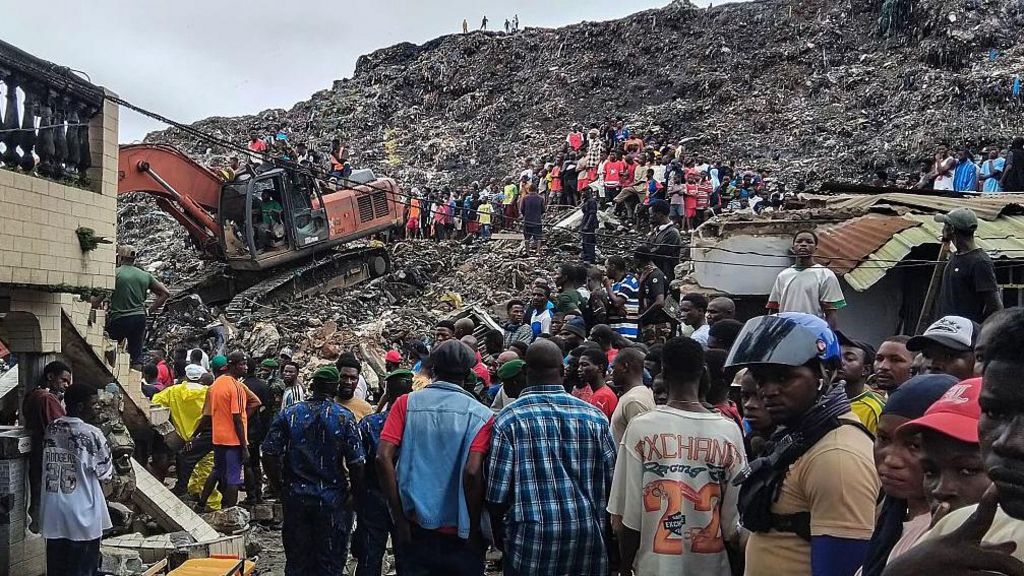
A catastrophic collapse of a massive garbage mound at one of Conakry, Guinea’s largest waste disposal sites, has claimed the lives of at least 30 people and left dozens more injured, government officials confirmed this week. The disaster, which unfolded around 2:00 a.m. local time in the capital’s densely populated Dar-es-Salam neighborhood, followed a night of intense heavy rainfall that destabilized the already precarious waste mound, which slid onto adjacent informal residential homes.
Beyond the confirmed fatalities, 22 people have been registered as injured, with six of those suffering critical, life-threatening conditions that require urgent medical care. Local media interviews have already captured devastating personal stories of loss: one resident told reporters that all five of her children were killed when the rubbish mound engulfed her home.
In response to the emergency, the Guinean government announced it has mobilized “significant” human and material resources, including units from the national military, to launch urgent search and rescue operations for survivors still potentially trapped under mounds of shifted debris. Rescue teams have been spotted working around the clock at the site, using heavy excavators to carefully sift through tons of scattered garbage, while anxious local residents gather near the perimeter waiting for updates on missing loved ones.
Guinea’s Prime Minister Mamadou Oury Bah traveled directly to the disaster site shortly after the collapse to personally assess the scale of the damage and coordinate ongoing search efforts. Early on-scene reports from local neighborhood leader Lancine Sylla to Agence France-Presse had already painted a grim picture, with Sylla warning that the death toll would likely climb before recovery efforts were complete. “We have pulled out 18 bodies that were taken to the morgue,” Sylla told AFP in initial on-the-ground comments.
This is not the first deadly disaster to strike this same waste site: a previous landslide at the Conakry landfill killed 10 people back in 2017, raising urgent questions about longstanding safety risks at the facility and the vulnerability of informal settlements built in close proximity to the unstable waste mound. Rescue operations are still ongoing as of this report, and aid organizations are preparing to support displaced families who lost their homes in the collapse. Officials have repeatedly warned that the confirmed death toll is expected to rise as recovery teams continue to clear debris and search for people still unaccounted for.