Nearly a year after a military takeover plunged West Africa’s only Portuguese-speaking nation deeper into regional democratic backsliding, Guinea-Bissau opened polling stations Sunday for a high-stakes constitutional referendum that will shape the balance of power ahead of December’s planned general election — a vote billed by military leaders as the final step back to civilian rule.
The current military junta seized control of the small nation of 2.2 million people in November 2023, following a bitterly contested presidential election where both incumbent former President Umaro Sissoco Embaló and opposition challenger Fernando Dias claimed victory. The coup was widely dismissed by African regional leaders as a staged power transfer; skeptics have long argued that Embaló struck a deal to step aside peacefully after projecting he would lose the official vote count, leaving the military in control of the transition process.
At the center of Sunday’s vote is a new draft constitution crafted by the military-appointed National Transitional Council. If approved by voters, the charter would expand executive authority granted to the presidency, cut the size of the national parliament from 102 seats to 65, and explicitly cement the president’s supremacy over the office of prime minister.
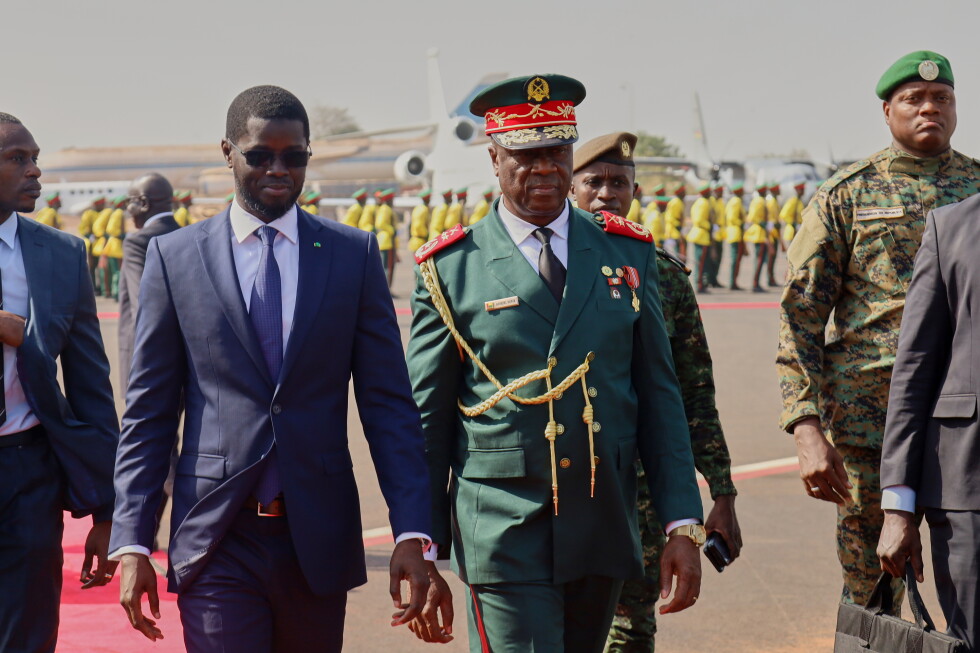
Military leaders frame the changes as a long-overdue fix for the chronic political instability that has plagued Guinea-Bissau since it gained independence from Portugal in 1973. “In a community, there is only one leader. No community or village can have two leaders,” General Tomás Djassi, head of Guinea-Bissau’s armed forces, explained in defense of the reforms. “We revised the constitution to avoid constant conflict between the president of the republic and the prime minister. We clarified the law and helped the public understand that the president of the republic is the national symbol, elected directly by the people.”
The junta argues that a smaller legislature will streamline legislative debate and eliminate gridlock, while clearer separation of authority between the presidency and prime minister’s office will end the power struggles that have repeatedly toppled governments over the past five decades.
But opposition groups have rejected the framing, and have organized a widespread boycott of the referendum, warning that the changes are little more than a power grab designed to cement military influence through an allied executive. The reforms, they argue, systematically weaken the office of prime minister, subordinate the national legislature and independent political parties, and erase the will voters expressed in last year’s disputed election — creating exactly the kind of deep political division the junta claims it is trying to fix.
“This constitution significantly weakens the Prime Minister and the government, subordinates the National People’s Assembly and political parties, and devalues—or even ignores the popular will expressed at the polls, carrying all the attendant risks of political and social division and tension,” said Muniro Conté, spokesperson for the African Party for the Independence of Guinea and Cape Verde, one of the nation’s largest opposition blocs.
Public sentiment toward the referendum reflects deep division and widespread confusion across the country. Roughly 915,000 voters are registered to cast ballots, but polling data suggests most registered voters do not view constitutional change as a pressing priority, and many remain unfamiliar with the full text of the proposed reforms.
Bacar Camará, a high school teacher in the capital Bissau, announced he would boycott the vote entirely, arguing the transitional government should prioritize national reconciliation over restructuring power ahead of the planned general election. “The transitional government should focus on creating conditions for better understanding and reconciliation among Guineans,” he said. Other voters who plan to cast ballots say they will reject the charter, simply because they do not have enough information to support it.
“I’ll go vote on Sunday. However, I’ll vote ‘no’ because — honestly, and I think this is the case for many other citizens — I don’t know this new Constitution well, so I can’t vote ‘yes’,” said Bissau resident Carolina Djeme.
Independent political analysts share the opposition’s core criticism, noting that the unelected transitional government lacks the democratic legitimacy to rewrite the national constitution. “The fundamental question is: Who drafted this Constitution, and on whose behalf? To protect which interests or institutions? Who stands to benefit from this Constitution?” asked Paulino Quadé, a prominent Guinean political analyst.
For West Africa, the referendum comes at a moment of deepening democratic crisis. Last year’s coup in Guinea-Bissau added the country to a growing list of nations in the region now under military rule, extending a trend that began with the 2020 coup in Mali and has since spread to Burkina Faso, Niger, and Gabon.
Guinea-Bissau’s long history of political instability is well-documented: since independence in 1973, the country has weathered more than a dozen successful and attempted coups, with a failed coup attempt recorded just one month before last November’s successful takeover. While the World Bank ranks the country as having the highest per capita share of natural wealth in West Africa, more than half of its 2.2 million residents live in extreme poverty. Experts also widely note that the country’s strategic location between Latin America and Europe has made it a major transshipment hub for international drug trafficking, an illicit trade that has funded political corruption and fueled repeated power grabs for decades.