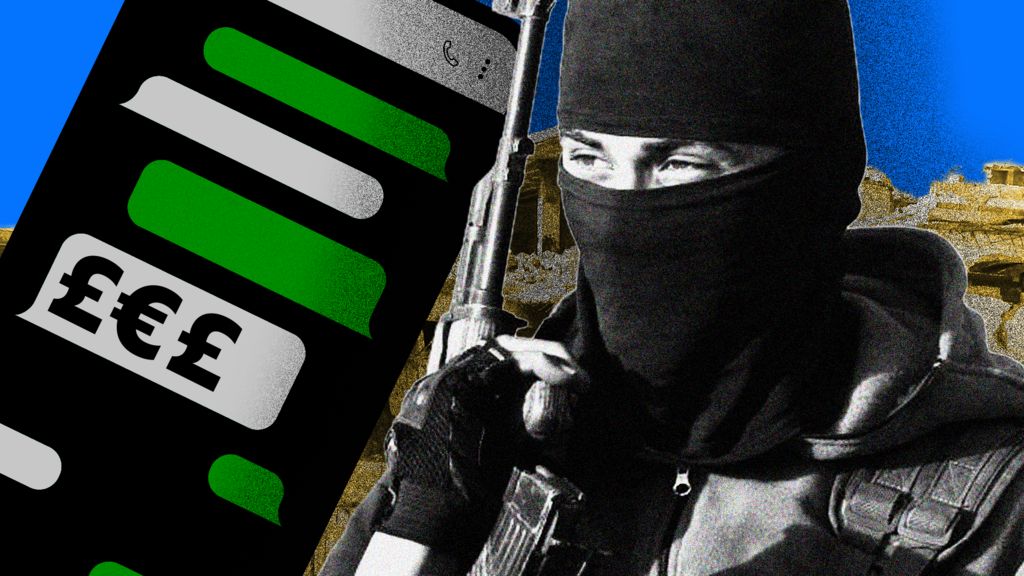
A cross-border investigation led by the European Broadcasting Union (EBU), which includes the BBC, has exposed a massive underground money transfer network that leveraged WhatsApp and the centuries-old hawala system to move hundreds of millions of euros in untraceable funds to criminal and extremist groups across the globe. The network, which included a 532-member chat called “Traders of Greater Europe”, moved money across international borders, including to major British cities London and Birmingham, and even sent payments from Brussels to Islamic State (IS) militants operating in Syria. The investigation also linked similar unregulated hawala systems to widespread people smuggling, drug trafficking, and other transnational organized criminal activities across the continent.
The chat log, which held more than 82,000 messages exchanged between February and December 2022, was first discovered on the personal phone of a convicted Brussels-based network leader by Belgian investigating magistrate Vincent Guerra. What began as a narrow probe into terrorist financing quickly expanded to reveal a global operation of unparalleled scale. Guerra described the total volume of transactions documented in the chat as “staggering”, noting that the network’s reach extended across the entire planet. He called the discovery of the full chat “hitting the jackpot” that unlocked access to the inner operations of a shadow financial system that operates entirely outside of government oversight.
The network relied on the hawala system, a trust-based money transfer mechanism that operates without formal electronic records or physical cross-border movement of cash. Under the system, two geographically separate brokers (called hawaladars) reach an agreement: one accepts cash from a sender, and the other pays out the equivalent sum minus a commission to the intended recipient, with all outstanding balances settled between the brokers at a later date. While hawala is often used legally to support remittances from migrant workers to family members in regions with limited formal banking access, it has also become a critical tool for criminals seeking to avoid the anti-money laundering checks built into the mainstream SWIFT international banking system, which requires banks to flag and report suspicious large transactions.
The “Traders of Greater Europe” chat was restricted to transactions of 5000 euros or more, with most transfers being far larger. Authorities stress that not all chat participants were aware of or involved in handling illicit funds. Hawala is currently banned in most European Union member states, but remains legal in the United Kingdom as long as brokers register with His Majesty’s Revenue and Customs.
The cache of chat messages was obtained by the EBU following a 2024 Belgian court conviction of six money launderers connected to the network, including Abu Adam, the Brussels head of the operation, and his deputy Abu Ahmed. The investigation into the pair began when authorities uncovered evidence they had transferred funds to IS to help the wives of militants escape detention camps in northeastern Syria. When Abu Adam was arrested, investigators found not only the WhatsApp chat on his phone but also 6,000 photos of 5-euro banknotes (with visible serial numbers, which are used as unique transaction identifiers in hawala operations) and 6,000 photos of identity documents. Guerra said these records indicate Abu Adam alone processed at least 12,000 transactions, describing the operation as fully professional criminal enterprise operating at a scale “we could never have imagined”, adding that the hawaladars operate effectively as unregulated bankers for transnational criminal groups.
The EBU investigation uncovered evidence of parallel criminal hawala networks operating across multiple European countries. A former insider in these networks, speaking anonymously under the pseudonym Frank, told reporters he had personally handled hundreds of millions of euros in illicit transactions. He described his first exposure to the system at a small office outside Rotterdam, where couriers delivered more than 1 million euros in cash in less than 90 minutes. Frank noted that the network facilitates far more than just money laundering, saying “it’s about the financing of terror. It’s about drug trafficking. It’s about prostitution and all sorts of other crap.”
Investigations in Austria have further highlighted the brutal human cost of these unregulated networks. A probe by ORF, an Austrian public broadcaster and EBU member, uncovered a large-scale hawala hub operating out of a busy central Vienna kebab restaurant that was used to process payments for people smuggling operations. Two Syrian brothers running the hub were convicted last year of human trafficking, torture, and rape after they abused a courier who claimed he had been robbed of 350,000 euros in network funds. The pair were sentenced to 18 and 8 years in prison respectively.
Earlier this year, Austrian police and Europol dismantled another people smuggling ring funded via hawala that authorities estimate smuggled 100,000 migrants into the European Union over an 18-month period. Gerald Tatzgern, who leads human trafficking investigations for Austria’s Criminal Intelligence Service, explained that criminal networks routinely use torture against migrants who cannot pay smuggling fees, then distribute videos of the abuse to the migrants’ families to extort additional payments, which are processed through the hawala system to avoid detection. “Videos of the torture are then sent to the families, saying that if they don’t send another 1,000 euros or several thousand euros, then the person concerned – your son, your brother, your father – will suffer,” Tatzgern said.
Quentin Mugg, a police commander and Europol liaison officer who has led multiple anti-money laundering probes, called the unregulated hawala system “the primary money-laundering channel for organised crime”. He noted that criminal hawaladars will process any transaction regardless of its source or purpose, saying: “Whether the money comes from migrant smuggling, human trafficking, pimping, a grandmother’s savings sent as a birthday present to her son, or a Malian working in France who wants to support his family, [the hawaladars] couldn’t care less. And they’ll apply their rates.”