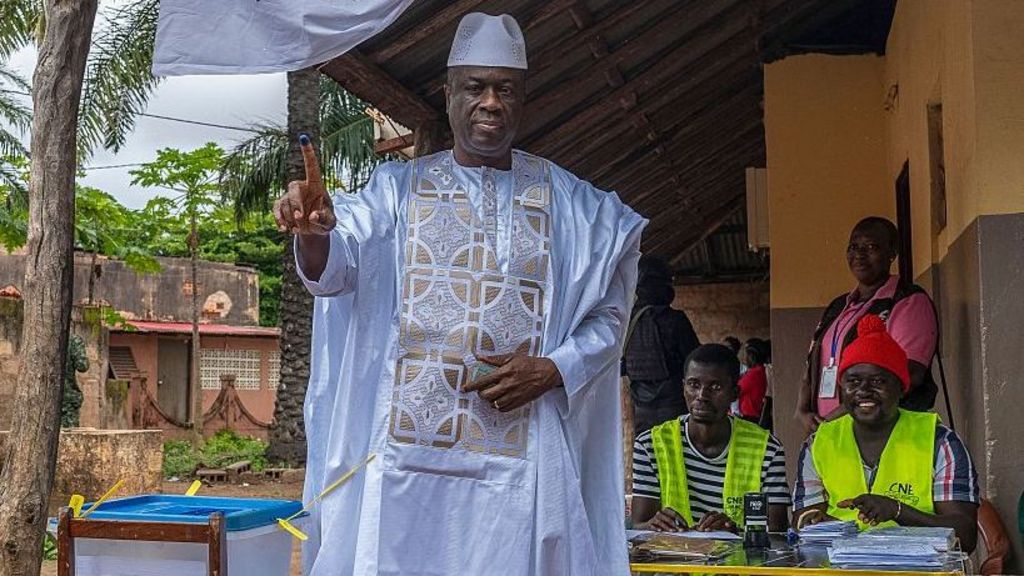
In a recent constitutional referendum held by Guinea-Bissau’s transitional military government, voters have backed a set of sweeping institutional reforms that will significantly expand executive presidential power, just months ahead of planned general elections that are supposed to return the West African nation to civilian rule. The vote comes on the heels of a November 2025 military coup, launched after a disputed presidential election left both incumbent Umaro Sissoco Embaló and opposition challenger Fernando Dias claiming victory, adding Guinea-Bissau to the growing list of central and western African nations that have seen military takeovers in recent years.
Provisional data released by the country’s national electoral commission shows that 70% of cast ballots supported the constitutional changes, with 30% opposing them, and overall voter turnout reaching almost 60%. The reforms fundamentally reshape Guinea-Bissau’s existing semi-presidential system, shifting the balance of power firmly away from the office of the prime minister and toward the presidency. Under the previous framework, the national parliament appointed a prime minister drawn from the parliamentary majority, who then went on to form a cabinet – an arrangement the ruling military junta argues fueled chronic political gridlock and instability that has plagued the country for decades.
The new provisions grant the president unilateral authority to appoint and remove prime ministers and full cabinet members, create or eliminate government ministries, and dissolve the national legislature during what is defined as a severe political crisis. Notably, the reforms retain the existing five-year presidential term limit and cap any individual at two terms, allaying some fears that the current transitional leadership was seeking to extend its hold on power indefinitely. Additional changes include cutting the total number of parliamentary seats from 102 to 65, reducing the number of national electoral constituencies from 29 to 12, and implementing new candidate eligibility rules, including a requirement that all presidential candidates have resided continuously in Guinea-Bissau for five years immediately preceding an election.
Transitional military leaders, led by interim President General Horta N’Tam, have defended the reforms as a necessary fix for the country’s long history of political infighting between the executive and legislative branches. Guinea-Bissau has weathered at least nine successful and attempted coups since it gained independence from Portugal in 1974, and the United Nations has formally labeled the nation a “narco-state” due to its long, undefended coastline dotted with unpopulated islands that has made it a key transit hub for international drug trafficking networks. Junta leaders argue that concentrated executive authority will cut down on the persistent power struggles that have prevented sustained progress and economic development in one of the world’s poorest countries.
However, the referendum has faced steep opposition from the country’s main opposition bloc, the African Party for the Independence of Guinea and Cape Verde (PAIGC), which organized a full boycott of the vote. Party leaders argue that the process lacked basic political and institutional safeguards to protect democratic norms, and warn that concentrating so much power in the presidency poses a severe threat to the country’s planned transition back to civilian democratic rule. PAIGC leader Domingos Simões Pereira has gone further, accusing the junta of deliberately undermining democratic institutions and fundamental political freedoms through the referendum. Some local activists have also challenged the official turnout figures, claiming to the BBC that as many as 90% of registered voters stayed away from the polls, casting the process as nothing more than a pre-planned formality to legitimize the military’s new power structure.
All eyes now turn to the December 2026 presidential and parliamentary elections, which the junta has promised will mark the end of the transitional period and the handover of power to an elected civilian government. The upcoming vote will serve as a critical test of the military leadership’s commitment to restoring civilian rule, as well as an early indicator of how the newly expanded presidential powers will reshape Guinea-Bissau’s already fragile political landscape going forward.