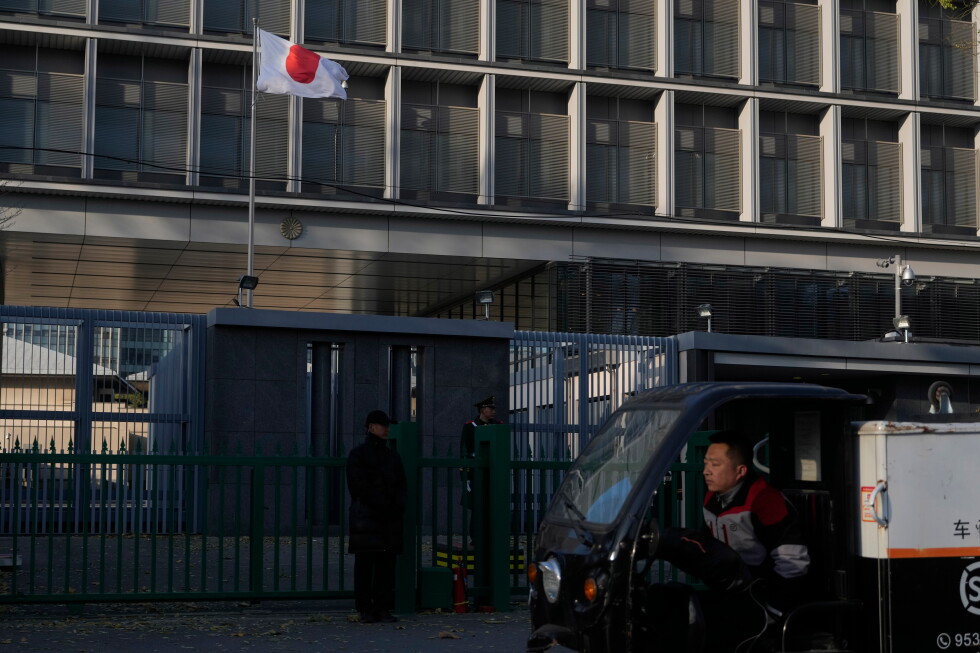
Escalating long-simmering geopolitical tensions between Beijing and Tokyo, China announced new sweeping export restrictions on Monday targeting 40 Japanese entities that Beijing accuses of enabling Japan’s accelerating military buildup. According to an official statement released by China’s Ministry of Commerce, 20 Japanese firms — including multiple business divisions of the major Japanese conglomerate Mitsubishi Corporation — have been added to a formal control list. This designation bars both Chinese and foreign-based exporters from selling China-manufactured dual-use goods, products that have both civilian and potential military applications, to the listed entities.
A further 20 Japanese organizations have been placed on a watch list for dual-use trade, the ministry confirmed. Notable entities on this secondary monitoring list include Mitsui E&S, a manufacturer of marine engines and key shipboard equipment, alongside selected divisions of technology giant Fujitsu and construction equipment producer Komatsu. For Chinese exporters seeking to conduct business with watch-listed firms, strict new regulatory requirements are now in place: exporters must obtain specialized government licenses, submit detailed third-party risk assessments of the Japanese entities, and file formal written guarantees confirming that the exported dual-use items will not be diverted to military end-uses.
In its official statement, the Ministry of Commerce emphasized that the new measures are fully justified, procedurally reasonable, and compliant with both domestic Chinese law and international trade norms. The policy is explicitly framed as a targeted deterrent against what Beijing calls Japan’s “reckless push for new militarism.” The statement went on to urge Japanese leadership to acknowledge its policy missteps, reverse its current confrontational trajectory, pursue genuine reflection on historical actions, and return diplomatic and security relations to a cooperative path.
The rift between the two Asian powers has widened sharply over the past year, after Japanese Prime Minister Sanae Takaichi’s administration suggested Japan could intervene militarily if China attempted to seize Taiwan by force. China claims the self-governing island democracy of Taiwan as an inalienable part of its sovereign territory, and has increased military pressure on the island in recent years.
Beyond the Taiwan issue, Takaichi’s government has moved aggressively to expand Japan’s military offensive capabilities. Recent policy shifts include lifting longstanding restrictions on lethal weapons exports, deploying extended-range missiles to remote Japanese island outposts, and plans to revise national defense and security policy documents by December, a move that is widely expected to unlock further increases to Japan’s already growing defense budget. Just on Monday, Japan’s Ground Self-Defense Force confirmed it had deployed a Type-12 surface-to-surface missile launcher to Minamitorishima, Japan’s southernmost remote Pacific island, a move widely interpreted as a direct response to increased Chinese military and maritime activity in the Western Pacific.
This round of export controls marks the second major trade action China has taken against Japanese entities this year. Back in February, Beijing added an identical 20 firms to its export control list and another 20 to the watch list. According to Monday’s statement, Japan has failed to course-correct following the February restrictions, instead doubling down on what Beijing calls its “wrong path” by accelerating remilitarization, deploying offensive weapons systems, and conducting missile test launches.
Tensions have flared further in recent weeks over maritime claims in waters east of Taiwan. Earlier this month, the China Coast Guard conducted organized patrols in the region, which Chinese state media framed as a “pointed warning” to both Japan and the Philippines after the two nations announced plans to hold bilateral talks on overlapping maritime claims in waters Beijing asserts as its own. In an uncommon display of coordinated diplomatic pushback, the United Kingdom, Germany, and France released a joint statement last week condemning Chinese maritime activity east of Taiwan and reaffirming their opposition to any unilateral change to the cross-strait status quo between Beijing and Taipei.
Reporting contributions for this article were provided by Mari Yamaguchi in Tokyo.