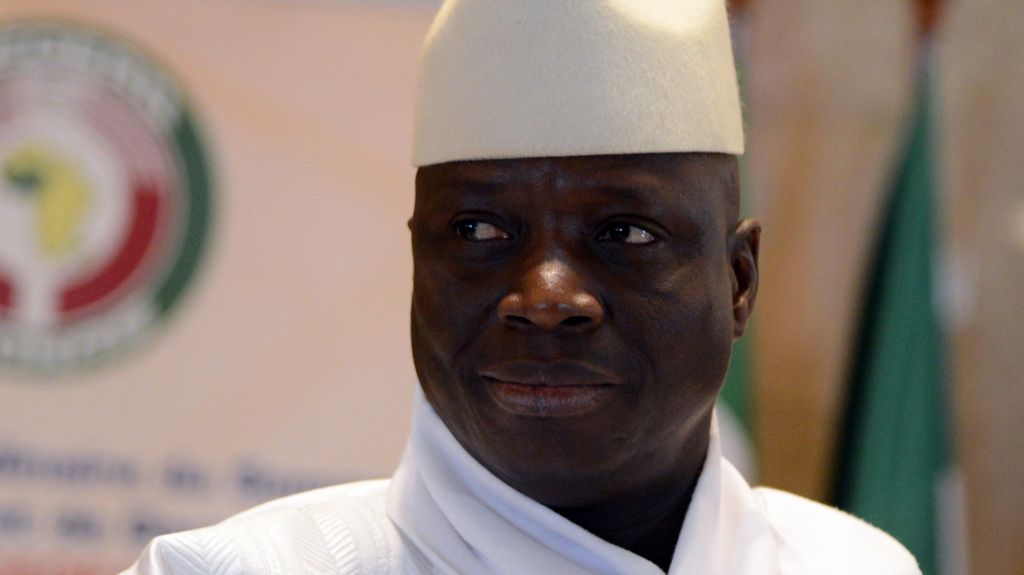
More than six years after former longtime Gambian dictator Yahya Jammeh was forced out of power, a major step forward has been taken to deliver long-awaited justice to thousands of victims of his authoritarian rule. Gambian authorities confirmed this week that the West African nation has received more than $2.5 million from the U.S. government, funds generated by the forfeiture and sale of one of Jammeh’s illegally acquired overseas assets, and the entire sum will be directed to reparations for survivors and families of those harmed during Jammeh’s 22-year regime.
The money, which totals exactly $2,573,414.10, comes from the sale of a Maryland mansion Jammeh owned, according to the Gambia’s National Reparations Commission. U.S. authorities first seized the property in 2022, after a court ruled the residence had been purchased using money stolen from the Gambian public through corruption and misappropriation of state funds. This marks one of the first successful cross-border recoveries of assets stolen by the former leader.
Jammeh seized control of The Gambia in a bloodless military coup in 1994, and went on to consolidate authoritarian power over the country for more than two decades. His tenure was marred by widespread, well-documented human rights violations: independent investigations have confirmed thousands of cases of extrajudicial killing, forced disappearances of political opponents, sexual violence, torture, and systematic corruption that drained the small nation’s public coffers. An official truth and reconciliation commission established after Jammeh’s ouster later confirmed that between 240 and 250 people were killed by state agents under his rule, and he misappropriated more than $300 million in public funds to build a global network of personal assets.
That network included 281 properties within The Gambia itself, plus additional holdings in the United States and Morocco, and control of more than 100 bank accounts spread across global financial institutions. Investigators have long confirmed Jammeh could never have afforded this sprawling property portfolio on his official presidential salary.
The 2016 presidential election marked the beginning of the end of Jammeh’s rule. He initially conceded defeat to opposition candidate Adama Barrow, but later backtracked and refused to step down, triggering a constitutional crisis. Intense pressure from the international community and regional bloc ECOWAS followed, with troops from neighboring Senegal and other West African nations deployed to the Gambian border to enforce the election results. In early 2017, Jammeh finally agreed to step down and go into exile in Equatorial Guinea, where he remains today.
In a public statement this week, the Reparations Commission announced it was pleased to deliver the long-awaited update to victims, survivors, and the general public. The commission emphasized it is committed to managing the recovered funds with full transparency and accountability, prioritizing the rights and needs of those who suffered harm under Jammeh’s regime. This recovery marks a significant milestone in The Gambia’s multi-year effort to seek accountability for past abuses and deliver meaningful reparations to affected communities.