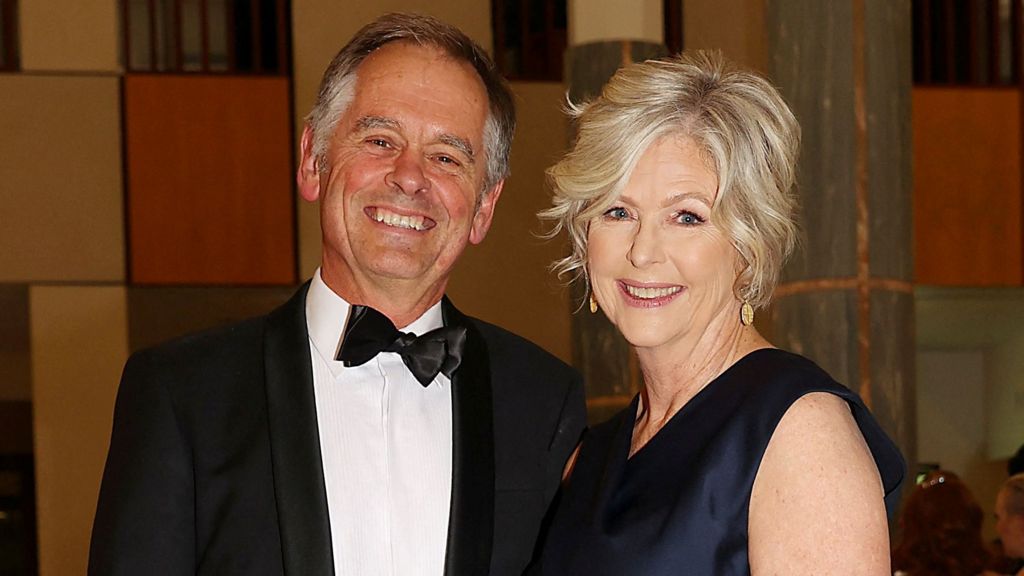
A shocking act of political violence has rocked regional Australia, after independent Member of Parliament Helen Haines was deliberately hit by a car outside her electorate office, leaving her with life-altering injuries that claimed both of her legs. The 53-year-old MP for Indi, first elected in 2019, was attacked on Monday afternoon just outside her office in Wangaratta, a regional town roughly 240 kilometers northeast of Melbourne.
Haines’ husband, Phil Haines, confirmed the devastating extent of his wife’s injuries during a press conference in Melbourne, where Helen is currently receiving medical care. While the “horrendous incident” left her with severe harm, Phil Haines said that “her heart and her mind are in good shape,” adding that the most important silver lining amid the tragedy is that “she’s alive.” He noted that Helen’s recovery journey will be long and challenging, but emphasized that his wife is a determined fighter with the full support of her family. “She is a determined person who will do her best, with our support and love, to recover. And that is what we hope for,” he said.
In a gesture that reflected Helen Haines’ long-standing community focus, Phil Haines thanked medical staff and supporters from across Australia and the globe for their outpouring of care, and urged anyone wishing to offer support to donate to the Save the Children fund rather than send gifts or messages directly. “Please keep sending Helen your love,” he added.
The alleged attacker, 43-year-old Brendan Nugent, a local resident from nearby Tarrawingee with a background as an environmental campaigner, made his first court appearance on Wednesday. He faces three initial charges: dangerous driving causing serious injury, intentionally causing serious injury, and causing harm to a Commonwealth public official. Court documents also reveal additional charges of cultivating and possessing cannabis. Victoria Police have indicated that more severe charges, including attempted murder, could be laid as the investigation progresses.
During the brief hearing, Nugent did not apply for bail and is scheduled to return to court in February. His defense attorney confirmed that Nugent has a history of mental health concerns and lives with idiopathic transverse myelitis, a rare neurological condition caused by spinal cord inflammation, but no further details were provided. Nugent remained silent and emotionless throughout the appearance.
Multiple law enforcement agencies, including Victoria Police and the Australian Federal Police, are continuing their investigation into the attack. Victoria Police Commissioner Mike Bush told reporters that establishing a clear motive remains the central focus of the inquiry. “His motivation for this – what we allege is a deliberate attack – is very much a centrepiece of the investigation,” Bush said. “Our people will continue to explore every element, angle and avenue to work that out. It’s something that, when we work towards it, discover it, we will present in court.”
Investigators are currently probing several possible lines of inquiry, including whether drug use or medication played a role in the attack, and whether any personal connection exists between Nugent and Haines. Police have confirmed that Nugent was not on any law enforcement watchlist prior to the attack, and there was no advance intelligence indicating a threat to Haines. In a surprising twist, Nugent’s own family released a statement saying they have been long-time friends with Haines, and described the attack as “devastating and unfathomable.”
Witnesses who were first on the scene have described Haines’ remarkable composure even in the immediate aftermath of the crash. Jacob and Jackie Evans, two bystanders who intervened to detain Nugent and provide first aid, told reporters that Haines thanked them for their help even as she lay critically injured. “Thank you, you lovely people,” Haines told the couple, according to local media reports. Jacob Evans used a tourniquet from his car’s first aid kit to stem bleeding from one of Haines’ legs, a step that is widely credited with saving her life before emergency services arrived. Haines underwent emergency surgery following the attack, but surgeons were ultimately unable to save either leg.
The attack has sent shockwaves through Australia’s political community, where acts of physical violence against elected officials remain extremely rare. Political leaders from across the ideological spectrum have expressed their support for Haines, who is widely respected across party lines. Prime Minister Anthony Albanese, who has spoken with Phil Haines multiple times since the attack, used the incident to highlight the growing crisis of threats against Australian politicians, particularly women. Albanese noted that female politicians often face a uniquely virulent form of aggression, including rape threats, and police data shows that nearly one person per week is now charged with making threats against high-level public officials.
The incident has also sparked urgent national debate over the adequacy of security protections for Australia’s 226 federal Members of Parliament. Federal police officials have explained that providing 24/7 personal security to every MP would require an unfeasible level of staffing, so current policy relies on risk assessments based on an MP’s role and known threat levels. Governor-General Sam Mostyn, who joined Phil Haines at his press conference, called on the nation to use this tragedy as a moment for reflection. “This is a moment for us to pause, and to choose to be better,” Mostyn said. “We should do what I imagine Helen would be doing if she was not the victim of this terrible attack – reaching out to those who are terribly distressed by what has happened. Most importantly, that we learn or re-learn to exercise our muscle of decency.”