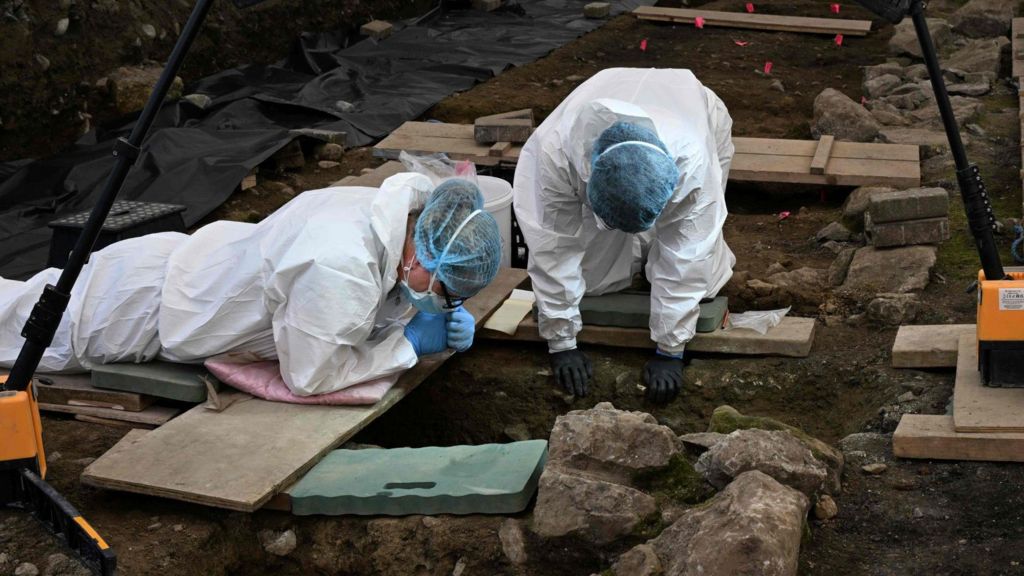
A decades-long chapter of Irish historical injustice continues to unfold as archaeological teams working at the site of a defunct mother-and-baby institution in Tuam, County Galway, have recovered 22 additional sets of infant remains. This latest discovery pushes the total number of infant bodies recovered at the former facility to 99, according to the latest official update from the excavation oversight body.
The home, which was established to house unmarried mothers and their children, operated from 1925 through 1961. Its existence and the grim fate of hundreds of infants who died within its walls only captured global public attention in 2014, when local historian Catherine Corless made a chilling discovery: official records listed 796 death certificates for children and infants who died at the institution, but no formal documentation existed to show where the bodies had been buried.
The current full excavation work launched one year ago, and this latest update covers findings from a six-week window ending July 15 of this year. The 22 newly recovered remains were found inside coffins in a section of the site’s southwestern edge, an area mapped in historical archives as an official burial ground.
All recovered remains are now being transported to a purpose-built mortuary and analytical laboratory in Toghermore, near Tuam. The facility was specifically outfitted for this project by the Office of the Director of Authorised Intervention, Tuam (ODAIT), the government-aligned agency leading the excavation work.
Per ODAIT’s official statement, a team of specialist experts will undertake a rigorous process to clean, preserve, and analyze each set of remains. The core goal of this work is to reconstruct key details about each infant’s short life and death, including their approximate age and biological sex. Advanced analytical techniques will be used, including medical radiology and high-resolution 3D scanning to document the remains in detail.
These forensic details are expected to help narrow the pool of possible matching identities, bringing researchers closer to the goal of connecting each set of remains to a name documented in historical death records. To support this identification effort, 62 family members with ties to infants who died at the home have already donated DNA samples for cross-referencing.
Not all sections of the site have been fully excavated yet: work has not commenced in the area of the existing memorial garden, where preliminary investigations in 2017 uncovered large quantities of human remains in hidden underground septic chambers.
Historically, the Tuam institution was owned by Galway County Council and managed by the Bon Secours Sisters, a Catholic religious order. The order has previously issued a formal public apology, acknowledging that the children and infants who died at the home were “buried in a disrespectful and unacceptable way.” It has also contributed €2.5 million (£2.14 million) to cover the costs of the excavation and forensic work. Galway County Council similarly issued a public apology in 2021 following the release of an official inquiry report, saying it “failed mothers and children” held at the institution.
Excavation work at the site is scheduled to continue through 2027, with additional years of follow-up forensic analysis and identification work expected to be completed after fieldwork concludes.