Deep in the working-class hills of Ecuador’s Mujer Trabajadora neighborhood, 24-year-old Chelsea star Moises Caicedo lifted his very first piece of silverware decades ago: a dented golden plastic cup, borrowed from a neighbor just to let a ragtag group of local kids experience the thrill of victory. That humble moment, captured in a faded childhood photograph, remains one of the most cherished keepsakes of Jeremy Cedeno, Caicedo’s lifelong friend and now a local paramedic.
The photo shows a young, grinning Caicedo kneeling surrounded by five small teammates, his small hands clamped around the toy trophy from an informal neighborhood tournament played on unmarked dirt. There were no referees, no line markers, and no proper gear—Cedeno recalled to AFP that tackles were brutal, and players often took the field barefoot. Today, that same wide, victorious smile is one that millions of football fans around the world recognize, as Caicedo prepares to represent Ecuador at his second consecutive World Cup, kicking off in June 2026.
Caicedo’s journey from a poor youngest child in a family of 10 to one of the most expensive footballers in English Premier League history is a story of relentless grit. As a child, he supplemented his family’s income by selling flowers in a local cemetery, and he often helped his youth coach park cars in the city’s entertainment district to earn small change for club equipment. His first coach Ivan Guerra, who still runs the same local football school that gave Caicedo his start, remembers the primitive pitch where the star cut his teeth: a rough expanse of mud, stones, sand, and scattered broken glass. Today, Guerra uses Caicedo’s story to teach every young player at the academy that hard work is the only path to turning dreams into reality.
Darwin Castillo, who coached Caicedo as a teenager at Jaipadida club, recalled a quiet, shy young man who blended in with his peers but already stood out for his unmatched discipline and natural physical ability. That discipline, Castillo says, came from Caicedo’s humble upbringing: a tight-knit poor family that said grace before every meal, and that instilled core values of gratitude and humility that the star has never lost.
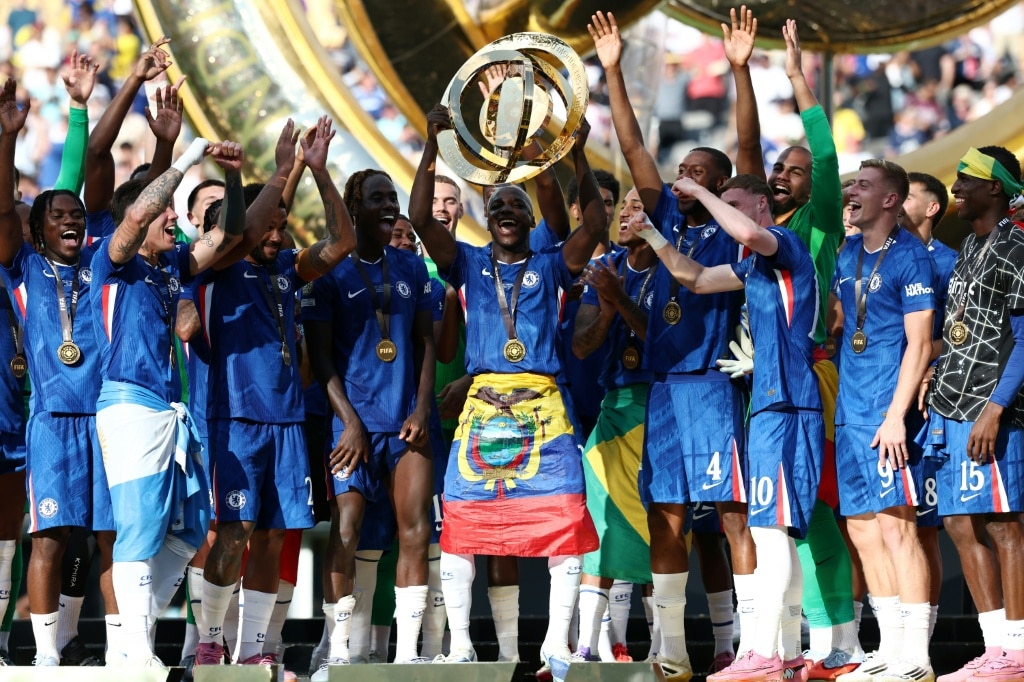
Caicedo made the breakthrough to top-tier European football in 2023, when his British record 115 million pound ($147 million) transfer from Brighton & Hove Albion to Chelsea made him the most expensive player in Ecuador’s national team history. He notched 50 appearances for the Blues in his first full season, scoring five goals and lifting the Club World Cup trophy with the club in the United States in July 2025. On that special day, he tied an Ecuadorian flag around his waist, a quiet tribute to the country and neighborhood that made him. He has since earned a national medal for sporting merit from the Ecuadorian National Assembly, where he reaffirmed his commitment to staying the same humble kid who never forgot his roots.
Castillo says Caicedo has kept that promise. Today, the star’s face adorns murals across his hometown of Santo Domingo, printed on youth jerseys and even emblazoned on the shin guards of local kids like 9-year-old Julian Hidalgo, who dreams of following in Caicedo’s footsteps and plays under the same coach Guerra. When Caicedo returns home for holidays, he spends his days just as he did as a kid: hitting the beach, riding local Ferris wheels, and kicking a ball around the neighborhood with his former coaches and childhood friends, slipping right back into being the barefoot kid who just loved to play.
With his second World Cup just weeks away, Caicedo’s journey remains far from over. From that borrowed plastic trophy to global stardom, the driving force that pushed him out of poverty is still pushing him forward to chase more silverware.