As the 2026 US congressional midterms draw within a week, Democratic lawmakers on Capitol Hill have publicly mapped out a sweeping oversight agenda they intend to activate if they secure majority control of either the House of Representatives or Senate, granting them subpoena power and dedicated funding to launch formal investigations as early as the start of the next legislative session. While the party’s path to chamber control remains highly competitive, internal party staffers have already compiled a preliminary roster of potential investigative targets and witness lists, according to multiple people familiar with ongoing internal deliberations.
At the top of the Democratic priority list are probes into the sprawling, high-value business transactions tied to former and current President Donald Trump’s family corporate empire, framed by party leaders as a critical guardrail against misuse of public funds. Virginia Democratic Representative Suhas Subramanyam, a sitting member of the House Oversight Committee, emphasized to BBC reporters that the core objective is to verify that taxpayer resources are not diverted for private gain through corrupt self-dealing arrangements. Specific lines of inquiry under consideration include undisclosed ties between Trump administration officials and cryptocurrency industry entities, the overseas business ventures of senior advisor and presidential son-in-law Jared Kushner, a $400 million custom aircraft donated by the Qatari government for use as the official Air Force One fleet, and multi-million dollar defense contracts awarded to firms with documented links to the Trump family’s business network. Subramanyam went on to note that the administration’s alleged corrupt practices are not just unprecedented, but unusually overt, marking a sharp departure from standard ethical norms for sitting executive branch officials.
The White House has repeatedly pushed back on all wrongdoing allegations, framing the planned Democratic oversight efforts as politically motivated obstruction. White House spokesperson Olivia Wales stated that President Trump’s full focus remains on protecting Republican congressional majorities and advancing policy priorities that reduce household costs for American families, adding that Democratic leaders have no substantive policy agenda to improve public well-being beyond launching baseless partisan attacks on the administration’s policy progress. A senior White House official also noted that the executive branch has standing protocols to respond to all congressional oversight requests, regardless of which party holds majority control in either chamber.
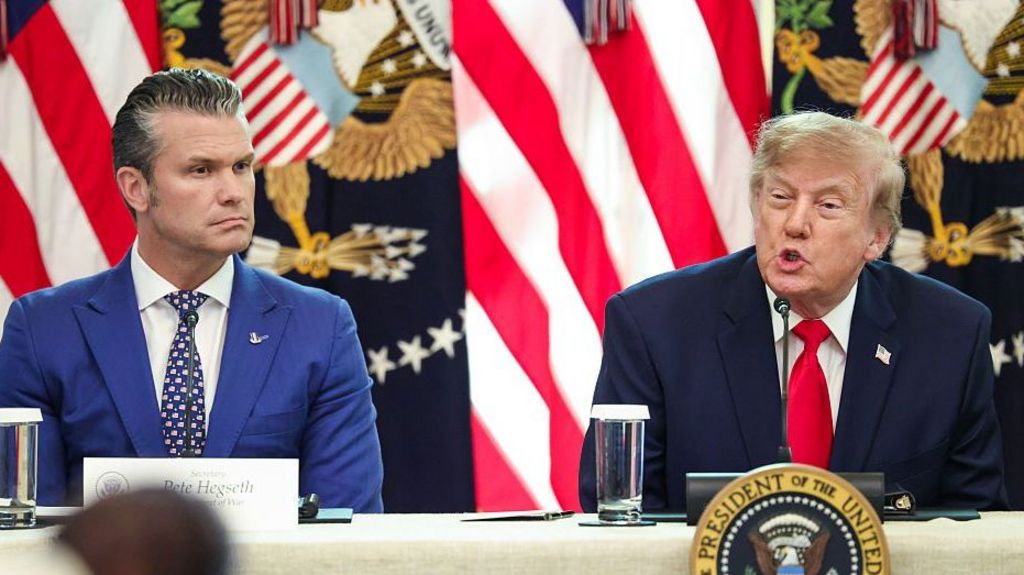
A second high-priority investigative track centers on Defense Secretary Pete Hegseth’s leadership of the US military campaign against Iran that launched in February of this year. Democratic lawmakers intend to scrutinize a wide range of operational details, including verified civilian casualty counts, reported munitions supply shortfalls, wartime spending allocations, and widespread claims that deployed troops and overseas military facilities were sent into combat with insufficient preparation. The probe would also examine a series of Caribbean maritime interdiction operations that the administration has framed as counter-narcotics missions to block illicit drug flows into the continental United States. Notably, House Democrats introduced historic articles of impeachment against Hegseth back in April, accusing him of high crimes and misdemeanors tied to the Iran war; while a simple House majority would suffice to advance impeachment charges, a two-thirds Senate vote would be required to remove him from office, a threshold no sitting cabinet secretary has ever met in US history. Nonpartisan presidential governance experts, including American University political science professor David Miller, note that sustained public hearings on Hegseth’s wartime record could generate enough negative public scrutiny that Trump may choose to dismiss Hegseth or push for his voluntary resignation to avoid distracting from his broader policy agenda. Former George W. Bush White House chief ethics lawyer Richard Painter also stressed that a core oversight gap to address is the fact that the Iran military campaign was never formally authorized by Congress, as explicitly required under the US Constitution’s war powers clause. Pentagon Press Secretary Kingsley Wilson defended Hegseth’s tenure in a formal statement, describing him as a transformative leader who has cut administrative red tape, accelerated military innovation, and delivered tangible improvements for frontline service members, noting that every measurable performance metric confirms the Department of War (the administration’s official rebranded name for the former Department of Defense) is far stronger under his leadership than it was prior to his appointment.
Led by California Representative Robert Garcia, the designated incoming chair of the House Oversight Committee if Democrats retake the lower chamber, party leaders have also flagged alleged misconduct by Immigration and Customs Enforcement (ICE) agents during ongoing domestic deportation raids as a third key investigative priority. The oversight track carries notable political risks, however: while Trump ran in 2024 on a platform of large-scale mass deportations that energized his core voter base, recent public opinion polling shows a growing share of even 2024 Trump voters are uncomfortable with the aggressive, highly visible raid tactics deployed by ICE in US cities in 2026. Painter noted that Democratic lawmakers will need to navigate a careful political balance, criticizing excessive ICE overreach without alienating voters who support broader public concerns over border security.
The Democratic caucus remains deeply divided over the question of pursuing a third impeachment effort against President Trump. Progressive legislators including Representative Alexandria Ocasio-Cortez have publicly backed impeachment proceedings, citing the unauthorized Iran war and other alleged constitutional violations as grounds for removal, while more moderate party members argue that such an effort would be futile, as the two-thirds Senate vote threshold for removal is effectively unachievable, and could backfire politically ahead of future election cycles. The party has also yet to reach consensus on a unified set of formal articles of impeachment to introduce. Trump himself dismissed all potential oversight efforts in recent Oval Office remarks to reporters, describing the two impeachment proceedings he faced during his first presidential term and subsequent state and federal criminal cases against him as unlawful partisan harassment. Ranking Republican House Oversight Committee member James Comer previously criticized Democratic plans as a singular, election-obsessed partisan stunt, dismissing the party as “one-trick ponies” fixated on targeting Trump rather than addressing constituent needs.
Even with the uncertainties around securing majority control and delivering tangible, enforceable outcomes from any probes, Subramanyam argued that launching rigorous oversight is a critical institutional obligation. He warned that choosing to avoid investigations out of fear of negative political optics, low odds of successful enforcement, or expected administrative stonewalling from the White House would set a dangerous precedent that erodes congressional oversight authority for decades to come, extending 20 years into the future. The party’s planned oversight agenda represents one of the most high-stakes partisan flashpoints for the 119th Congress, should Democrats make the projected midterm gains next week.