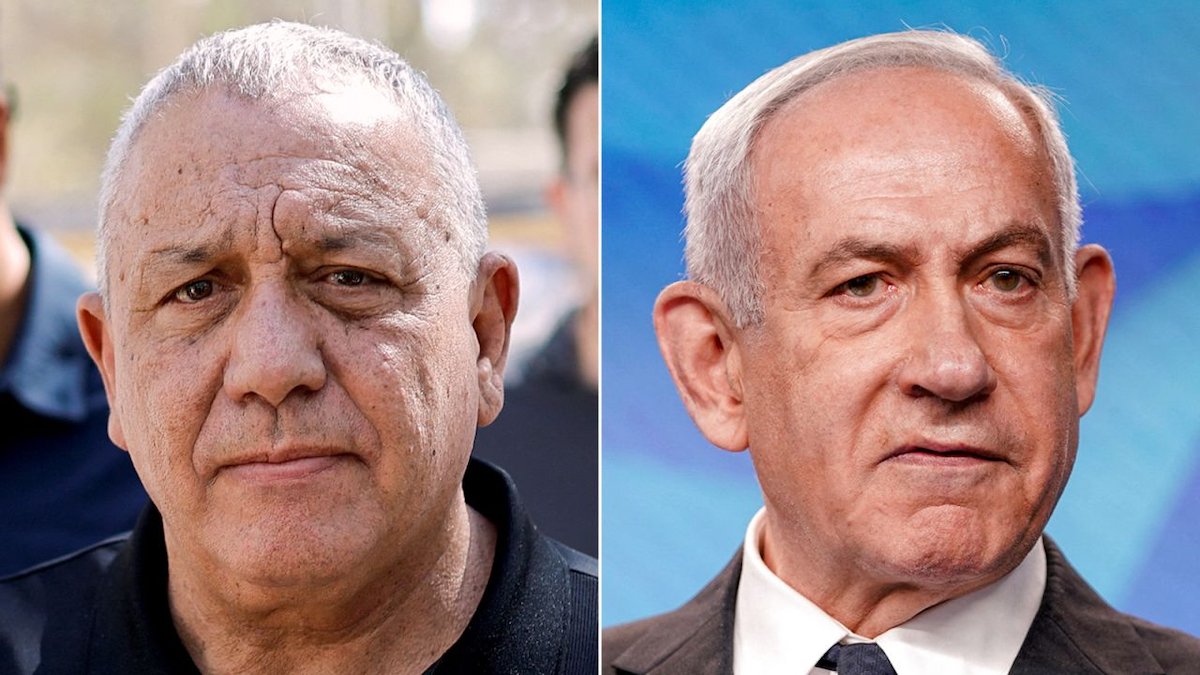
Israel’s 2026 national general election, the first national poll held since the devastating October 7, 2023, Hamas-led attacks and the subsequent multi-front conflicts across Gaza, Lebanon and against Iran, has delivered an unprecedented hung parliamentary outcome after a record-breaking voter turnout unseen in a generation. Official partial vote tallies released early on the day following the election confirm that neither former long-serving prime minister Benjamin Netanyahu’s right-wing bloc nor former military chief Gadi Eisenkot’s centrist and anti-Netanyahu alliance has secured the 61 Knesset seats required to form a stable governing majority. Voter participation hit 77.7%, the highest recorded national turnout since 1999 and a full seven percentage points above the 2022 election, dispelling widespread pre-election fears of widespread public apathy. The most dramatic surge in participation came from Israel’s Arab citizen population, which makes up roughly one-fifth of the country’s total population, with reported turnout reaching approximately 80% — a historic high for the demographic that has long seen lower engagement in national elections. This unprecedented Arab voter mobilization is the defining structural factor behind the deadlocked results: exit polls had initially projected the two major blocs running nearly neck and neck, with some major public and private broadcasters showing Eisenkot’s side holding a narrow lead, but overnight vote counting trended steadily in Netanyahu’s favor to narrow the gap further. As of the 55% vote count mark, Netanyahu’s outgoing governing coalition holds 56 seats, Eisenkot’s change bloc sits at 49, and the combined Arab-led parties hold 15 seats. Netanyahu’s Likud party remains the single largest faction in the Knesset with 27 seats, though this represents a notable drop from the 32 seats it won in 2022, and the broader right-wing bloc has fallen from the 64-seat majority that allowed Netanyahu to form his previous government. Eisenkot’s newly founded Yashar party ranks second with 21 seats, followed by the joint Together list led by former prime minister Naftali Bennett and ex-premier Yair Lapid, and the Arab-majority Joint List, both tied at 11 seats. Other factions include Yair Golan’s Democrats with 9 seats, ultra-Orthodox United Torah Judaism with 9, Avigdor Liberman’s Yisrael Beytenu with 8, Shas and Itamar Ben-Gvir’s Otzma Yehudit at 7 seats each, Bezalel Smotrich’s Religious Zionist list at 6, and Ra’am at 4. Despite neither side hitting the 61-seat threshold, both Netanyahu and Eisenkot immediately laid claim to a victory on election night. Eisenkot addressed cheering supporters to declare that the long-dominant old political order had been broken, and a new era of accountable governance was set to begin. Netanyahu, by contrast, emphasized that Likud held a commanding lead over all rival parties, and that the broader right-wing camp maintained a decisive majority among Jewish and Zionist voters. Analysts note that both claims hold factual weight, as the final result is less a clear win or loss for either frontrunner than a vivid political map of a deeply divided Israeli electorate, meaning the post-election negotiation process will carry far more weight than the ballots themselves. Every plausible path to a 61-seat majority requires leading figures to break explicit campaign promises, with no easy route for any side. For Netanyahu to return to office, his current 56-seat bloc needs five additional seats, but the most obvious potential partners are largely off the table: Liberman has repeatedly pledged he will never serve under Netanyahu or in a coalition that includes ultra-Orthodox factions, while Bennett told his own supporters on election night that Netanyahu had effectively lost his mandate. The only low-effort path for Netanyahu is a late shift in remaining uncounted ballots that pushes his existing bloc over the majority line. For Eisenkot, his current 49-seat bloc is far short of a majority, and the only way to hit 61 is to bring Arab parties into the governing fold — a step that his key allies Bennett and Liberman have categorically ruled out. Eisenkot himself has previously stated that all coalition partners must accept Israel’s identity as a Jewish state and the goal of dismantling Hamas, terms that nearly all Arab Knesset lawmakers have rejected, leaving even the proposed option of a minority government backed by external Arab parliamentary support deeply unpopular among his own camp. A national unity government combining Likud and Eisenkot’s Yashar party would easily clear the 61-seat threshold, and pre-election reports from TIME indicated Netanyahu was open to such an arrangement, while Liberman has publicly accused Eisenkot of secretly pursuing a unity deal. For Eisenkot, however, entering a unity government would mean propping up the very incumbent leader he spent the entire campaign vowing to remove from office. The final remaining scenario is a snap sixth national election, a outcome that most Israeli voters would reject after five consecutive tightly contested elections between 2019 and 2022, but one that remains a very real possibility if no faction can cobble together a working majority. The election was widely framed as a de facto referendum on Netanyahu’s leadership before, during and after the October 7 attacks, with his supporters hailing him as a resolute wartime leader who projected strength against regional enemies and maintained close strategic ties with the United States, while his critics hold him responsible for the catastrophic intelligence failures that allowed the October 7 atrocities to occur, as well as the years of domestic polarization driven by his government’s controversial judicial overhaul push and bitter disputes over ultra-Orthodox military conscription. Notably, the leading anti-Netanyahu challengers did not run as a traditional left-wing bloc: Eisenkot, Bennett and Liberman are all established security hawks, meaning the campaign was fought far more heavily on questions of public trust and competent governance than on policy toward the Palestinians. Even the United States became an implicit factor in the race, as sitting US president Donald Trump issued a public explicit endorsement of Netanyahu nine days before voting day, marking the first time a sitting US president had openly backed a candidate in an Israeli national election. Most local analysts concluded the endorsement did little to shift voter sentiment, citing widespread public frustration among Israelis over the Biden administration’s handling of the conclusion of the recent Iran conflict, while Eisenkot publicly pushed back on the intervention by stating that only Israeli citizens have the right to choose their own national leader. Full final vote tallies are expected to be completed by October 30, with official certified results set to be published on November 4. Even a shift of one or two seats from factions hovering near the parliamentary entry threshold could dramatically alter the calculus of coalition negotiations, after which Israeli President Isaac Herzog will formally consult with all party leaders and task the candidate with the highest likelihood of forming a government, who will be granted up to 42 days to secure a Knesset majority. The recommendations from kingmaker figures Bennett, Liberman and the two Arab party blocs will carry far more weight than the positions of either of the two top frontrunners in determining the final shape of the next government. The overarching takeaway from the election is that the massive, record-breaking wave of Israeli voters turned out specifically to deny any single political camp a clear, unchallenged mandate. Netanyahu’s long-running era of political dominance has not formally ended, and Eisenkot’s promised new era has not yet begun, meaning the next phase of Israeli politics will be defined not by who “won” the election, but by which political actors are willing to make unprecedented compromises and negotiate cross-faction deals to form a functional government.