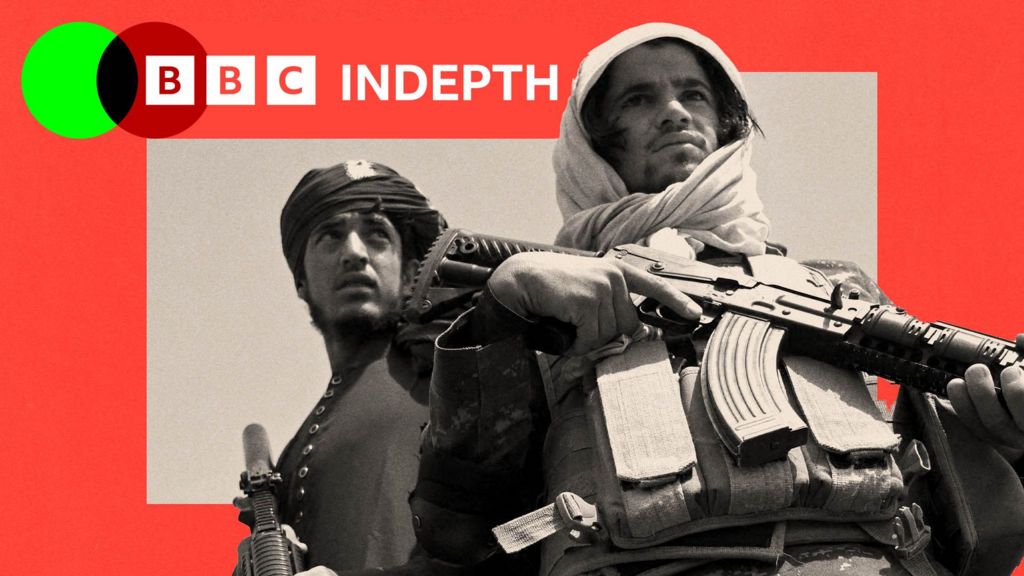
Five years have passed since the Taliban’s lightning offensive swept into Kabul on 15 August 2021, bringing the ultra-conservative Islamist movement back to full control of Afghanistan. Today, the country grapples with cascading humanitarian, economic and political crises, while the international community remains deeply divided over how to engage the ruling regime – a divide that has left Afghan women, already stripped of most basic rights, increasingly adrift and losing hope.
In a whitewashed basement workshop in a village south of Kabul, a dozen young women stir bubbling pots of cherries and plums, labeling glass jars of homemade jam to sell. Run by 47-year-old Afghan entrepreneur Najia – a child bride married at 14 and mother of nine – this small operation is one of the very few remaining spaces where Afghan women can still earn an income and build professional skills under Taliban rule. Most of the women working here, including Najia’s own daughters, would be pursuing university degrees or professional careers if the Taliban had not banned girls and women from secondary education and university enrollment. Even this limited opportunity is now being squeezed: new Taliban rules bar women from selling their own goods at public markets and trade fairs, forcing them to rely on male intermediaries to handle sales, with the regime justifying the restriction by claiming women fail to comply with rigid hijab requirements.
“The world has to talk to the Taliban in a different way because what it’s doing now just isn’t working,” Najia says. “The lives of Afghan women have to change because we’re losing hope.”
Her words cut to the core of the pressing global question five years into Taliban rule: what approach can actually deliver meaningful change for Afghanistan and its people, amid sweeping restrictions that have erased women and girls from nearly all of public life?
The debate over how to engage the Taliban has exposed deep rifts globally. Western nations have largely prioritized human rights conditions for any normalization, while neighboring and regional powers have moved ahead to strike trade, mining and energy deals with the regime, extending de facto recognition. Even within the Western bloc, there is no unified approach. Critics across the board acknowledge that current strategies have failed to shift the Taliban’s policies, but few advocate for full isolation: the United Nations estimates 22 million Afghans – nearly half the country’s population – depend on international aid to survive, and the nation has already been battered by overlapping crises: a crippling economic meltdown, repeated devastating natural disasters, cross-border clashes with Pakistan, and the recent influx of millions of deported Afghans returning to the already impoverished country.
Despite ongoing opposition attacks from armed groups based abroad and Islamic State insurgents, the Taliban has steadily consolidated its hold on power, growing more confident in its rule each year. Today, the regime collects taxes and negotiates major commercial deals with China, Russia, the United Arab Emirates and Uzbekistan, among other partners. While only Russia has granted formal diplomatic recognition, and the Taliban remains locked out of its UN seat, informal and de facto recognition is growing. More than 40 Afghan embassies around the world are now controlled by the Taliban, rather than holdouts from the previous Western-backed government it ousted.
“The West is losing the argument over formal recognition,” a senior former UN official, who spoke on condition of anonymity due to their ongoing work in Afghanistan, told reporters. “There’s no doubt the Taliban would like to be recognised at the UN but it’s no longer as potent a bargaining chip as it was at the beginning.”
For the Taliban, the priority is now expanding diplomatic engagement rather than waiting for formal recognition. “We need to come closer diplomatically rather than talking from a distance if we want to make progress in our relationship,” Taliban chief spokesman Zabihullah Mujahid said in an interview in Kandahar – the movement’s de facto seat of power, where reclusive Taliban emir Hibatullah Akhundzada has built his base and issued hundreds of strict edicts, most targeting the public presence of women, which he frames as an Islamic religious obligation to protect gender segregation.
Five years on, the international community’s approach is evolving. The UN, which maintains a mission in Kabul, has shifted to a new structured negotiation framework called the Mosaic process, which addresses six core issues: human rights (including women’s rights), inclusive governance, counterterrorism on one side, and the Taliban’s demands for sanctions relief, unfreezing of seized Afghan assets, and formal diplomatic representation on the other.
“Engagement is slow, progress is incremental, and reversals are frequent,” the UN’s acting head of mission in Kabul, Georgette Gagnon, acknowledged. “But a stalled process is better than no process. Pressure has not worked so far, threats have not worked; our best chance lies in consistent and common messaging and collective action.”
On the ground in provincial Afghanistan, international aid agencies have developed pragmatic “workarounds” to comply with Taliban gender restrictions while still allowing women to work and keep projects running – for example, having women work from home, or in separate facilities from men. Aid workers say these incremental daily adaptations help preserve limited opportunities for women, even as they operate within the regime’s red lines.
“Everything in Afghanistan is relationships, and day-to-day that can help make things easier,” said Chris Kinder, chairman of British charity Afghanaid, which has operated in the country for more than 40 years. “The Taliban have their red lines and we, and our donors, have ours. We discuss approaches so both sides understand where they are coming from.”
But many Afghan women’s rights activists and human rights groups argue that unconditioned engagement has become a one-way street, with the Taliban making no meaningful concessions in return for greater global acceptance. A recent flashpoint came in June 2026, when the European Union hosted a Taliban foreign ministry delegation in Brussels for the first time since the regime returned to power, drawing widespread criticism that it amounted to “creeping normalisation” of the Taliban’s discriminatory policies.
Mahbouba Seraj, a 78-year-old veteran Afghan women’s rights activist who stayed in Kabul after 2021 to run shelters for women fleeing domestic abuse, announced she is preparing to leave the country after her last shelter was shut down by the Taliban in December 2025. Her repeated appeals to reopen girls’ classrooms have been ignored.
“These small windows that the world sees, the little openings here and there including secret schools for girls, are just meant to fool everybody,” Seraj said. Still, she argues the international community cannot stop talking – it just needs to talk with clear conditions. “They have to talk, but they have to make sure that when they sit down and talk, it’s not just a lot of people just filling the air.”
Five years into Taliban rule, Afghanistan has largely faded from global headlines, overshadowed by wars in Ukraine and the Middle East. Many observers agree that real and lasting change will have to come from within the Taliban movement itself, rather than being imposed from outside. While a small number of senior Taliban officials have privately pushed back against the strictest edicts – most notably the full ban on girls’ secondary education – the emir’s rulings are treated as absolute, and the movement prioritizes internal unity over policy change.
Back at Najia’s jam workshop, framed training certificates – including some from the now-shuttered U.S. Agency for International Development – line the walls, a testament to years of perseverance amid growing restrictions. A new social order, shaped by the Taliban’s rules, is slowly taking hold across Afghanistan, but many Afghans continue to push and pray for a different future, pleading with the world not to forget them.