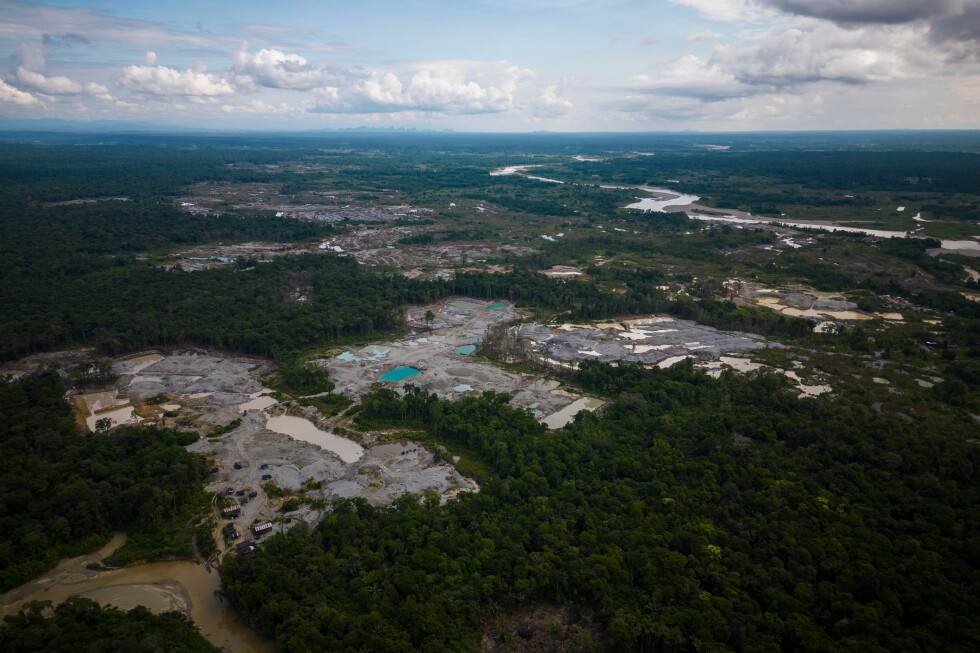
In a landmark show of cross-border collaboration to protect the world’s largest tropical rainforest, law enforcement agencies from five Amazonian nations have concluded one of the most sweeping crackdowns on transnational environmental crime ever recorded in the region, netting hundreds of arrests and seizing more than $280 million in illegally trafficked goods.
Operation Green Shield 2026, which unfolded across the entire Amazon Basin from July 15 to 31, brought together more than 3,600 officers from Bolivia, Brazil, Colombia, Ecuador and Peru to target the full spectrum of destructive illegal activity plaguing the ecosystem: unlicensed mining, unauthorized logging, wildlife trafficking, fuel smuggling, and land grabbing — the unlawful seizure and occupation of territory that almost always ends in large-scale forest clearing. The entire operation was coordinated from Bogota, Colombia, by the International Initiative of Law Enforcement for Climate (I2LEC), a 2023 partnership between the United Arab Emirates and the United Nations Office on Drugs and Crime designed to strengthen global collective action against cross-border environmental harm.
Official data released Tuesday details the operation’s far-reaching outcomes: across 1,045 separate field deployments, authorities made 839 arrests linked to environmental crime. Teams seized over 280,000 cubic meters of illegally harvested timber — a volume large enough to fill approximately 110 Olympic-sized swimming pools — alongside 195 metric tons of illegally extracted minerals including gold, carbon, iron and copper, plus all the heavy equipment used for unregulated mining operations. Beyond timber and minerals, law enforcement rescued more than 3,000 live wild animals captured for trafficking and recovered 430 deceased animals, a collection that includes snakes, birds, lizards and freshwater fish native to the Amazon.
Environmental crime has emerged as one of the most profitable illicit industries operating in the Amazon, driven by relentless global demand for high-value gold, rare timber, and exotic wild animals. Investigators have documented that transnational criminal networks often merge illegal mining, logging, and wildlife trafficking operations, sharing cross-border smuggling routes and international financial networks to move stolen goods and evade detection. By shifting operations and contraband across neighboring national borders to avoid law enforcement, these groups have made coordinated multinational action not just effective, but essential to disrupting their activity.
This year’s Green Shield operation builds on a smaller 2025 multinational campaign that brought together 1,500 officers from Brazil, Colombia, Ecuador and Peru. That earlier effort marked one of the first large-scale attempts to implement shared intelligence and simultaneous cross-border enforcement against Amazon environmental crime, reflecting growing global concern over the increasingly borderless nature of these criminal networks. The 2026 iteration expanded the partnership to include Bolivia, with synchronized patrols and raids targeting remote border and river regions where criminal groups have long operated with impunity.
“The UAE leadership firmly believes that collaboration is essential to combating transnational crime,” Col. Dana Humaid, director general of the International Affairs Bureau at the UAE Ministry of Interior, said in an official statement. “By working together, law enforcement agencies can achieve stronger results.”
Colombian National Police Director Gen. William Oswaldo Rincón Zambrano emphasized that the operation’s success demonstrated how cross-border intelligence sharing can translate into tangible, coordinated enforcement outcomes. “Protecting our natural resources requires a shared response,” he noted.
Peruvian police environmental chief Gen. J. Manuel Cruz Chamba echoed that sentiment, pointing out that environmental crimes “do not respect borders” and therefore demand unified international cooperation to effectively address.
The Associated Press’ climate and environmental coverage receives financial support from multiple private foundations. AP is solely responsible for all content.