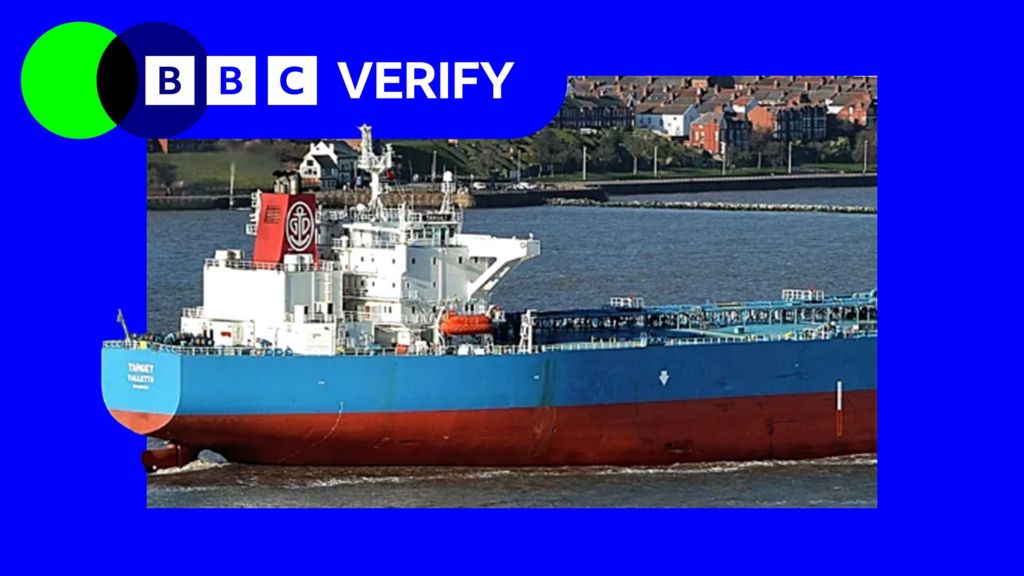
Weeks after a dramatic UK interception of a sanctioned Russian shadow fleet tanker upended the routing of Moscow’s energy shipments to global markets, one vessel has broken ranks, sailing through the English Channel for the first time since the operation, according to ship-tracking data analyzed by BBC Verify.
The tanker in question, the Forwarder, is a Russian-flagged vessel already sanctioned by the United Kingdom, United States, and European Union. It departed the Russian Baltic port of Primorsk on June 12 after loading crude from the region’s largest refinery, a key export hub for Russia’s energy sector, and entered the English Channel Wednesday evening en route to Dongying Port in China. The ship is currently sailing south through the waterway.
The development marks a sharp break from the pattern that emerged after early Sunday morning’s UK commando operation to board and seize the Smyrtos, another sanctioned shadow fleet tanker. In the days following that interception, tracking data shows dozens of Western-sanctioned Russian oil tankers altered their planned routes to bypass the Channel entirely, rerouting around the west coast of Ireland to avoid any risk of interception.
As of Thursday, ship tracking data also indicates a British Royal Navy patrol ship, HMS Tyne, is operating in the immediate vicinity of the Forwarder. A NATO official previously confirmed to BBC Verify that Russia has assigned the frigate Admiral Grigorovich to escort sanctioned shadow fleet tankers transiting the region, though it remains unclear if the warship is accompanying the Forwarder. The Admiral Grigorovich made headlines earlier this week when it fired warning shots at a British civilian yacht that approached its position in the Channel, and as of Wednesday evening, it had not moved far from the site of that encounter.
The legal and strategic context for any potential interception of the Forwarder differs dramatically from that of the Smyrtos, maritime analysts note. In March, UK Prime Minister Keir Starmer announced a new policy allowing British armed forces to board sanctioned vessels transiting UK waters that violate international law. The Smyrtos was sailing without a registered flag after Cameroon delisted the vessel from its registry before the voyage, giving UK authorities clear legal grounds to act. The ship is currently held off Weymouth, and its captain faces charges for violating UK sanctions.
By contrast, the Forwarder is officially flagged to Russia, and analysts say there is no publicly available evidence to prove it is flying a false flag. That legal distinction changes the risk calculus for Western nations, experts argue. Intercepting a vessel that is clearly Russian-flagged, particularly if it is accompanied by a Russian military escort, would represent a major escalation of tensions between the West and Moscow, making an interception unlikely according to most observers.
“Going after vessels that are falsely flagged or misusing a flag of convenience is one thing, but this would be going after Russia directly which would be a further step up in escalation,” explained Frederik Van Lokeren, a former Belgian naval officer and maritime security analyst. “Since this is a Russian-flagged vessel, possibly escorted by a Russian warship, I don’t expect the UK, or any other Western country, to attempt to board her.”
Mark Douglas, an analyst with New Zealand-based Starboard Maritime Intelligence, echoed that assessment, noting the unique legal standing of the Smyrtos operation. “Given that the Cameroon registry had delisted Smyrtos before she sailed through the Channel there were definitely reasonable grounds to suspect the vessel was without nationality,” he said. “Forwarder, on the other hand, is flagged by Russia and despite the opaque ownership structure we have no information to suggest that is a false flag.”
BBC Verify has reached out to the UK Ministry of Defence for comment on the Forwarder’s transit and HMS Tyne’s deployment near the vessel.
The shadow fleet of anonymous, aging tankers has emerged as a critical lifeline for the Kremlin after Western nations imposed sweeping sanctions on Russian energy exports following Moscow’s full-scale invasion of Ukraine in 2022. According to UK Ministry of Defence estimates, the fleet now numbers more than 700 vessels and carries roughly 75 percent of all Russia’s sanctioned oil exports. Data from BBC Verify collected in May found that nearly 200 shadow fleet vessels had passed through the English Channel in the months after Starmer’s interception policy announcement, with at least 94 crossing briefly into UK territorial waters.