After more than a decade of quiet volunteer work cataloging historical documents at Britain’s National Archives, retired insurance executive Michael Scurr stumbled upon a historic find that has electrified the global history community. For 11 years, Scurr dedicated his Thursday mornings to the painstaking work of organizing 18th-century Royal Navy correspondence, a labor of love designed to support future generations of researchers. It was during a routine sifting session last May that his work turned up something extraordinary.
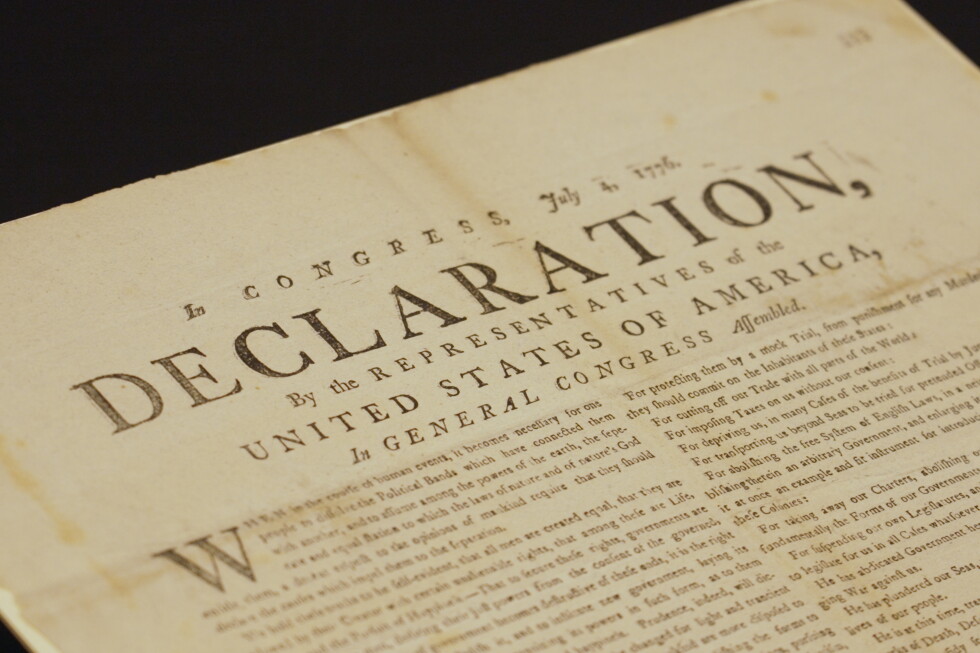
Nestled within the personal letters of an 18th-century Royal Navy captain, attached to a December 24, 1776 battle report detailing the capture of the American privateer *Dalton*, was an unassuming folded enclosure labeled only “another paper.” When Scurr carefully unfolded the yellowed document, his eye immediately caught the word “Declaration” printed across its top margin. “I thought, oh, right, OK, this is definitely a Declaration of Independence,” he recalled to the Associated Press. “How exciting is that?”
Following months of careful authentication, the UK National Archives officially unveiled the discovery this Thursday, just days ahead of the 250th anniversary of American independence. Experts have confirmed the document is an extremely rare early printing of the United States’ founding text, produced less than two weeks after the original Declaration was signed in Philadelphia on July 4, 1776. Printed in Exeter, New Hampshire between July 16 and 19, 1776, the copy was created specifically to spread word across the colonies and beyond that the 13 North American colonies had formally severed their political ties to the British Crown.
This find marks a historic first: of the 11 known surviving original copies of the Exeter printing of the Declaration, this is the only one located outside of the United States. What makes the document even more significant, however, is its provenance, according to Amanda Bevan, head of the National Archives’ cataloging project for Royal Navy correspondence from the American Revolutionary War. The document was captured directly from a ship operating under the authority of the newly formed Continental Congress, with official orders signed by Congress president John Hancock.
Bevan noted that while popular history has widely documented the harsh struggles of the Continental Army on land at sites like Valley Forge, far less attention has been paid to the American sailors who risked their lives at sea to disrupt British trade routes and challenge the dominant Royal Navy. This discovery, she says, casts new light on that forgotten chapter of the revolution.
The presence of the Declaration on board the *Dalton* also offers key insight into how the founding document was used in the field, Bevan explained. Following customary naval practice, the *Dalton*’s captain would have read his official orders aloud to the entire crew – and likely included the Declaration in that reading. “They know why they’re fighting, but this puts it in a language which makes it greater than them,” Bevan said. “They’re not fighting because they’re aggrieved in particular. They’re fighting for an ideal. And I think that just to find the declaration in a theater of war where people are committing themselves to fight for their country on the wide ocean is really something special.”
The *Dalton*, an 18-gun privateer, was a privately owned vessel commissioned by the Continental Congress to bolster the fledgling nation’s tiny, under-resourced navy. On Christmas Eve 1776, after a seven-hour chase off the coast of Portugal, the *Dalton* was captured by HMS *Raisonnable*, a 64-gun Royal Navy ship commanded by Captain Thomas Fitzherbert. The *Dalton*’s 120-member crew was taken prisoner and transferred to Plymouth, England, where they were held in harsh, overcrowded conditions.
One 19-year-old captive named Charles Hebert documented his experience in a personal journal, which he kept throughout more than two years of imprisonment before he was finally freed in a prisoner exchange. Hebert’s entries detailed persistent hunger, widespread illness, and repeated punishment for the captured Americans – though dozens of the crew, including Hebert, ultimately survived their captivity.
News of the discovery has been met with widespread excitement from historians across the Atlantic. Matthew Skic, director of collections and exhibitions at the Museum of the American Revolution in Philadelphia, called the find a transformative link to the earliest days of American independence. This copy, he explained, connects directly to the *Dalton*’s captain, who carried the message of American sovereignty to ports across the globe.
“It’s not just a document, it’s an artifact,” Skic said. “It’s a tangible connection to the past, because holding that piece of paper in the archivist’s hand today is a way to transport us back to 1776. The baton being passed, in a way.”
Skic added that the discovery also carries a larger lesson for the historical community: even 250 years after the American Revolution, there are still untold stories and unexamined artifacts waiting to be uncovered. “Even though 250 years has gone by, we still do not know everything about the American Revolution, and there are still finds left to be discovered,” he said.