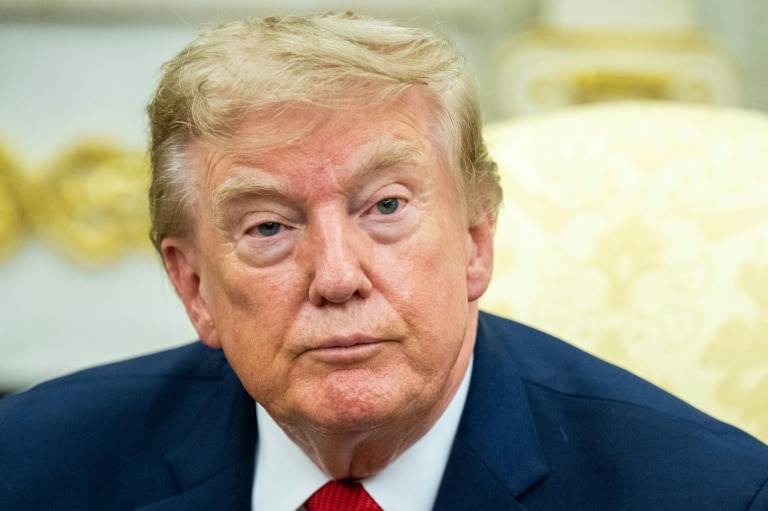
In a dramatic reversal of comments made by his own senior envoy just 24 hours earlier, U.S. President Donald Trump announced Tuesday that no diplomatic negotiations with Iran are currently ongoing or planned, doubling down on his incendiary threat to claim sovereignty over the strategically critical Strait of Hormuz as new American territory.
The ongoing conflict between the U.S.-backed coalition and Iran, which erupted nearly six months ago when Trump launched joint military operations alongside Israel in late February, has left the key energy chokepoint locked in a tense stalemate with no clear path to de-escalation. On Monday, White House senior advisor and Trump’s son-in-law Jared Kushner told Fox News that Washington and Tehran were engaged in “very positive and active conversations” aimed at easing tensions. But Trump directly contradicted that claim in a post to his Truth Social platform Tuesday morning.
“There are no talks or conversations going on, or scheduled, with the Islamic Republic of Iran. The Naval Blockade remains in full force and effect,” Trump wrote. He added that “The Hormuz Strait is open and operating. All water mines have been removed or detonated,” a claim that has not been independently verified. Multiple anonymous U.S. sources confirmed to Agence France-Presse that low-level positive discussions had indeed taken place in recent weeks, but noted that Trump has instructed his negotiating team to pause engagement until Iran signals it is prepared to meet U.S. demands for a comprehensive agreement.
Hours before his post disavowing talks, Trump shared an altered map on Truth Social labeling the Strait of Hormuz as “NEW U.S. Territory,” repeating a provocative claim he first floated to reporters in the Oval Office on Monday, where he argued that seizing the waterway would be “a good idea.” This threat fits a well-documented pattern of the second-term president: when confronted with intractable foreign policy challenges, he has issued outlandish threats to annex sovereign territory, all of which have yet to be acted on. Since returning to the White House in 2025, Trump has publicly threatened to annex Canada as the 51st U.S. state, seize Greenland from Denmark, take control of Cuba, and assert U.S. sovereignty over the Gaza Strip.
Iran responded to the closure of the Strait of Hormuz, a chokepoint through which roughly 20% of the world’s global oil supplies transit daily, as a direct retaliatory measure against the ongoing war. Tehran has stated it will not reopen the waterway until Washington meets a sweeping set of preconditions: ending the U.S. naval blockade of Iranian ports, lifting crippling oil sanctions, unfreezing billions of dollars in blocked Iranian state assets, and paying reparations for damage caused by the war.
“I want to state clearly that the Strait of Hormuz will not be opened until the American commitments stipulated in the memorandum of understanding… are implemented,” Iran’s top negotiator Mohammad Bagher Ghalibaf said in a nationally televised speech Tuesday.
Kushner had framed Trump’s approach as deliberate this week, telling reporters the president “is going to be very patient… he doesn’t want to rush to a deal.” But political analysts note that Tehran has little incentive to rush negotiations: Trump’s domestic approval ratings have slid steadily as his campaign promise to keep the U.S. out of costly “forever wars” has collapsed under the weight of the six-month Iran conflict. The war has also driven sharp increases in energy and consumer prices across the U.S., creating major political headwinds for Trump’s Republican Party ahead of critical November midterm elections that will determine which party controls Congress for the final two years of his term.
Trump has increasingly showed public frustration with the stalemate in recent days. On Monday, he made an extraordinary threat against U.S. ally Oman, saying he would “bomb the shit” out of the country if it interfered with efforts to reach a deal over the strait. At the same time, Qatar — which has served as a key neutral mediator in the stalled talks — announced Tuesday that a preliminary cooperation agreement between Iran and Oman over transit through the strait has cleared the way for potential resumption of broader negotiations to end the regional conflict.