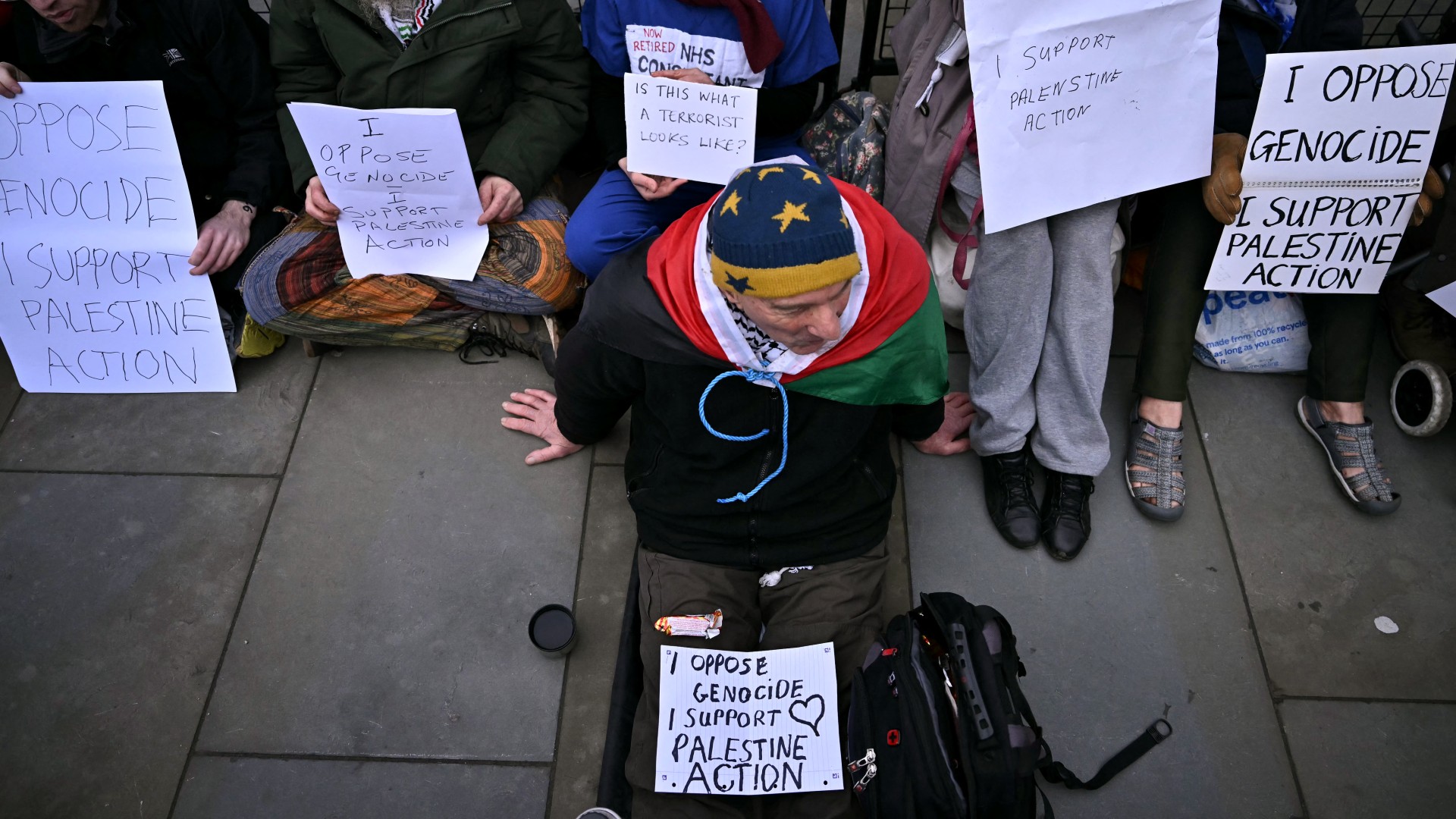
A new set of workplace restrictions for UK National Health Service (NHS) staff, which bans the display of political symbols in health facilities and bars workers from wearing medical scrubs at public protests, has triggered widespread condemnation from healthcare professionals and politicians alike. Critics argue the policy is weaponizing legitimate concerns about antisemitism to silence public expressions of solidarity with the Palestinian people amid the ongoing humanitarian crisis in Gaza.
The new guidance stems from the Mann report, an inquiry into antisemitism within the NHS commissioned by former UK Health Secretary Wes Streeting in 2025. While NHS England has formally adopted the recommendations, enforcement is left to individual regional NHS trusts. Even as stakeholders broadly agree that addressing antisemitism and all forms of racism within the public health system is a critical priority, leading medical bodies and frontline workers warn that the broad scope of the ban risks severe overreach that undermines free speech.
The British Medical Association (BMA), the UK’s leading doctors’ union, has raised deep alarm over the vague language of the policy, questioning how authorities will define what qualifies as a “political symbol.” The union has called for clear, nationally consistent guidelines that draw a firm line between legitimate expressive activity and professional misconduct, warning that a blanket ban on all symbols interpreted as political goes far beyond what is needed to combat discrimination.
Labour MP Kim Johnson echoed these concerns, noting that pro-Palestine expression has been disproportionately targeted as part of a broader national crackdown on Palestinian rights advocacy. Johnson emphasized that sweeping restrictions on solidarity messaging risk conflating legitimate demonstrations of identity and support with professional wrongdoing, ultimately undermining rather than advancing efforts to root out racism in the health service.
Medact, a UK-based medical justice advocacy organization, said the Mann report’s recommendations bypass open, nuanced debate to impose a one-size-fits-all ban on expression. Medact spokesperson Nina Radulovic argued that political leaders and segments of the UK media are more focused on suppressing dissenting views than engaging with the urgent ethical questions frontline health workers are raising about the NHS, corporate influence, and the UK’s role in the political dynamics driving the war in Gaza.
Professor Nick Maynard, a veteran British surgeon who has worked in Gaza hospitals throughout the current conflict, described the framing of the new policy as deliberately dishonest. Maynard, who witnessed firsthand what United Nations experts have labeled “medicide” – the deliberate targeting of healthcare infrastructure and personnel by Israeli forces, including the widespread use of deadly double-tap airstrikes on first responders – said the policy conflates pro-Palestine solidarity with antisemitism as part of a deliberate government campaign to silence critical doctors. He added that the deliberate destruction of Gaza’s health system is a core pillar of Israel’s policy of ethnic cleansing, a reality that has compelled healthcare workers globally to speak out. Maynard noted that despite Streeting’s recent public positioning as sympathetic to Palestinians, the former health secretary has led efforts to silence NHS workers who advocate for Gaza.
Dr Omar Abdel-Mannan, a 15-year NHS veteran and co-founder of Health Workers 4 Palestine, framed the ban as part of a growing wave of censorship targeting pro-Palestine voices across multiple UK sectors. He argued that authorities fear health workers because their professional authority gives their statements unique credibility with the public, making their calls for accountability for Gaza particularly threatening to the status quo. Abdel-Mannan also questioned the foundation of the Mann report itself, noting that the NHS lacks even basic data on racist incidents across many regional trusts, making it impossible for the inquiry to meaningfully address the problem it was meant to solve.
He pointed to the high-profile case of Palestinian doctor Ghassan Abu-Sittah, who was reported to the UK General Medical Council (GMC) by the pro-Israel advocacy group UK Lawyers for Israel over his pro-Palestine activism. GMC tribunals twice dismissed all antisemitism claims against Abu-Sittah, but the doctor has alleged Streeting pressured the GMC to launch what he calls a McCarthyite witch hunt against him and other critical clinicians – an unprecedented political interference that Abdel-Mannan said has created a chilling effect across the NHS, pushing many workers to self-censor out of fear of professional retaliation.
Ahmad Baker, a British-Palestinian nurse at London’s Whipps Cross Hospital, is one worker who has already faced disciplinary action under the new policy direction. Baker was ordered by hospital managers to remove a still-life painting featuring a watermelon from the background of his work video calls, with managers labeling the artwork potentially antisemitic – a common misinterpretation of the watermelon, which has become a widely recognized symbol of Palestinian identity. Baker, who is now pursuing legal action against Barts Health NHS Trust alongside two other NHS employees, said he is being told to hide his Palestinian identity at the exact moment that his people are facing genocide in Gaza because of that identity.
He also highlighted the glaring double standard in how the policy is applied: after Russia’s 2022 full-scale invasion of Ukraine, NHS staff who wore pro-Ukraine solidarity badges faced no disciplinary action or scrutiny, unlike workers who display symbols of support for Palestine. For Baker, these public displays of solidarity matter because they let other supporters know they are not alone, building a collective movement for justice – which is exactly why authorities are seeking to ban them. He added that the concept of political neutrality in healthcare is widely misinterpreted: while clinical care must be impartial for all patients, there is no requirement for health workers to set aside their political beliefs, and they have a moral obligation to speak out against genocide rather than remain silent.
Advocacy group Health Workers for a Free Palestine warned that full implementation of the Mann recommendations would create an absurd reality where NHS managers are pulled away from core patient care duties to adjudicate whether everyday items – from fruit to pieces of jewelry – qualify as punishable political expression, all while Gaza’s entire health system is systematically destroyed. Dr Aarash Saleh, who joined Baker’s legal challenge against Barts Health, said he knows of one colleague who was disciplined simply for wearing watermelon-shaped earrings. Saleh noted that even though Mann has insisted his report should not be weaponized against pro-Palestine voices, the symbol ban has almost exclusively been used to target Palestine supporters.
Saleh added that the ban on health workers wearing scrubs at protests is even more unjustifiable. He called the rule an overreach of government power that blocks clinicians from marching as healthcare professionals in solidarity with their Gazan colleagues who are being targeted by Israeli forces, breaking with a long history of UK medical workers advocating for marginalized communities. Dr Sara Ali, who is also a party to the legal challenge, emphasized that the policy contradicts the core mission of the NHS. “I find it deeply troubling that an institution whose core purpose is the provision of care should regard expressions of human empathy and solidarity with a people undergoing a genocide as inappropriate or objectionable,” Ali said. “Defending the right to express such solidarity is important because healthcare professionals should not be required to abandon their humanity when they come to work. Compassion and empathy for human suffering are not separate from our professional values – they are fundamental to them.”