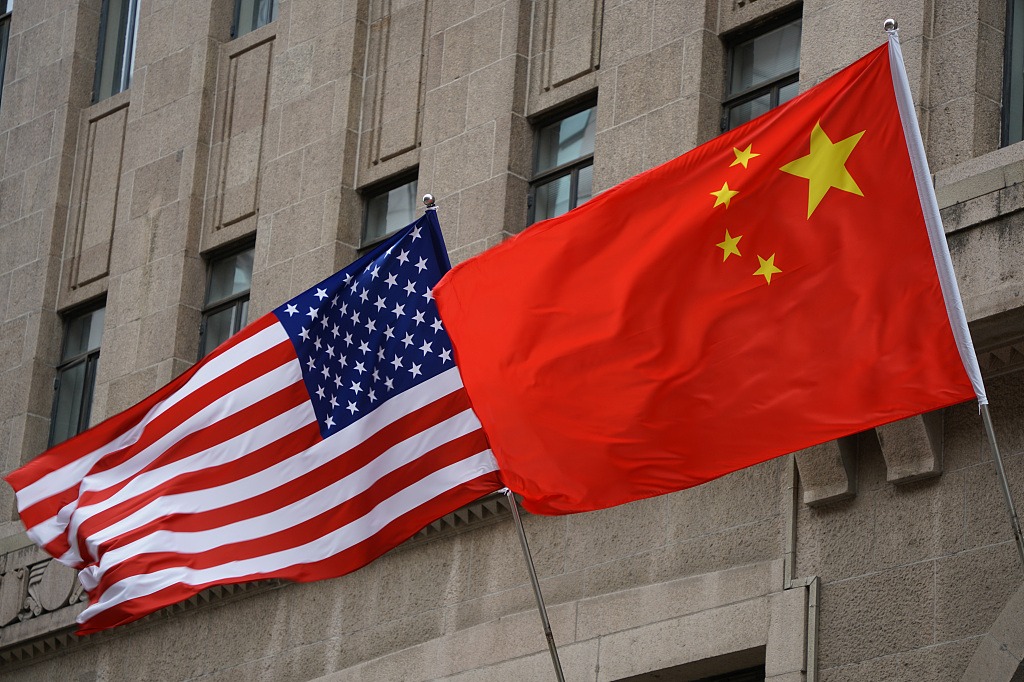
Against a shifting backdrop of global trade rebalancing, leading economists, business leaders and policy analysts are calling on China and the United States — particularly Washington — to build a more stable and predictable policy environment that can underpin mutually beneficial bilateral commercial cooperation, noting the two global economic powers still hold massive untapped potential to deepen cross-border business ties.
New data released by China’s General Administration of Customs reveals that Sino-US bilateral trade fell 16.6 percent year-on-year to $128.68 billion in the first quarter of 2026, a decline that comes as China reshapes its trade portfolio toward faster-growing emerging markets and regional trade partners. Over the same period, China’s trade with the European Union expanded 17.6 percent year-on-year in U.S. dollar terms, while trade with the Association of Southeast Asian Nations (ASEAN) rose 18.4 percent, according to the official statistics.
Li Wei, a professor of international relations at Renmin University of China, attributes the sharp Q1 contraction in Sino-US trade to mounting structural challenges facing the bilateral economic relationship. He explained that Washington’s increasing reliance on national security justifications for restrictive trade measures against China has disrupted established cross-border trade flows and injected widespread uncertainty into global commodity and supply chains.
China’s Ministry of Commerce has repeatedly emphasized the country’s openness to strengthening trade collaboration with the United States, while cautioning that unilateral trade restrictions and inconsistent policy frameworks have created measurable headwinds for bilateral commerce. The ministry has repeatedly called for collaborative action to establish a more stable policy landscape that can rebuild business confidence on both sides.
Sean Stein, president of the US-China Business Council, stressed that targeted, pragmatic action is needed to address legitimate national security concerns without undermining the foundation of bilateral trade, with the goal of building a more resilient and sustainable bilateral trade relationship. “We should rationalize security concerns and make it the right size, not over-blow it,” he said. Stein pointed out that as the world’s two largest economies and two largest consumer markets, China and the United States carry an outsize responsibility for shaping global economic growth, cross-border research and development, and the stability of global supply chains.
Looking beyond the dynamics of the bilateral relationship, Robert Koopman, former chief economist of the World Trade Organization, noted that trade policy is not the primary determinant of long-term global trade expansion. “Tariffs and related measures account for only a part of trade dynamics, while broader factors such as technological change and innovation play a far more significant role,” he explained.
Lynn Song, chief China economist at Dutch financial group ING, projected that the economic drag from U.S. trade restrictions will likely ease over the course of 2026, and external demand for Chinese goods will remain a key driver of China’s economic growth this year — barring the introduction of new, large-scale tariff shocks.
Louise Loo, head of Asia Economics at Oxford Economics, a leading British think tank, added granular context to China’s shifting trade trends: while Chinese exports to ASEAN members, South Korea and India have outpaced 2025’s average growth rate, and sequential monthly growth has returned for exports to the EU, the U.S. and Canada, U.S.-bound shipments still remain below year-earlier levels. Loo noted that since Washington first rolled out new tariff measures against China in February 2025, U.S.-bound exports have declined, but this gap has been more than offset by surging trade volumes with ASEAN and Northeast Asian partners.
This reorientation of China’s trade flows underscores a broader regional rebalancing of trade, as supply chains and demand patterns continue to evolve across the Asia-Pacific. Even amid geopolitical headwinds, regional economic ties have demonstrated unexpected resilience: despite strained Sino-Japanese diplomatic relations dating back to November 2025, bilateral trade between China and Japan grew 17.8 percent year-on-year to $85.19 billion in the first quarter of 2026, according to customs data, highlighting the deep economic complementarity between the two economies.
Chen Zilei, a professor of Japanese studies at Shanghai University of International Business and Economics, said that against the backdrop of strained political ties, Tokyo must recognize how critical bilateral trade with China is to Japan’s own domestic economic growth and long-term industrial competitiveness.
This perspective aligns with on-the-ground business sentiment. A February 2026 survey from the Japanese Chamber of Commerce and Industry in China found that despite ongoing geopolitical tensions, roughly 59 percent of Japanese member companies plan to either increase or maintain their current investment levels in China in 2026 — a 3 percentage point increase from the chamber’s previous survey.
Stephen Ma, chairman of Nissan Motor China, noted that China’s vast consumer market and rapidly expanding domestic demand are opening new growth opportunities for the global automotive sector. He added that these opportunities reflect China’s maturing market, rising operational efficiency, and growing investor confidence. The Japanese automaker sold 653,000 vehicles in China in 2025, with sales growing 4.5 percent year-on-year in the second half of the year.