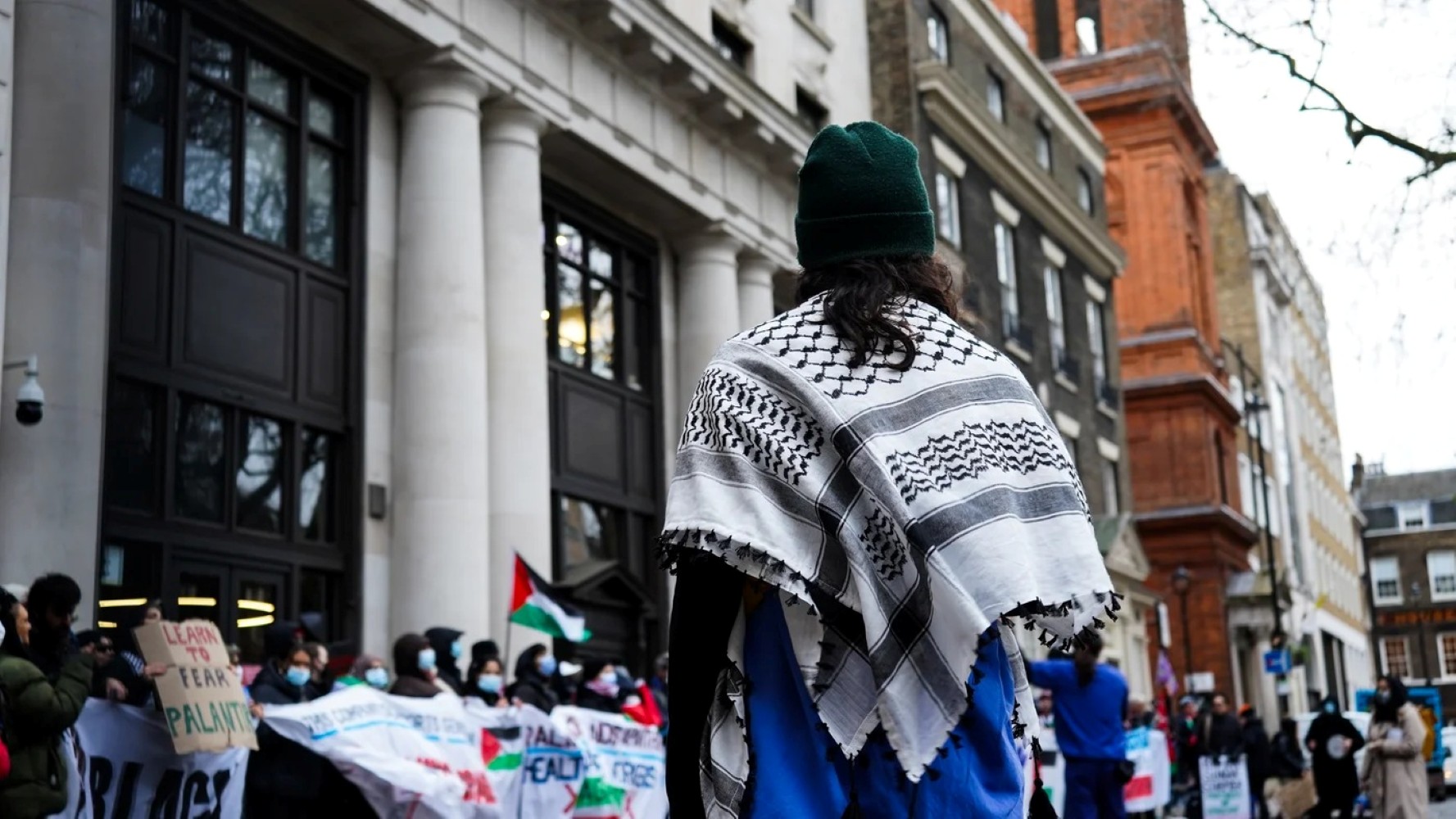
A broad coalition of UK medical associations representing more than 13,000 frontline and specialist healthcare workers is demanding the British government immediately suspend implementation of a controversial set of proposals born from a review of antisemitism and racism in the National Health Service (NHS), arguing the measures disproportionately target and silence pro-Palestine speech among staff.
The review, led by the UK government’s antisemitism advisor Lord John Mann, was formally endorsed last week by the Department of Health and Social Care (DHSC). Its key recommendations include mandatory antisemitism training for all 1.5 million NHS employees, a blanket ban on political symbols being displayed in the workplace, and a prohibition on staff attending political protests while wearing NHS uniform.
In an official response submitted to the government this Thursday, the coalition — which counts multiple associations representing Muslim, Middle Eastern, and South Asian healthcare professionals among its members — has raised grave alarms over the process that shaped the review. In an exclusive statement shared with Middle East Eye (MEE), the coalition warns that the Mann review’s proposals to address racism are being pushed forward without any meaningful consultation with affected communities or consideration of established empirical evidence on racism in healthcare.
MEE has also uncovered new details showing that several medical organizations listed in Mann’s review acknowledgements were never actually involved in developing the final recommendations. The British Islamic Medical Association is among those listed but unconsulted.
Of particular concern to the coalition is the proposed ban on political symbols, which the group describes as a “chilling” overreach that infringes on private conscience and protected lawful speech, falling far outside the bounds of legitimate regulation of professional conduct.
Longstanding NHS workforce data backs up the coalition’s broader critique: it has long documented that ethnic minority NHS staff face consistently higher rates of systemic and interpersonal racism than their white colleagues, a problem critics argue the Mann review fails to address adequately.
Roger Kline, a research fellow at Middlesex University Business School who was commissioned by the UK’s healthcare regulator, the General Medical Council (GMC), in 2018 to investigate the disproportionate representation of ethnic minority staff in fitness-to-practice investigations, shared his exclusive assessment with MEE calling the Mann review a “missed opportunity” to tackle deep-rooted racism across the NHS. Kline went further, arguing Mann was the wrong person to lead the review entirely.
As a Jewish researcher who acknowledges the urgent need to confront antisemitism, Kline argues the review erases the equally pressing crisis of Islamophobia in the NHS, creating a harmful “hierarchy of racism” that elevates one form of hate above others. He emphasized that critical speech targeting the state of Israel does not equate to antisemitism, noting “Lord Mann has been too closely aligned with defending the interests of Israel rather than that of all Jewish people.” Kline rejects the idea that pro-Palestine badges or protest attendance constitute antisemitic activity, dismissing the entire package of proposals as performative, legally vulnerable, and argues the mandated training will be “pointless and counterproductive.” He also revealed that senior NHS leaders privately agree with his assessment but fear professional retaliation for speaking out publicly.
Currently, dozens of NHS doctors are already under active GMC investigation for their pro-Palestine advocacy, including public comments at protests and social media posts. One high-profile case is that of Dr. Ranjeet Brar, a London-based vascular surgeon who was suspended from King’s College Hospital NHS Foundation Trust earlier this year after delivering a pro-Palestine speech at a public demonstration. Brar was arrested over his remarks but ultimately released without charge, yet still faces ongoing GMC investigation. He told MEE he has endured “a long and sustained period of harassment because of my political views,” and has been falsely labeled a racist and antisemite for speaking out against what he describes as genocide in Gaza. Brar has launched a judicial review challenging the NHS and GMC’s use of the International Holocaust Remembrance Alliance (IHRA) definition of antisemitism, a framework that has sparked widespread global debate for its tendency to conflate legitimate criticism of Israeli policy with antisemitic hate. “I’ve exercised my right to free speech. I’ve been cleared of wrongdoing – why should my principles and beliefs be discarded for my ability to work,” Brar said.
Another case highlighting the chilling effect of current policies is that of Dr. Tamara Ali, a general practitioner based in Scotland. Last year, a patient filed a complaint against Ali over a small Palestine flag displayed in her consulting room and a pro-Palestine badge on her work lanyard. Ali was ordered by senior practice leaders to remove both items. “It was the most isolating and anxiety-provoking period of my career. I felt completely unseen,” Ali told MEE. She noted the complaint compared the Palestinian flag to a Nazi symbol and labeled it a terrorist emblem, yet no institutional leadership recognized the complaint itself as racist or Islamophobic. Ali has since filed a legal claim against her former GP practice and NHS Education for Scotland, alleging racial and religious discrimination and unlawful suppression of freedom of expression. “You can ban pins and political symbols, but you can’t ban the moral clarity people have,” she said.
Ali and Brar are co-founders of the campaign group Healthcare Workers Against Censorship, which is pursuing multiple judicial reviews targeting the growing censorship of pro-Palestine healthcare workers. One key target of their legal action is a GMC rule change that would allow the regulator to reopen investigations and reimpose sanctions on doctors who have already been cleared of wrongdoing by the GMC’s own tribunal service. Healthcare workers warn this rule change is specifically designed to target pro-Palestine advocates, pointing to the high-profile case of British-Palestinian surgeon Dr. Ghassan Abu-Sitta. After the GMC’s independent tribunal cleared Abu-Sitta of all accusations of antisemitism and glorifying terrorism, the regulator petitioned the High Court to overturn the acquittal.
Jonathan Fluxman, a retired anti-Zionist Jewish doctor who regularly participates in pro-Palestine solidarity events, told MEE that the Mann review deliberately exaggerates and single out antisemitism for special treatment while ignoring other forms of hate that impact staff. Fluxman, who has been targeted with antisemitic abuse by Zionist activists for his pro-Palestine stance at public demonstrations, argues the British government is weaponizing accusations of antisemitism to crack down on the pro-Palestine movement, in service of its official foreign policy that supports Israel. He points to a clear double standard: just weeks after the October 7 2023 attacks, the DHSC flew the Israeli flag from its headquarters and issued public statements of solidarity with Israel, while the NHS has repeatedly allowed staff to display symbols of solidarity with Ukraine. “They don’t want health workers to speak out about this because we are listened to and trusted by the public, but you can’t be neutral in genocide,” Fluxman said.
Another leading campaign group, Healthcare Workers 4 Palestine, has warned that the Mann review risks “suppressing the NHS’s long tradition of humanitarian advocacy by healthcare professionals” and confirms it is exploring legal action to block implementation of the review’s recommendations.