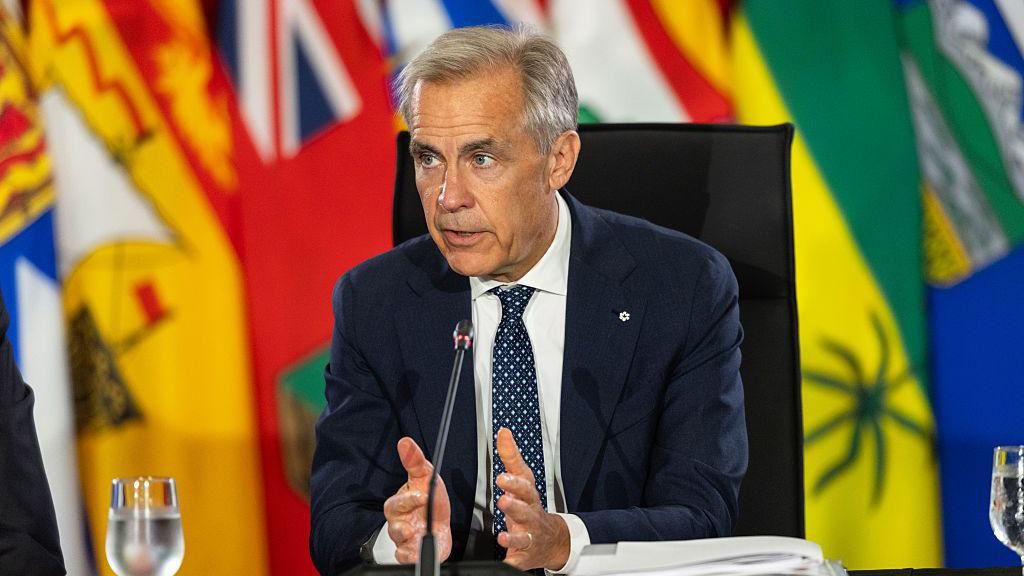
A growing trade rift between Canada and the United States has entered a critical new phase, with Canadian Prime Minister Mark Carney confirming that no policy options are off the table as the two nations race to reach a resolution before new sweeping US tariffs take effect mid-August. Carney’s remarks followed a Thursday gathering with provincial and territorial leaders, where representatives from across the country gathered to coordinate a unified response to the Trump administration’s recent announcement of 50% tariffs targeting roughly CA$20 billion worth of Canadian goods. The levies, scheduled to go into force on August 19, have pushed trade negotiations between the two North American neighbors into overdrive, according to Carney. The meeting with regional leaders came amid growing pressure from some provincial heads, who have demanded Ottawa adopt a firmer negotiating stance and deliver faster results to mitigate potential economic harm. During a press briefing after the meeting, Carney outlined multiple paths the Canadian government could pursue, including accelerating long-running efforts to diversify Canada’s trade partnerships beyond the US market and rolling out targeted support for industries that stand to be hit hardest by the new import taxes. When pressed for details on potential reciprocal punitive measures against US imports, Carney only noted that a full spectrum of direct response tools remained under consideration, declining to elaborate on specific countermeasures. “We are going to support Canadian workers, families, businesses, full stop,” he affirmed. The Trump administration first unveiled the new tariff schedule this past Monday, justifying the move with claims that Canada engages in “unequal treatment” of American automobiles, dairy products, and alcoholic beverages. The tariff target list includes both everyday consumer goods ranging from wine to hockey sticks and industrial materials such as cement, but several of Canada’s highest-value exports have been excluded from the new levies — among them energy products, potash, critical minerals, and fish. With roughly four weeks remaining between the tariff announcement and the implementation date, Carney characterized the approaching August 19 deadline as a dual-edged dynamic: it serves as an intentional pressure tactic crafted by the Trump administration, but also creates a window of opportunity to accelerate stalled talks toward a tangible agreement. The current trade dispute is unfolding against the backdrop of long-stalled efforts to renegotiate the United States-Mexico-Canada Agreement (USMCA), the trilateral trade deal that replaced the original North American Free Trade Agreement during Donald Trump’s first presidential term. Earlier this year, the White House declined to extend the existing USMCA framework, pushing for sweeping revisions to the original terms. Negotiations on the updated agreement have moved at a glacial pace in recent months, however. On Wednesday, US Trade Representative Jamieson Greer told congressional representatives that his team aims to finalize interim trade agreements with both Canada and Mexico for legislative consideration by the end of 2026. That said, Greer acknowledged that the most contentious sticking points — including Washington’s demands for stricter automotive rules of origin and revised labor and environmental standards — will likely extend into 2027 before they can be resolved. Greer also defended the newly announced tariffs on Canadian goods, framing them as a core component of the administration’s broader economic strategy to protect American manufacturing workers and shrink the persistent US trade deficit, which he labeled a “national emergency” for the country. As the clock ticks down to the August implementation date, Canadian consumers and businesses have already begun expressing frustration over the impending trade barriers, with many voicing concern that the tariffs will drive up prices for everyday goods and disrupt cross-border supply chains that have been in place for decades.